By Dr. Asnat Raziel, bariatric surgeon specializing in obesity treatment, metabolic health and healthy longevity; Director of the Multidisciplinary Center for Obesity Treatment, Assia Medical, Assuta Ramat HaChayal, Tel Aviv
Menopause lifestyle changes: the foundation for symptom relief
Menopause lifestyle changes have a strong effect on symptoms, on health and on quality of life. A new systematic review, published in September 2025 in Climacteric, the journal of the International Menopause Society, reinforces this message. According to the review, lifestyle medicine is linked to fewer hot flashes, better sleep and better mood. In addition, it is linked to a lower risk of heart disease, diabetes and osteoporosis.
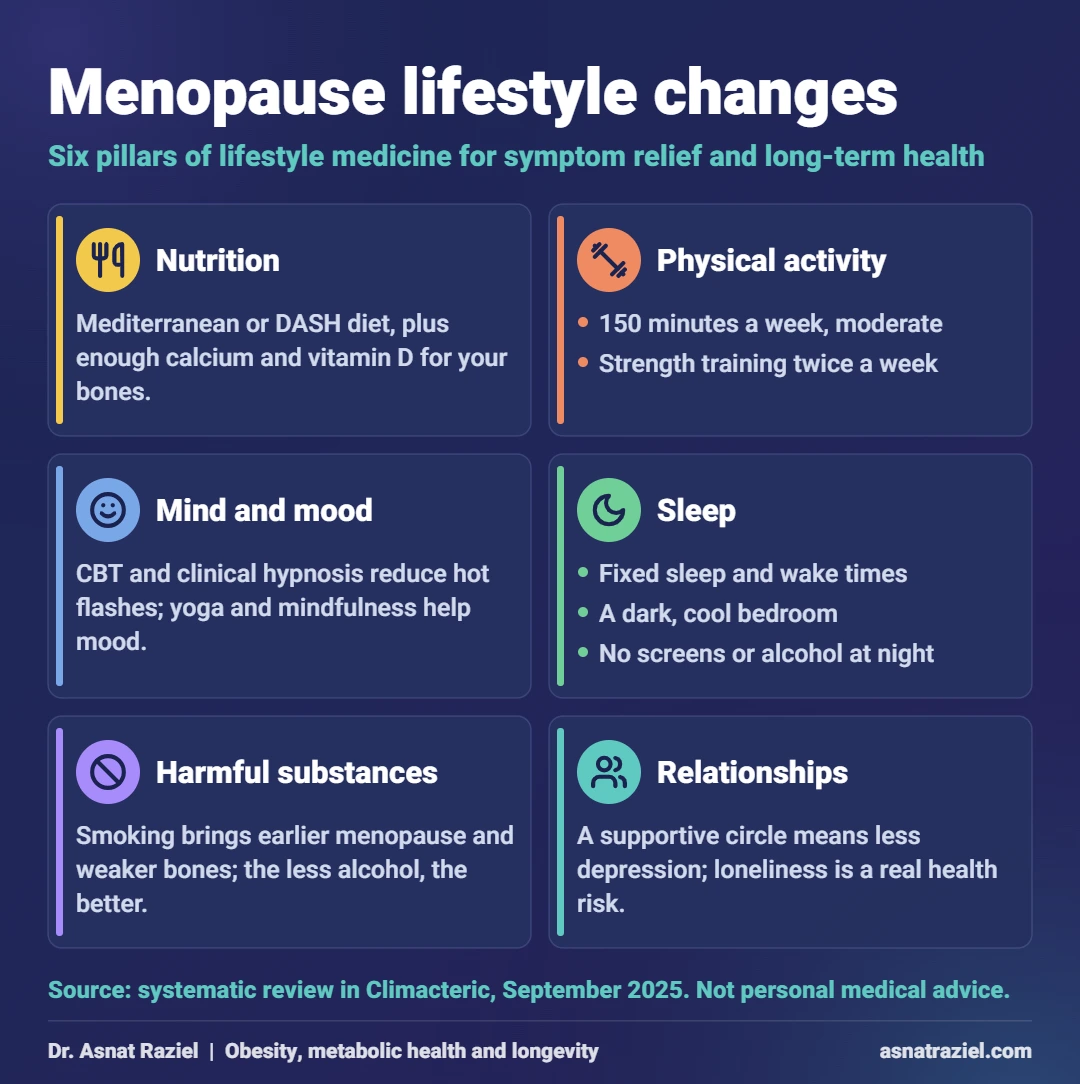
The authors stress that menopause is not a disease. It is a stage of life that calls for a fresh approach. That is why they urge doctors to make lifestyle medicine, an approach that uses daily habits as treatment, a regular part of care. The approach rests on six pillars: healthy eating, physical activity, mental health, restorative sleep, avoiding harmful substances and healthy relationships.
This article focuses on habits, pillar by pillar. If weight gain is your main concern, you will find broad information in the article on obesity in menopause and how to treat it.
Nutrition: a key to balance and health
Eating whole, natural foods is the starting point. A Mediterranean diet or the DASH diet, an eating plan developed to lower blood pressure, is especially suitable. These diets are rich in vegetables, fruit, legumes and fish. They help lower blood pressure, blood fats and excess weight. It is also worth getting enough calcium and vitamin D to protect your bones.
Put simply, changing your menu can change your quality of life. Sometimes, however, diet alone is not enough for weight loss. In such cases, obesity medications such as Mounjaro or Wegovy can help. These drugs also improve blood sugar, blood fats and blood pressure. In my view, they do not replace a healthy lifestyle; rather, they strengthen it. You can read more in the article on a new weight-loss pill for women in menopause.
Menopause lifestyle changes and physical activity
Many women become less active around menopause. As a result, belly fat increases, muscles weaken and bone density drops. On the other hand, regular activity, even a daily walk, reduces visceral fat. It also strengthens the bones and improves mood.
The basic recommendation of the World Health Organization is at least 150 minutes a week of moderate-intensity activity. In addition, it is worth adding strength training twice a week. Strength training matters most of all, because muscle mass declines with age. Another practical idea appears in the article on creatine for women over 40.
The mind: the center of balance in menopause
Menopause is not only a hormonal change. It is also an emotionally stormy time. Chronic stress, family and work pressure and lack of sleep can make symptoms worse. Therefore, caring for the mind is part of caring for the body.
Here it is worth being precise. According to the 2023 position statement of The North American Menopause Society, CBT (cognitive behavioral therapy) and clinical hypnosis reduce hot flashes. By contrast, yoga, mindfulness and relaxation have not been shown to reduce hot flashes. Even so, they still help with mood, sleep and stress relief.
Technology helps as well. Stress-management apps and smartwatches help you track sleep, activity and mood. This way, every woman can spot patterns and improve her well-being.
Sleep: part of menopause lifestyle changes
During this period, unrefreshing sleep is very common, and it comes at a price. Short sleep over time is linked to a higher risk of heart disease, diabetes and weight gain. For this reason, it is worth adopting a few simple habits:
- Fixed times for going to bed and waking up.
- A dark, cool bedroom.
- Avoiding screens and alcohol before bed.
- Breathing exercises before lying down.
The message is clear: sleep is a medical treatment in every sense. At times, it is even the first step toward restoring metabolic balance. You can read more about this link in the article on sleep and metabolic health.
Avoiding harmful substances: give up cigarettes and gain years
Women who smoke reach menopause earlier, and they sometimes suffer from more severe symptoms. In addition, smoking damages bone and raises the risk of osteoporosis. Quitting smoking sometimes leads to a slight weight gain. However, the health benefit is far greater.
The conclusion about alcohol is similar. Alcohol harms sleep quality and burdens the liver. So, the less you drink, the better.
Healthy relationships: the healing power of human connection
Women with a supportive circle of family and friends report less depression and better health. Loneliness, on the other hand, is a real health risk factor. In other words, a supportive partner and at least one close friend are part of the prescription. Sometimes they matter no less than any supplement or medicine.
What is new in drug treatment for menopause
Menopause lifestyle changes do not rule out drug treatment. On the contrary, combining the two gives the best results. In the past year, several important changes have taken place:
- In November 2025, the US Department of Health and Human Services and the FDA announced the removal of the boxed warning from hormone therapy products. This was the warning about heart disease, breast cancer and dementia. The warning about uterine cancer remained on estrogen-only products.
- In February 2026, the FDA approved the updated labels of the first six products.
- Women who cannot take hormones have new options. Fezolinetant, sold as Veozah, was approved in 2023. In October 2025, elinzanetant was approved as well, sold as Lynkuet, for moderate to severe hot flashes.
In addition, in December 2025 the International Menopause Society published comprehensive new recommendations. They include a chapter on lifestyle and a new chapter on muscle loss. You should always choose a treatment together with a doctor, based on your medical history. A combined medical and holistic approach is presented in my article on weight gain in menopause, with a practical checklist.
Bottom line: menopause lifestyle changes as an opportunity
The new review marks a clear trend: a shift from reactive medicine to preventive medicine. A combination of balanced nutrition, movement, sleep and emotional support improves health measures and the sense of vitality. When needed, tailored drug treatment strengthens the effort. In the end, menopause lifestyle changes are an opportunity for a fresh start. That way, you can go on living a healthy, stable and meaningful life after 50 as well.
The information in this article is general and does not replace personal medical advice.
References
The role of lifestyle medicine in menopausal health: a review of non-pharmacologic interventions
The 2023 nonhormone therapy position statement of The North American Menopause Society
HHS Advances Women’s Health, Removes Misleading FDA Warnings on Hormone Replacement Therapy
FDA Approves Labeling Changes for Menopausal Hormone Therapy Products
FDA approves Lynkuet for moderate to severe hot flashes due to menopause