By Dr. Asnat Raziel, bariatric surgeon specializing in obesity treatment, metabolic health and healthy longevity; Director of the Multidisciplinary Center for Obesity Treatment, Assia Medical, Assuta Ramat HaChayal, Tel Aviv
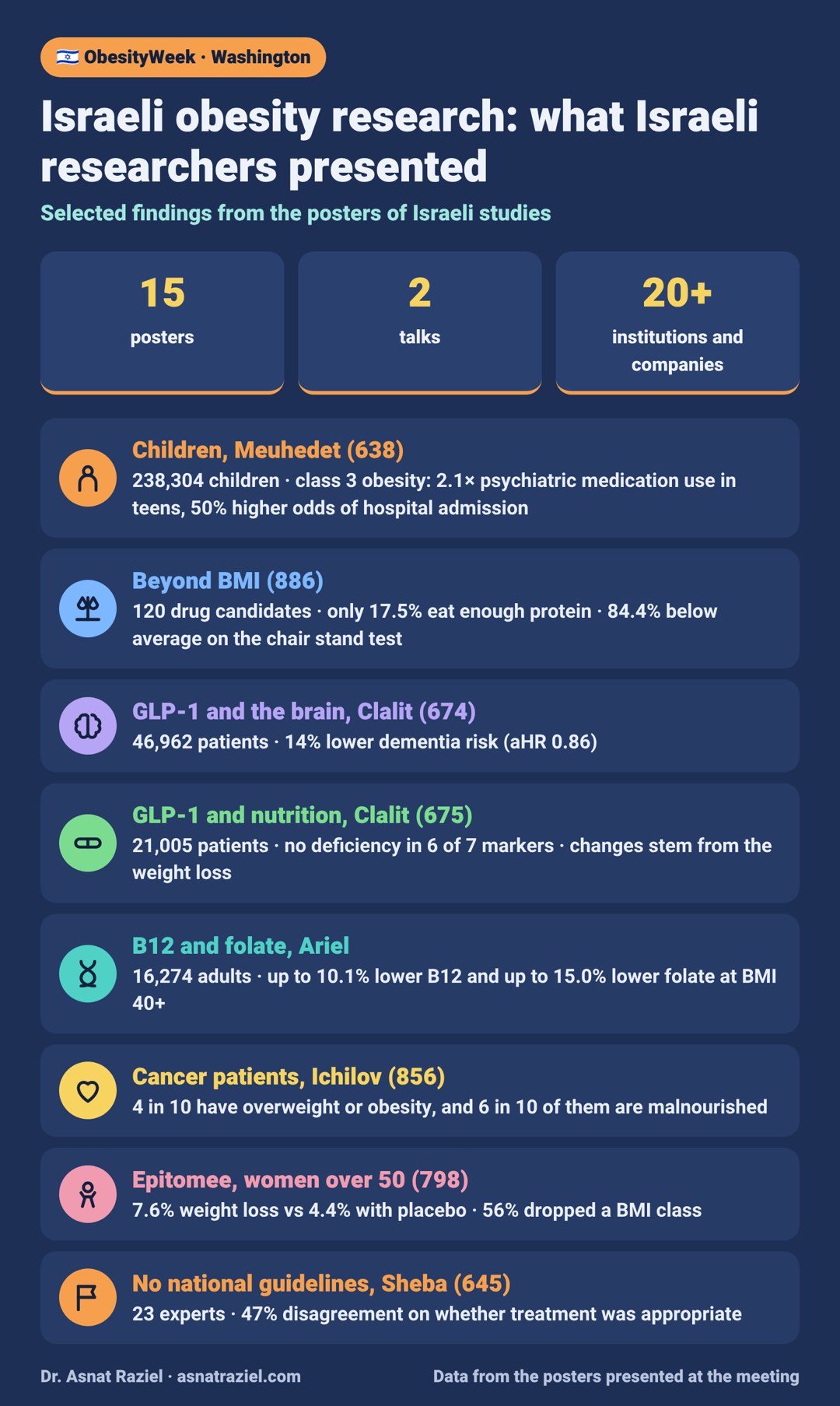
Israeli obesity research: 15 posters from Israel at ObesityWeek
Israeli obesity research took a place of honor in Washington this week. At ObesityWeek, the world’s largest obesity research meeting, Israeli researchers presented 15 posters and two talks. Together, they come from Sheba, Ichilov, Beilinson and HaSharon, from Clalit, Meuhedet and Leumit, from Ariel and Tel Aviv universities, from the Weizmann Institute and from young Israeli companies.
First, I stood in front of the posters, one after another. Behind every number are patients, teams and years of work. That is why I gathered all of them here, with the poster image, every author’s name and the findings as presented. Where the poster itself was not uploaded to the meeting app, the findings come from the abstract.
🧒 Children and teens📊 Beyond BMI💊 GLP-1 drugs🏃 Metabolism and activity🧬 Genetics and rare syndromes💡 Made in Israel📋 Policy and guidelines🎤 The two talks
🧒 Children and teens: the cost is already being paid
📌 Poster 638
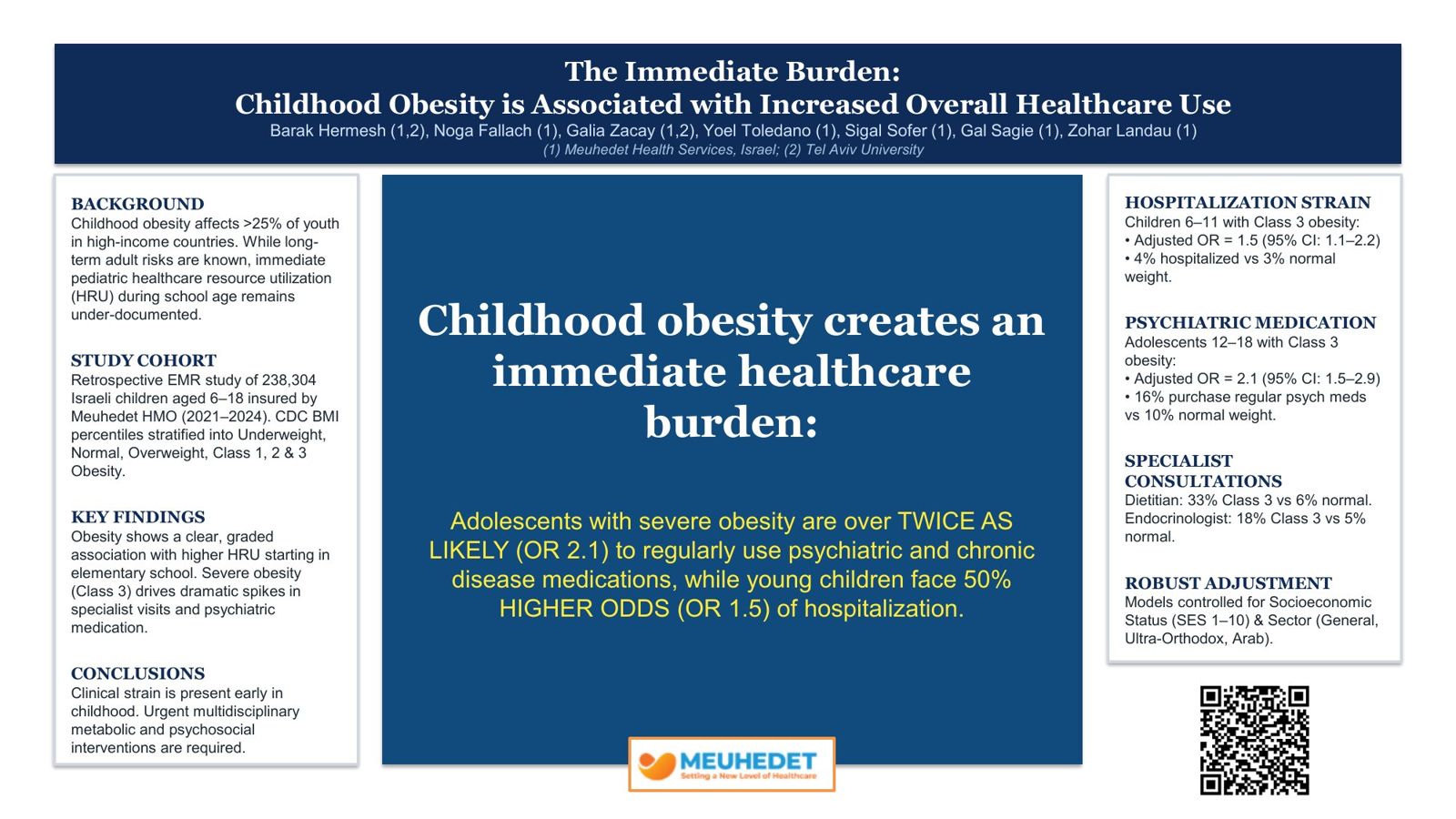
Israeli obesity research in children: more hospital stays and more medications
Click the image to open the full poster
👤 Lead author: Dr. Barak Hermesh, Meuhedet and Tel Aviv University, led by Prof. Zohar Landau.
All authors: Barak Hermesh, Noga Fallach, Galia Zacay, Yoel Toledano, Sigal Sofer, Gal Sagie, Zohar Landau
The researchers reviewed the records of 238,304 children aged 6 to 18 at Meuhedet, from 2021 to 2024. As a result, they found a graded link: the more severe the obesity, the more the children used health services.
- Children aged 6 to 11 with class 3 obesity: a 50% higher chance of hospital admission (OR 1.5), 4% versus 3% at a healthy weight.
- Teens aged 12 to 18 with class 3 obesity: twice the odds of regular psychiatric medication use (OR 2.1), 16% versus 10%.
- Similarly, dietitian visits were 33% versus 6%, and endocrinologist visits 18% versus 5%.
- Finally, the results held after adjusting for socioeconomic status and population sector.
Overall, their conclusion is clear: the burden starts in elementary school. I wrote at length about treating obesity in children and teens.
📌 Poster 270
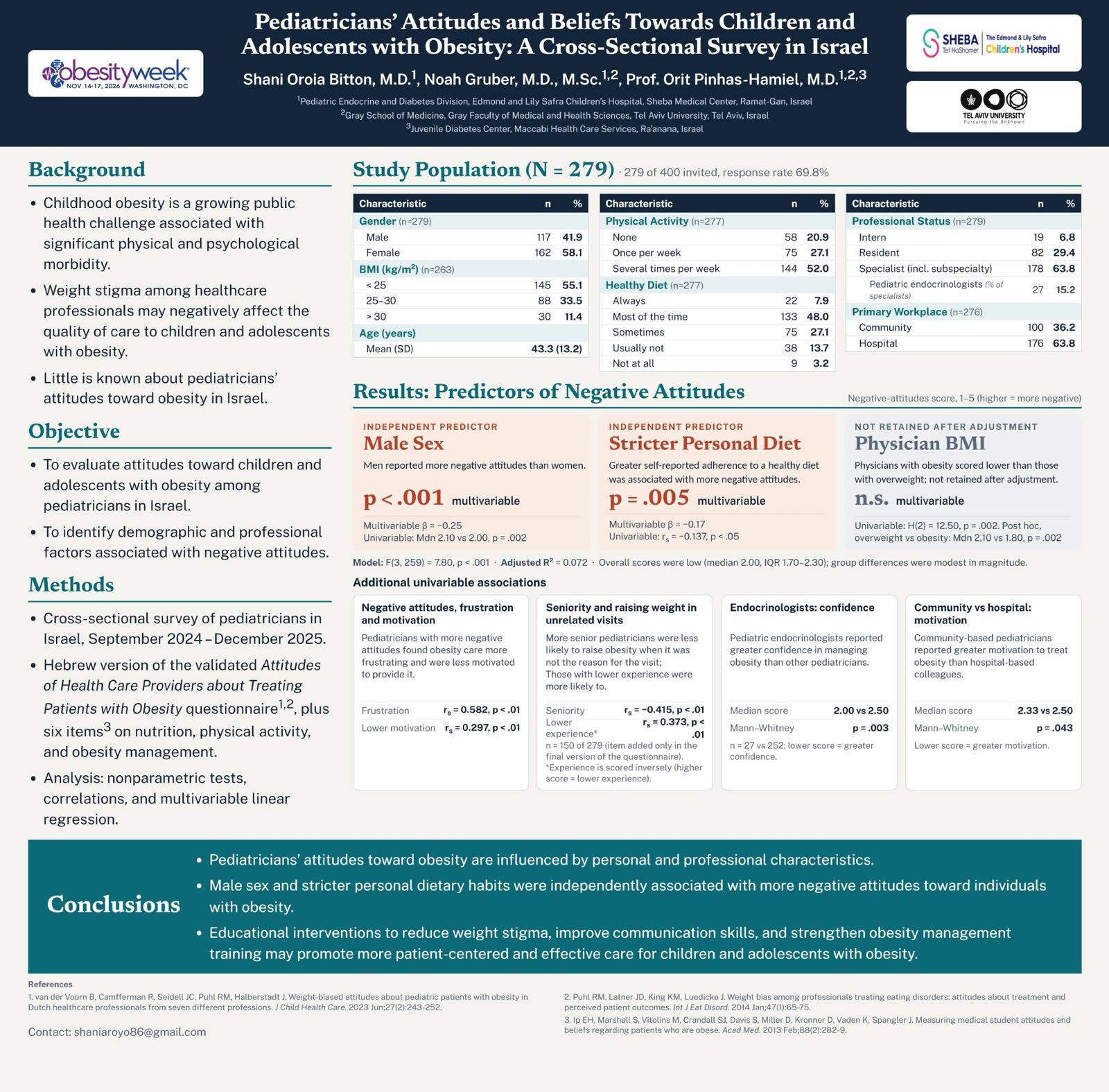
How pediatricians see childhood obesity
Click the image to open the full poster
👤 Lead author: Dr. Shani Oroia Bitton, Endocrinology and Diabetes Unit, Safra Children’s Hospital, Sheba.
All authors: Shani Oroia Bitton, Noah Gruber, Orit Pinhas-Hamiel
In a national survey, 279 of the 400 pediatricians invited took part. In general, negative attitudes toward children with obesity were low. Still, two groups stood out: male doctors, and doctors who follow a strict diet themselves, held more negative attitudes.
- Negative attitudes went together with frustration and lower motivation to treat.
- In addition, senior doctors raised weight less often when the child came in for another reason.
- Pediatric endocrinologists felt very confident, and community pediatricians showed more motivation than hospital doctors.
Therefore, the authors recommend training that reduces stigma and improves communication. I have written before about the effects of weight stigma.
📊 Beyond BMI: what the scale does not tell you
📌 Poster 886
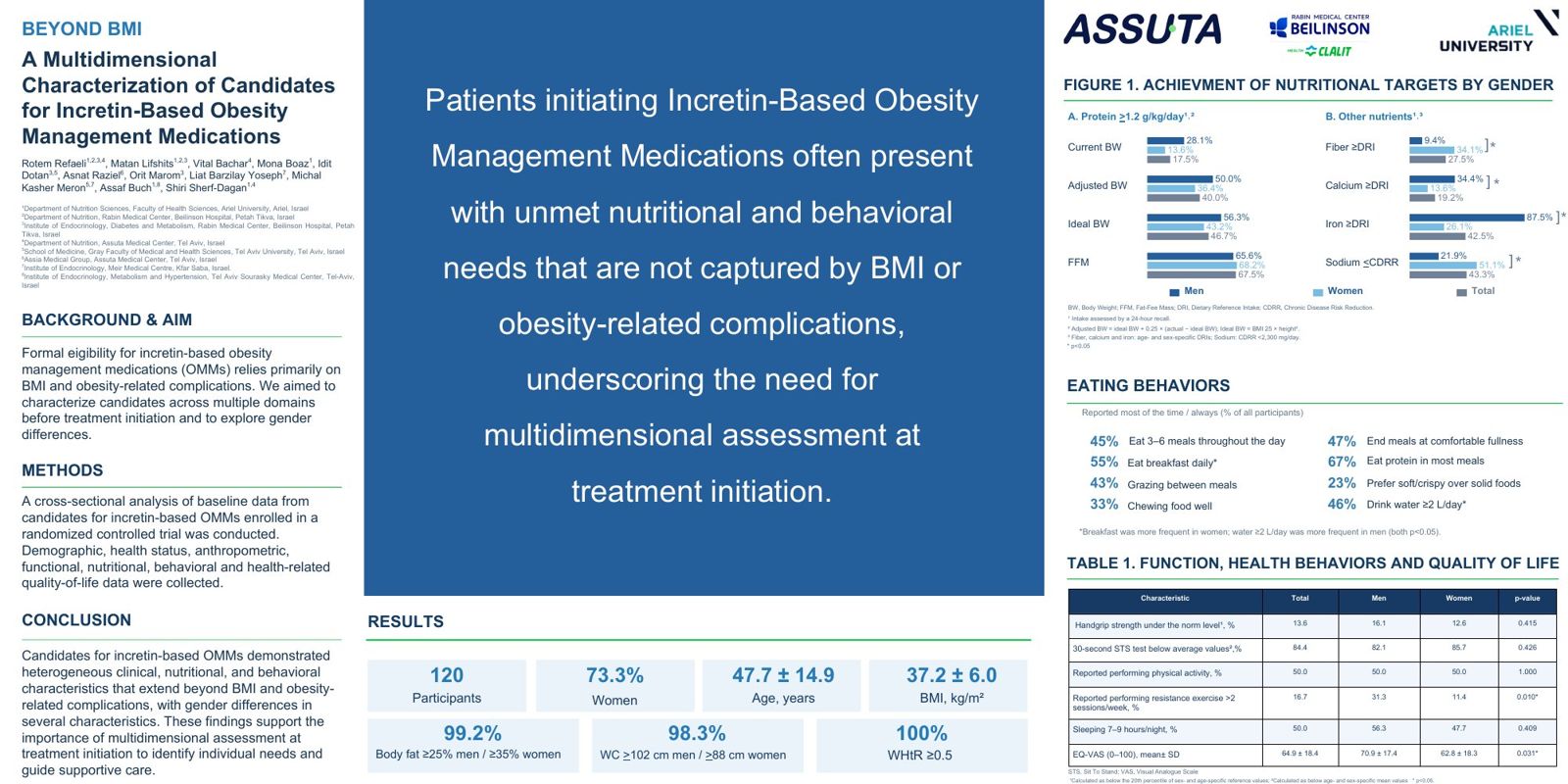
Israeli obesity research: who the candidates for incretin drugs are
Click the image to open the full poster
👤 Lead author: Rotem Refaeli, Department of Nutrition Sciences, Ariel University, Beilinson and Assuta.
All authors: Rotem Refaeli, Matan Lifshits, Vital Bachar, Mona Boaz, Idit Dotan, Asnat Raziel, Orit Marom, Liat Barzilay Yoseph, Michal Kasher Meron, Assaf Buch, Shiri Sherf-Dagan
Eligibility for drugs like Ozempic and Mounjaro rests mainly on BMI and complications. So the team assessed 120 candidates before treatment began, across several areas: body composition, diet, strength, habits and quality of life.
- 73.3% women, mean age 47.7, and mean BMI 37.2.
- Moreover, all had a waist-to-height ratio of 0.5 or more, a sign of visceral fat.
- Only 17.5% ate at least 1.2 grams of protein per kg. Only 27.5% met the fiber recommendation, and 19.2% the calcium one.
- In addition, 84.4% scored below average on the 30-second chair stand test.
- Only 16.7% did strength training more than twice a week: 31.3% of men and 11.4% of women.
- Finally, women reported lower quality of life: 62.8 versus 70.9 out of 100.
The takeaway: before starting a drug, look at the whole person. I wrote a practical guide on preserving muscle mass during weight loss.
📌 B12 poster
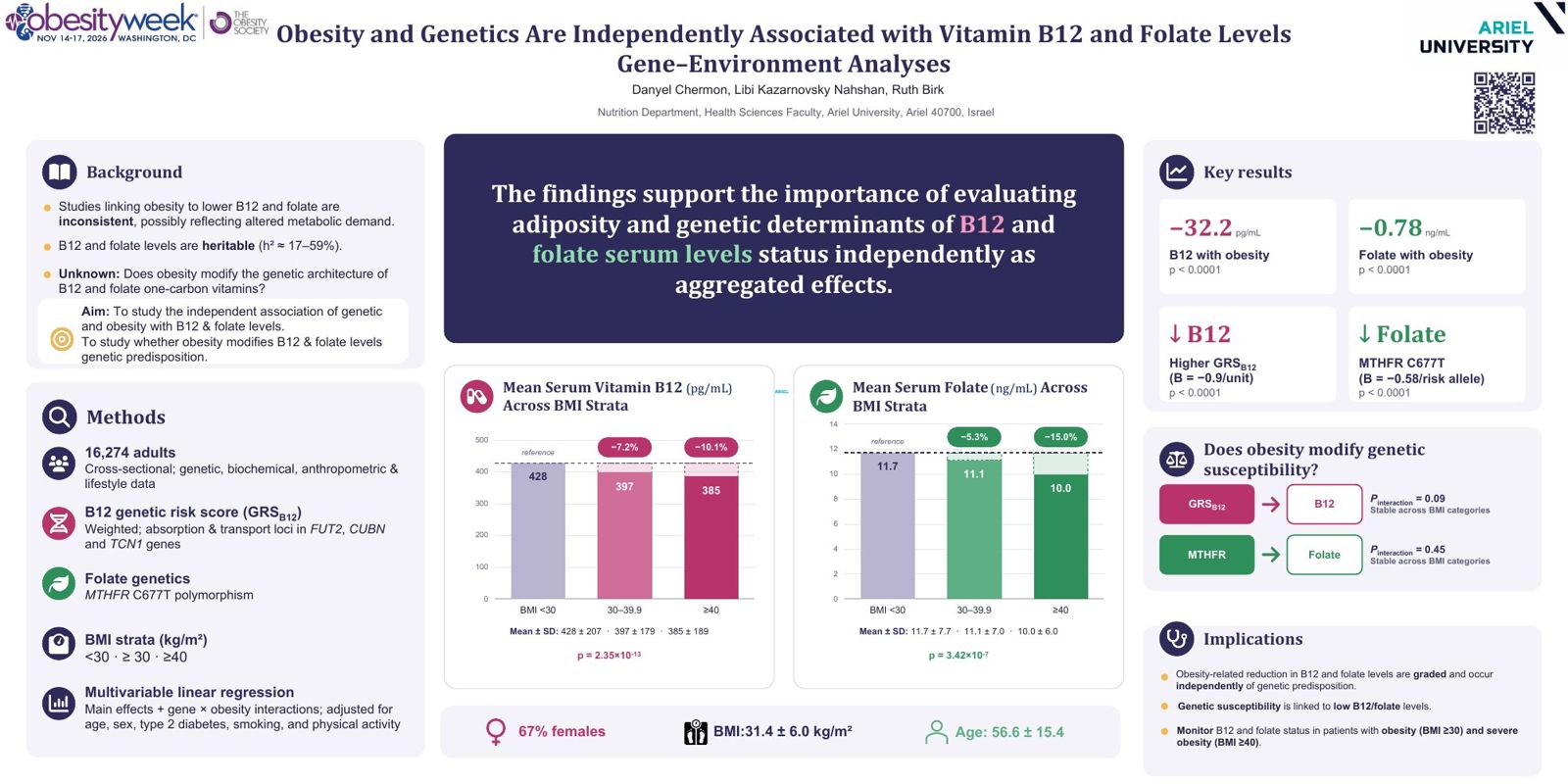
Obesity, genetics and B12 and folate levels
👤 Lead author: Dr. Danyel Chermon, dietitian, Nutrition Department, Ariel University.
All authors: Danyel Chermon, Libi Kazarnovsky Nahshan, Ruth Birk
The study included 16,274 adults with a mean BMI of 31.4. As BMI rises, B12 falls: from 428 to 385 pg/mL, up to 10.1% lower at a BMI of 40 or more. Folate also falls, by up to 15.0%. Also, a genetic tendency is linked to low levels too, separately from obesity.
Therefore, the authors recommend checking B12 and folate when BMI is 30 or more. You can read about iron and B12 tests on my site.
📌 Poster 856
Israeli obesity research in cancer care: excess weight and malnutrition
Click the image to open the full poster
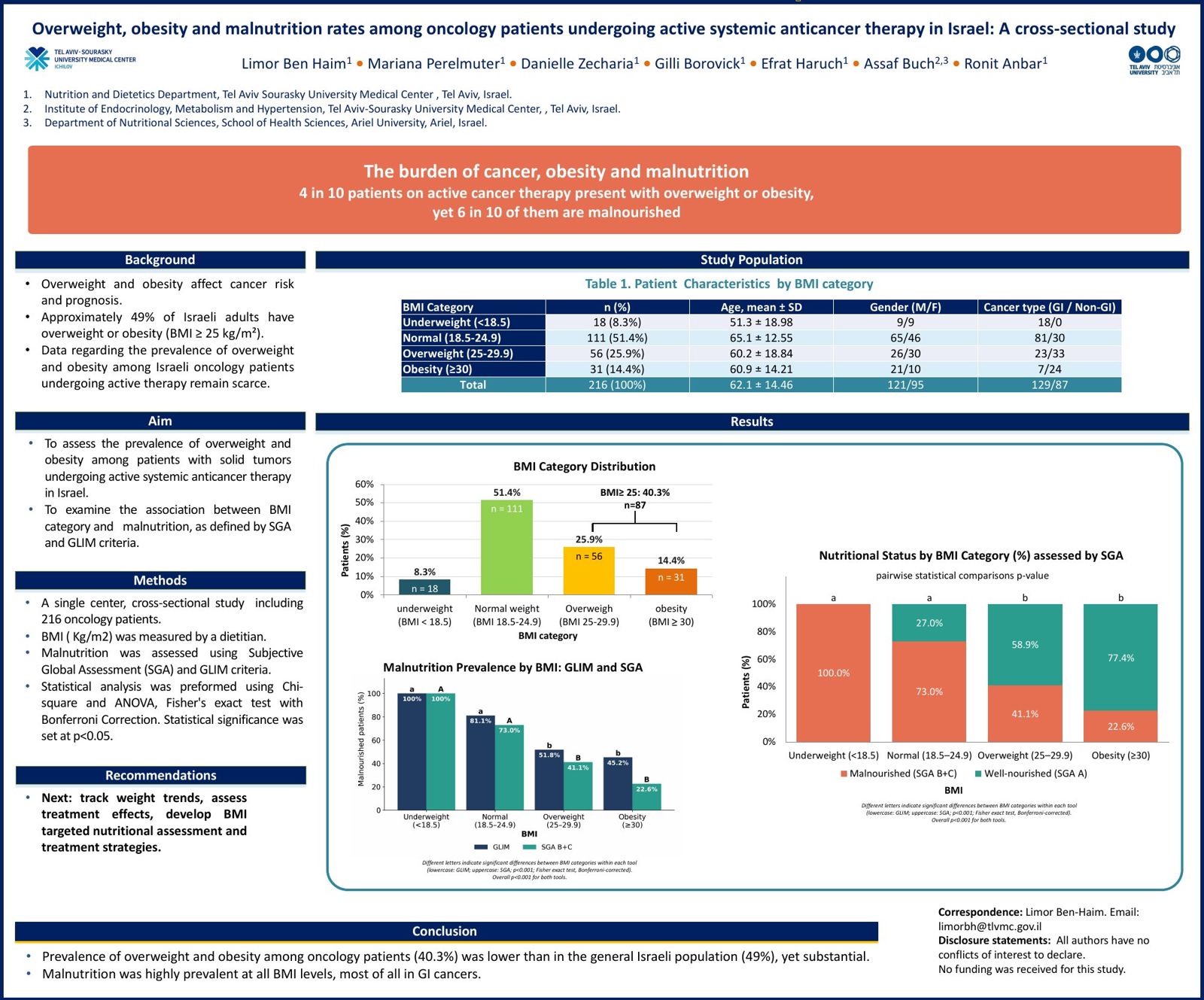
👤 Lead author: Limor Ben Haim, Department of Nutrition and Dietetics, Tel Aviv Medical Center (Ichilov).
All authors: Limor Ben Haim, Mariana Perelmuter, Danielle Zecharia, Gilli Borovick, Efrat Haruch, Assaf Buch, Ronit Anbar
The study looked at 216 patients with solid tumors during active cancer treatment. 40.3% had a BMI of 25 or more. This is lower than the 49% in Israel’s general population, but still high. The poster’s key message is moving and important: four in ten have overweight or obesity, and yet six in ten of them are malnourished.
In fact, malnutrition appeared at every BMI level, especially in digestive cancers. I have written at length about the link between obesity and cancer.
💊 Israeli obesity research on GLP-1 drugs: the brain and nutrition
📌 Poster 674
GLP-1 drugs and the risk of dementia and Parkinson’s
Click the image to open the full poster
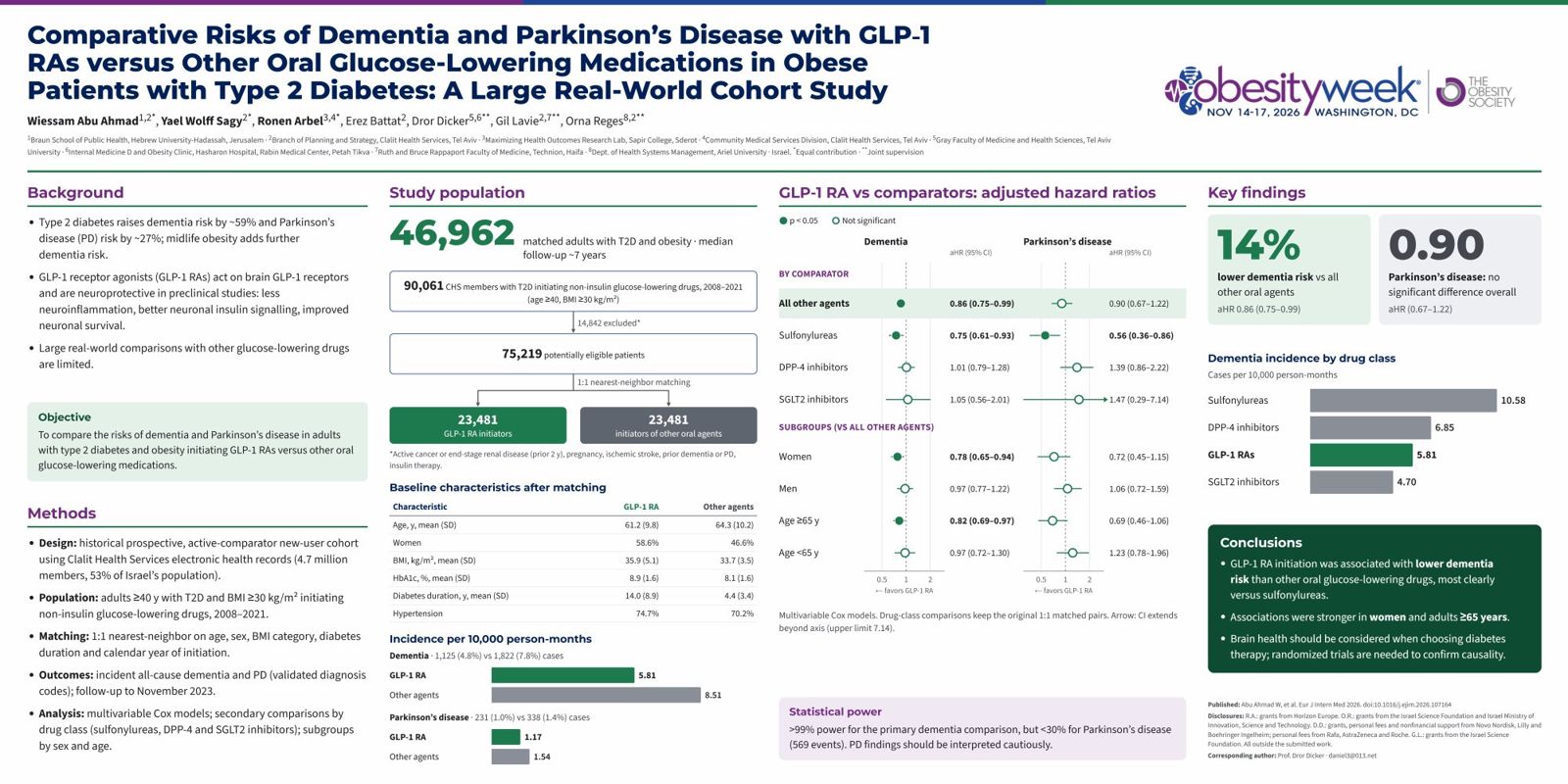
👤 Lead authors: Wiessam Abu Ahmad, Dr. Yael Wolff Sagy and Ronen Arbel, supervised by Prof. Dror Dicker (HaSharon, Rabin), Dr. Gil Lavie and Dr. Orna Reges.
All authors: Wiessam Abu Ahmad, Yael Wolff Sagy, Ronen Arbel, Erez Battat, Dror Dicker, Gil Lavie, Orna Reges
The researchers compared 46,962 Clalit adults with type 2 diabetes and obesity, followed for about seven years. Of these, half started a GLP-1 drug, and half another oral diabetes drug.
- Dementia risk fell by 14% (aHR 0.86): 4.8% versus 7.8%.
- Versus sulfonylureas: dementia aHR 0.75 and Parkinson’s aHR 0.56.
- However, versus DPP-4 and SGLT2 inhibitors, the difference was not significant.
- Above all, the link stood out in women (aHR 0.78) and from age 65 (aHR 0.82).
For Parkinson’s, however, the authors caution that the study is too small to decide. The study was published in the European Journal of Internal Medicine. I have written before about protecting brain health.
📌 Poster 675
GLP-1 drugs and nutritional deficiencies
Click the image to open the full poster
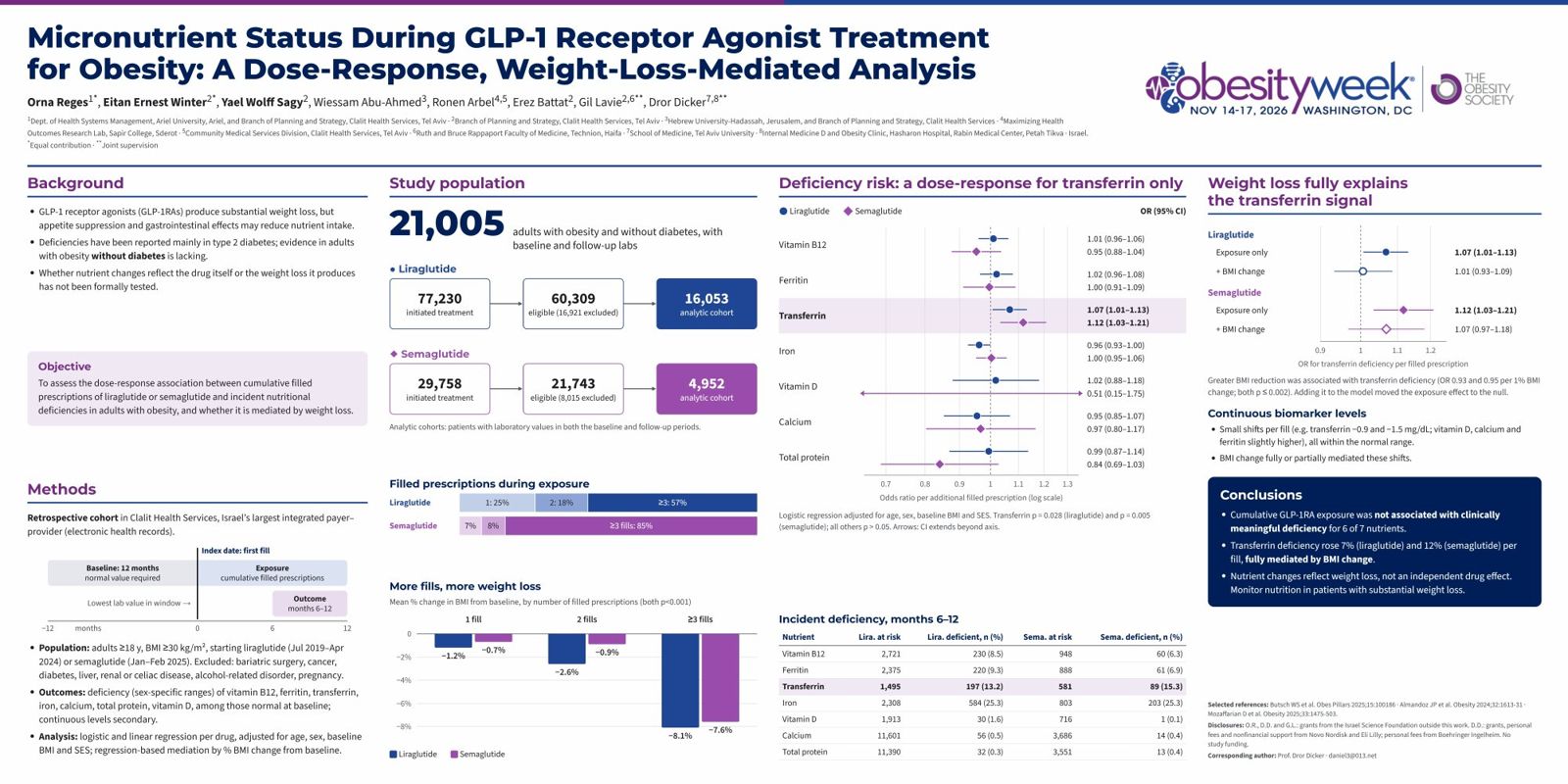
👤 Lead authors: Dr. Orna Reges and Eitan Winter, Clalit and Ariel University, supervised by Dr. Gil Lavie and Prof. Dror Dicker.
All authors: Orna Reges, Eitan Ernest Winter, Yael Wolff Sagy, Wiessam Abu-Ahmed, Ronen Arbel, Erez Battat, Gil Lavie, Dror Dicker
The study included 21,005 adults with obesity and without diabetes: 16,053 started liraglutide and 4,952 semaglutide. Overall, for 6 of 7 nutrition markers, treatment length was not linked to deficiency. Only transferrin deficiency rose, by 7% with liraglutide and 12% with semaglutide per prescription fill. However, weight loss explained this link entirely, and all changes stayed within the normal range.
The takeaway: the changes come from the weight loss, not from the drug itself. I wrote a full guide on nutritional deficiencies with weight-loss drugs.
🏃 Metabolism and physical activity
📌 Poster 336
Israeli obesity research: metabolism drops more than expected
Click the image to open the full poster
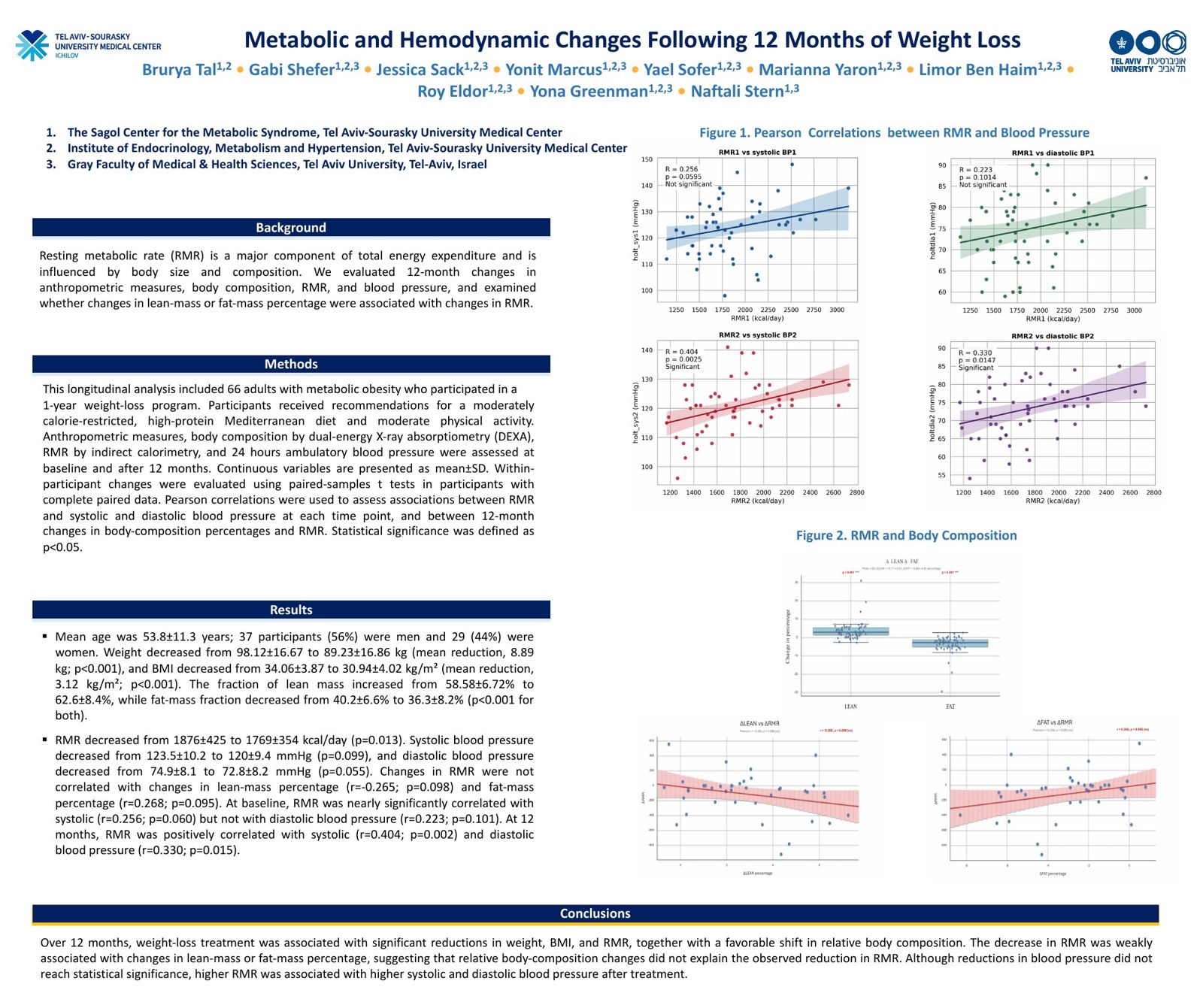
👤 Lead author: Dr. Brurya Tal, Segol Center for the Metabolic Syndrome and Institute of Endocrinology, Tel Aviv Medical Center (Ichilov).
All authors: Brurya Tal, Gabi Shefer, Jessica Sack, Yonit Marcus, Yael Sofer, Marianna Yaron, Limor Ben Haim, Roy Eldor, Yona Greenman, Naftali Stern
66 adults with metabolic obesity followed a one-year program: a high-protein Mediterranean diet, a moderate calorie deficit and moderate activity. Weight fell by 8.9 kg on average, from 98.1 to 89.2. At the same time, the lean share of the body rose from 58.6% to 62.6%.
Even so, resting metabolic rate fell from 1,876 to 1,769 calories a day. Yet the better body composition did not explain this drop. I also wrote a separate article about this study.
📌 Poster 045 and talk
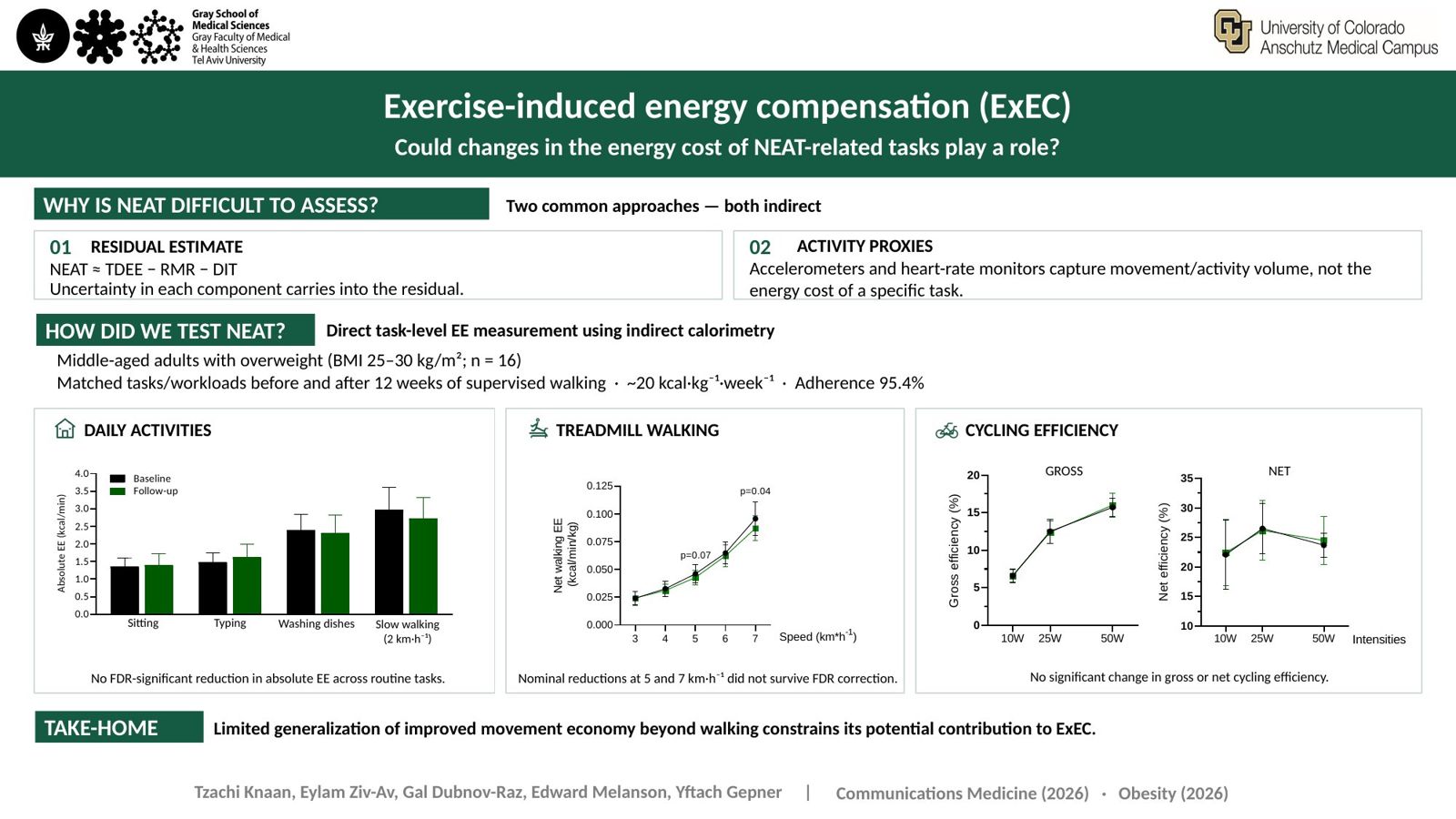
Does the body become more economical after training?
Click the image to open the full poster
👤 Lead author: Dr. Tzachi Knaan, Tel Aviv University. He also presented the study as a rapid-fire talk.
All authors: Tzachi Knaan, Eylam Ziv-Av, Gal Dubnov-Raz, Edward Melanson, Yftach Gepner
Weight loss from exercise tends to be smaller than expected. This is called exercise-induced energy compensation (ExEC). The study asked whether the body becomes more economical in everyday movement after training. You will find the details and the poster findings in the talks section below.
🧬 Genetics and rare syndromes
📌 Poster 107
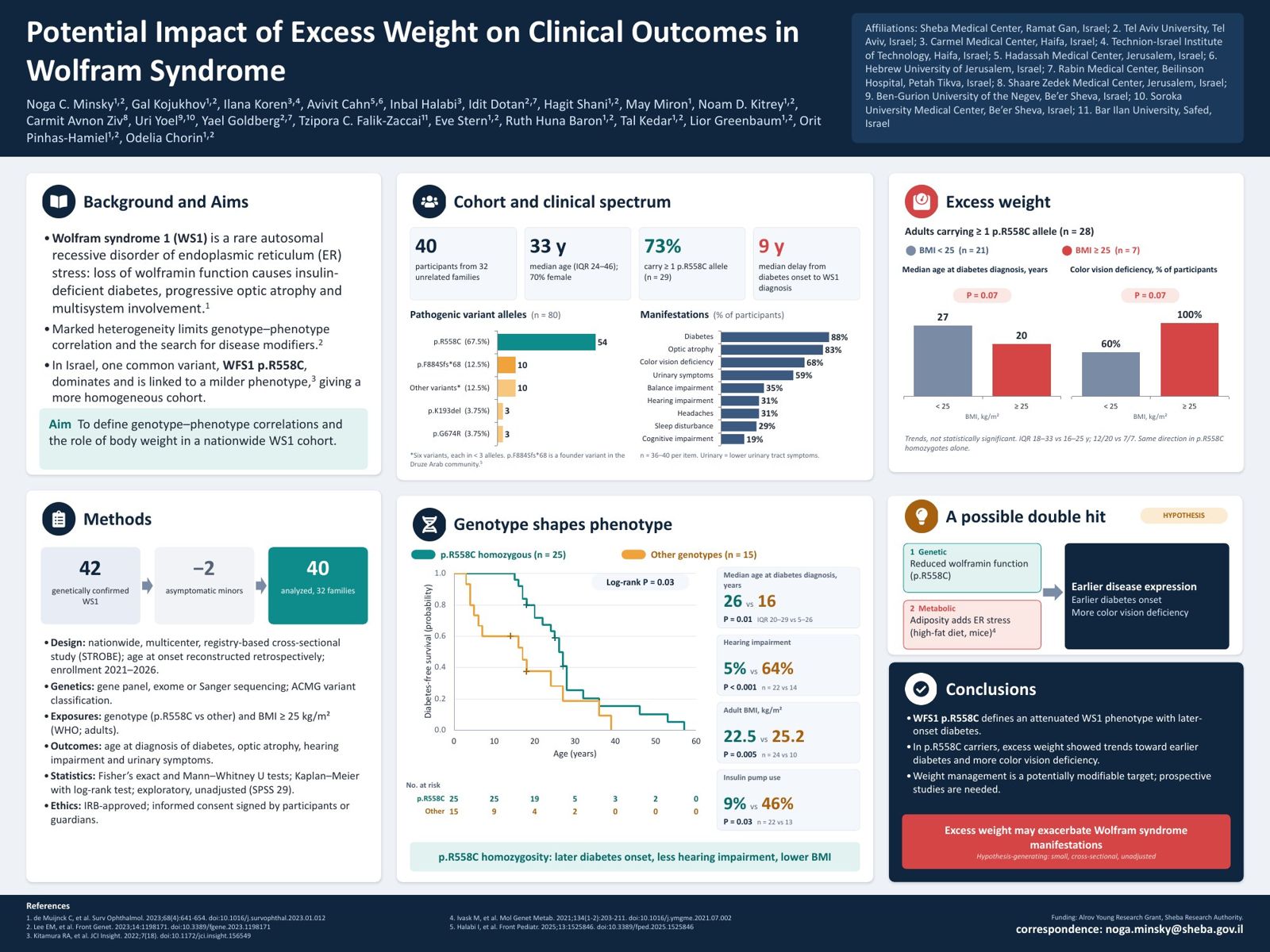
Israeli obesity research in Wolfram syndrome: excess weight brings diabetes earlier
Click the image to open the full poster
👤 Lead author: Dr. Noga Minsky, Sheba Medical Center and Tel Aviv University.
All authors: Noga C. Minsky, Gal Kojukhov, Ilana Koren, Avivit Cahn, Inbal Halabi, Idit Dotan, Hagit Shani, May Miron, Noam D. Kitrey, Carmit Avnon Ziv, Uri Yoel, Yael Goldberg, Tzipora C. Falik-Zaccai, Eve Stern, Ruth Huna Baron, Tal Kedar, Lior Greenbaum, Orit Pinhas-Hamiel, Odelia Chorin
Wolfram syndrome is a rare genetic disease that causes diabetes and vision loss. In Israel, however, one variant dominates, p.R558C, which is linked to a milder form. To study it, the researchers built a national registry of 40 participants from 32 families.
- Carriers of two copies of the variant developed diabetes at 26, versus 16 (P=0.01).
- In adults with a BMI of 25 or more, diabetes appeared at 20, versus 27 (P=0.07). This is only a trend.
- The hypothesis: a double hit, genetic and metabolic. So weight management may affect the course of the disease.
📌 Poster 890
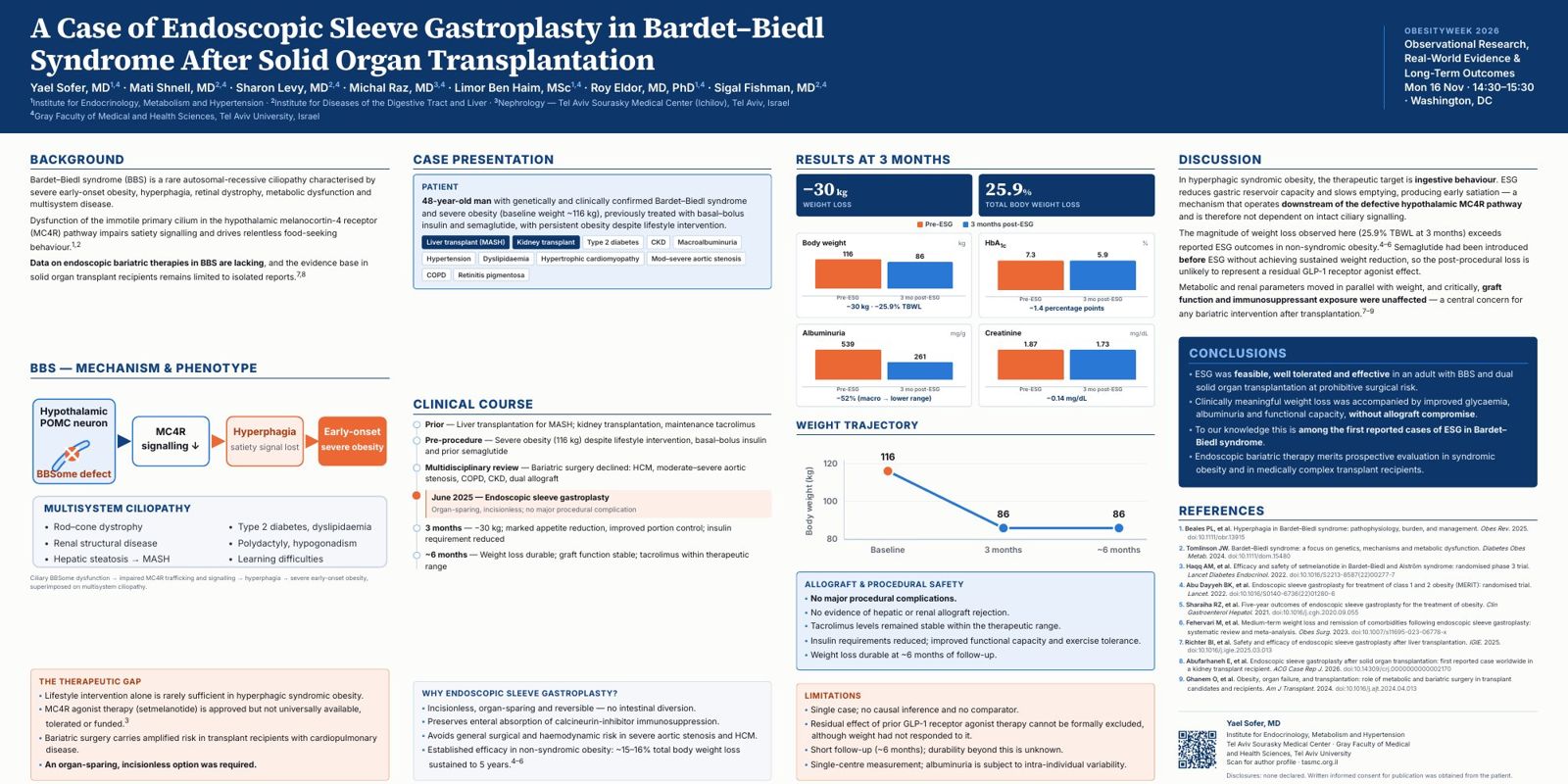
Israeli obesity research and procedures: an endoscopic sleeve after two transplants
Click the image to open the full poster
👤 Lead author: Dr. Yael Sofer, Institute of Endocrinology, Tel Aviv Medical Center (Ichilov).
All authors: Yael Sofer, Mati Shnell, Sharon Levy, Michal Raz, Limor Ben Haim, Roy Eldor, Sigal Fishman
This is a story that reminds us why we chose medicine. A 48-year-old man with Bardet-Biedl syndrome, a genetic disease that causes constant hunger (hyperphagia), had a liver transplant and a kidney transplant. At the time, he weighed 116 kg, and regular surgery was too risky. In June 2025 he had endoscopic sleeve gastroplasty (ESG).
- After 3 months he had lost 30 kg, 25.9% of his weight.
- HbA1c, the average blood sugar marker, fell from 7.3% to 5.9%.
- In addition, albuminuria fell by 52%, with no graft rejection and no major complications.
I wrote a full guide on non-surgical treatment options.
💡 Made in Israel: Israeli obesity research and innovation
📌 Poster 798
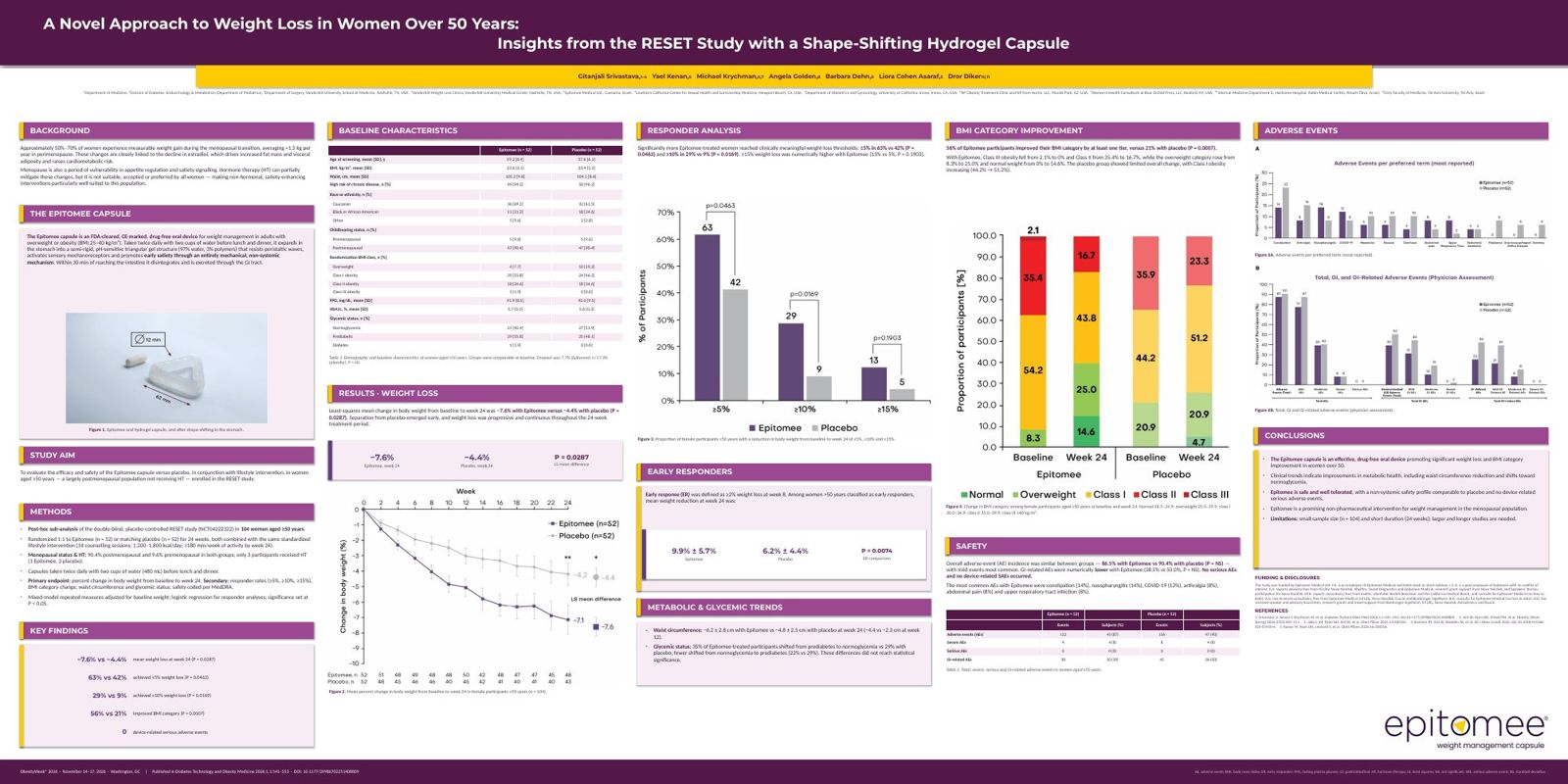
The Epitomee capsule in women over 50
Click the image to open the full poster
👤 Lead author: Dr. Gitanjali Srivastava, Vanderbilt University, with Dr. Yael Kenan and Liora Cohen Asaraf of Epitomee in Caesarea, and Prof. Dror Dicker.
All authors: Gitanjali Srivastava, Yael Kenan, Michael Krychman, Angela Golden, Barbara Dehn, Liora Cohen Asaraf, Dror Diker
The Israeli capsule expands in the stomach and creates a feeling of fullness, without a drug. The poster presents 104 women aged 50 and over from the RESET trial, most of them after menopause. I have written before about the Epitomee capsule.
- After 24 weeks: 7.6% weight loss versus 4.4% with placebo.
- 63% lost 5% or more, versus 42%. 29% lost 10% or more, versus 9%.
- 56% dropped at least one BMI class, versus 21%.
- Meanwhile, safety was similar to placebo. Limitations: a small, short study funded by the company.
📌 Posters 094 and 095
A coffee-protein peptide for fullness
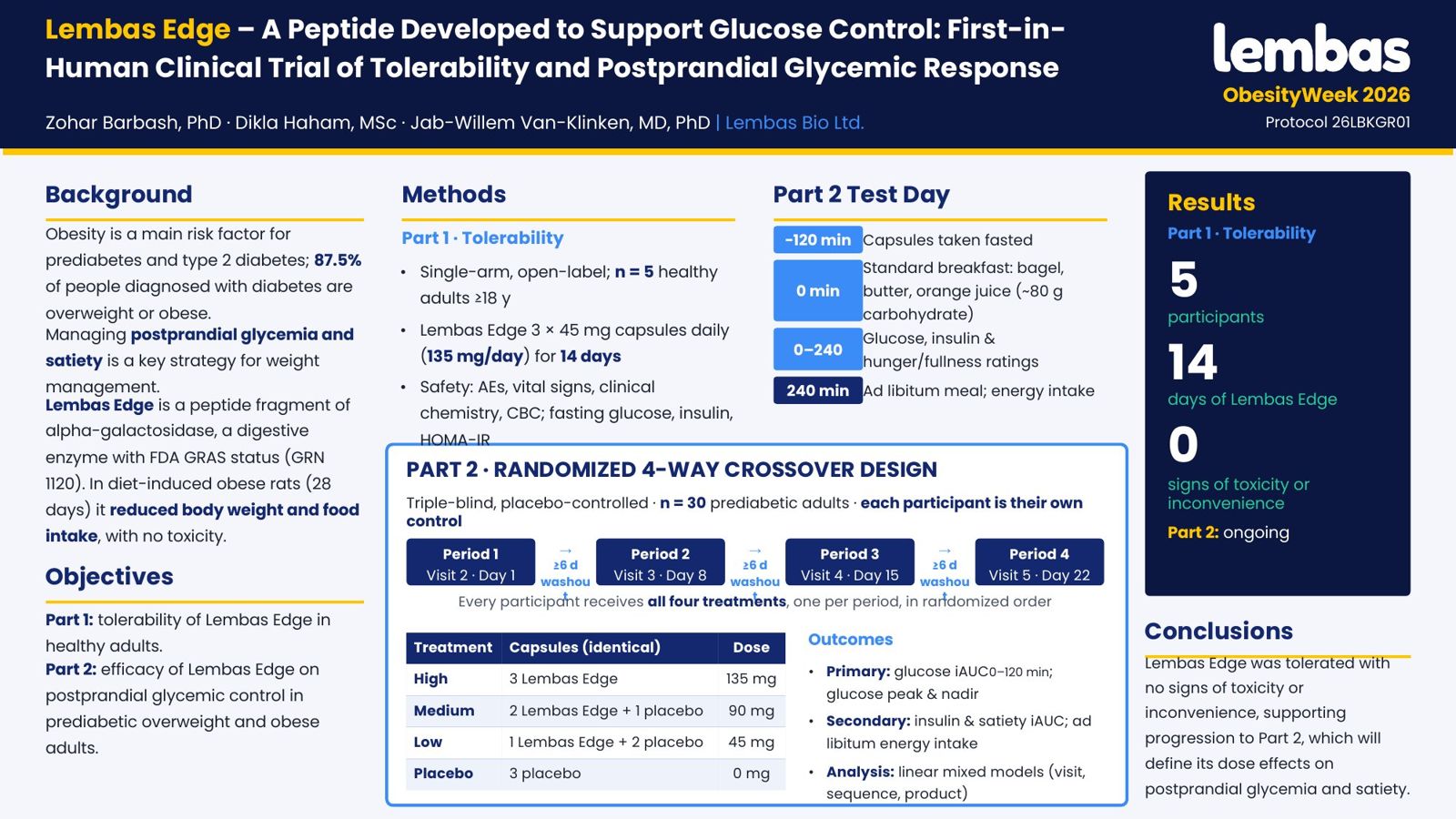
Click the image to open the full poster
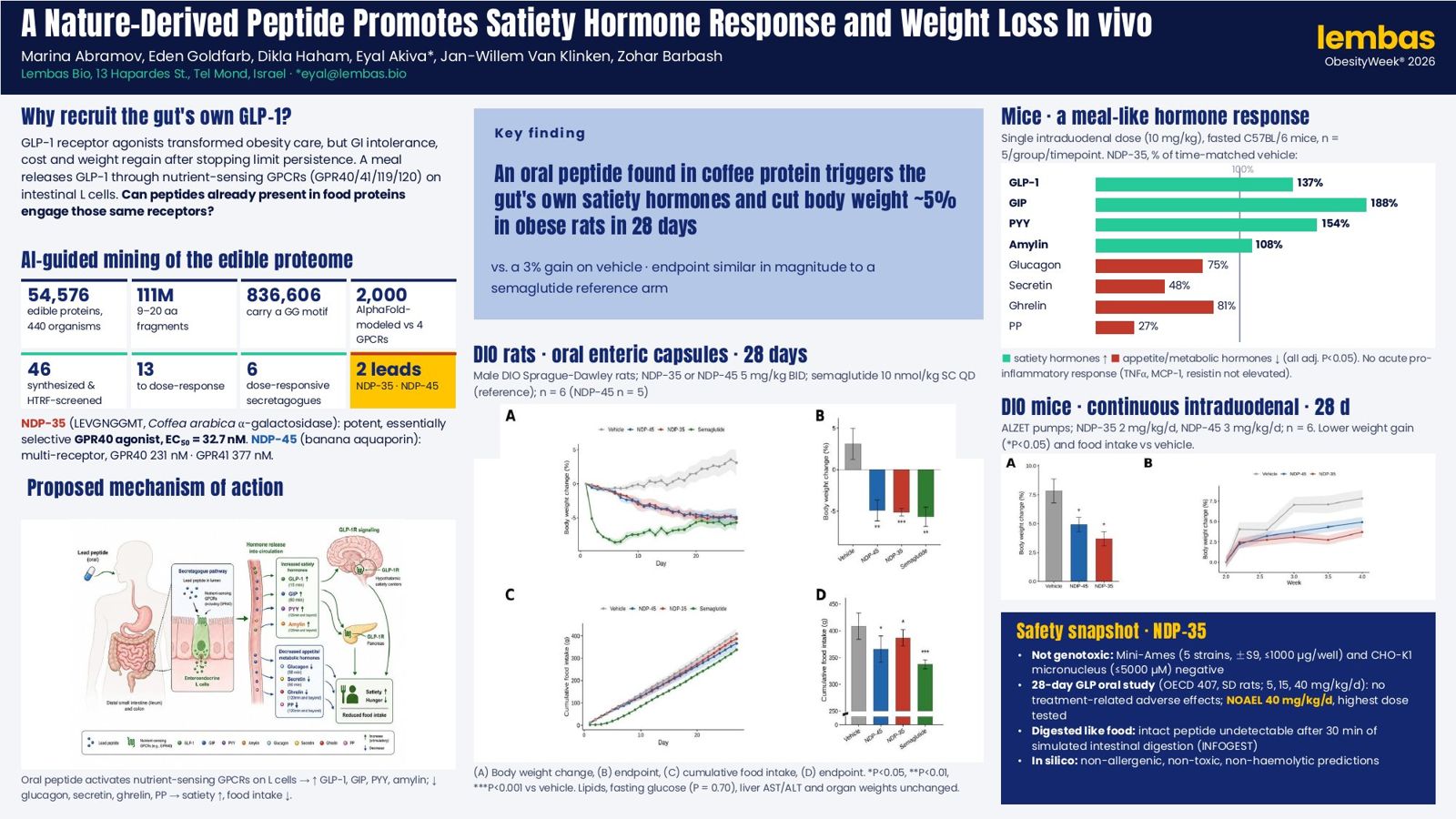
Click the image to open the full poster
👤 Lead authors: Dr. Zohar Barbash (094) and Marina Abramov (095), Lembas Bio, Tel Mond.
All authors, poster 094: Zohar Barbash, Dikla Haham, Jan-Willem Van Klinken
All authors, poster 095: Marina Abramov, Eden Goldfarb, Dikla Haham, Eyal Akiva, Jan-Willem Van Klinken, Zohar Barbash
Artificial intelligence screened 54,576 edible proteins. From these, the team then chose a peptide from a coffee bean protein that triggers the body’s own fullness hormones.
- In mice: GLP-1 rose to 137% of control, GIP to 188% and PYY to 154%.
- Next, in rats with obesity: about 5% weight loss in 28 days, versus a 3% gain.
- In humans, Part 1: five healthy adults, with no signs of toxicity. Part 2 is still ongoing.
📌 Posters 050 and 051
A molecule that raises energy expenditure
👤 Lead author: Dr. Anton Petrov, Mitotech London, with Dr. Maxim Skulachev, Mitotech Rishon LeZion.
All authors: Anton Petrov, Maxim V. Skulachev
The data come from the abstracts of poster 050 and poster 051. In mice, after 33 days, the molecule SkQ1 cut weight by 24.6%, and semaglutide by 27.3%. Together, the combination cut 32.8%. Even so, food intake with SkQ1 stayed at 92% of control. In other words, the loss came mainly from higher energy expenditure. All data so far are from mice.
📌 Poster 168
The microbiome changes after a sleeve
👤 Lead author: Dr. Sally Vanegas, New York University, with Prof. Eran Segal of the Weizmann Institute.
All authors: Sally M. Vanegas, Silvia Curado, Anastasia Godneva, Eran Segal, Melanie Jay
According to the abstract, gut bacterial diversity rose as early as six weeks after sleeve gastrectomy and stayed high for up to two years. Specifically, Akkermansia muciniphila increased, and inflammatory bacteria decreased. In addition, the microbiome before surgery predicted some of the outcomes. I have written before about the microbiome after bariatric surgery.
📋 Policy: without guidelines, every expert decides differently
📌 Poster 645
Israeli obesity research and policy: variation in care in Israel
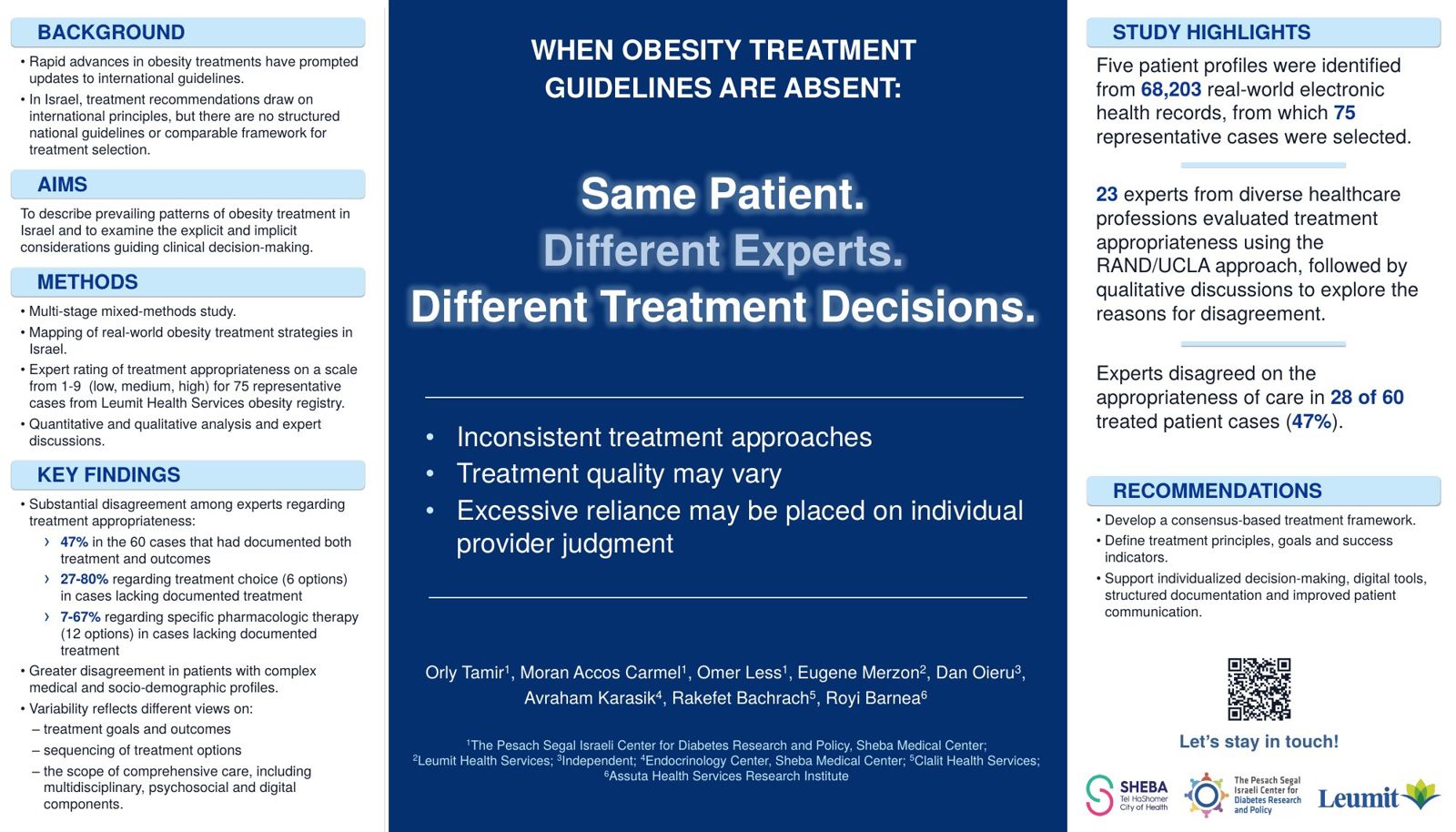
Click the image to open the full poster
👤 Lead author: Dr. Orly Tamir, Pesach Segal Israeli Center for Diabetes Research and Policy, Sheba.
All authors: Orly Tamir, Moran Accos Carmel, Omer Less, Eugene Merzon, Dan Oieru, Avraham Karasik, Rakefet Bachrach, Royi Barnea
23 experts rated real cases drawn from 68,203 Leumit records. In almost half of the cases (47%), they disagreed on whether the treatment was right. Likewise, on the type of treatment, disagreement ranged from 27% to 80%.
So the authors call for an agreed national care framework, with goals and measures of success. I join this call wholeheartedly. I wrote at length about the new drug treatment guidelines.
🎤 Israeli obesity research on stage: the two talks
Beyond the posters, two studies with Israeli partners were presented as talks from the stage. Here is what they presented.
🎤 Talk
Tirzepatide in adolescents with obesity: SURMOUNT-ADOLESCENTS
📅 When and where: Sunday, November 15, around 6:05 pm, Woodrow Wilson Ballroom, in the Lilly session (Oral-074).
👤 Presenter: Prof. Aaron Kelly. Israeli co-author: Prof. Marianna Rachmiel, pediatric endocrinologist, Shamir Medical Center (Assaf Harofeh).
All authors: Aaron Kelly (presenter), Karthik Chandrasekhar P, Marianna Rachmiel, Gitanjali Srivastava, Daniel Hsia, Erika Fortes, Madhumita Murphy, Apurva Prakash
Tirzepatide (Mounjaro) has already proven effective in adults. However, data in teens are scarce. So the SURMOUNT-ADOLESCENTS trial tested the drug in adolescents.
- A phase 3, double-blind, placebo-controlled, multicenter trial.
- Participants included teens with obesity (BMI at or above the 95th percentile for age and sex), as well as teens with overweight (85th percentile or above) and at least one complication.
- 2:1 randomization: two thirds received tirzepatide at the maximum tolerated dose, and one third placebo, for 72 weeks, along with lifestyle treatment.
- Finally, the primary endpoint was the percent change in BMI. The secondary endpoint was the distance from the 95th percentile, a child-appropriate measure.
According to the abstract, tirzepatide lowered BMI more than placebo and improved heart and metabolic risk factors. In addition, safety was similar to other GLP-1 drugs. The exact numbers were shown only in the talk itself.
You can read more about Lilly at the meeting in my article on Lilly at ObesityWeek, and about treating teens in my guide to treating obesity in children.
🎤 Talk
Dr. Tzachi Knaan’s rapid-fire talk: does the body save energy after training?
📅 When and where: Monday, November 16, 10:30 am, National Harbor 10–11, in the early-career rapid-fire session.
👤 Presenter: Dr. Tzachi Knaan, Tel Aviv University.
The talk and the poster are the same study, and the data here are those shown on the poster.
Weight loss from exercise tends to be smaller than expected. This is called exercise-induced energy compensation (ExEC). Compensation can come from a change in energy expenditure or in energy intake. One possibility is a change in the energy cost of everyday movement that is not structured exercise.
Such movement is called NEAT (non-exercise activity thermogenesis). However, its role in compensation is hard to measure directly. One way is to calculate it as a remainder: total daily energy expenditure, minus resting metabolism, minus the thermic effect of food. But the uncertainty in each part adds up and weakens the estimate. Another way is accelerometers or heart rate monitors. Still, they describe how much a person moves, but not the energy a given task requires.
How the study was done and what it found
So the researchers measured directly, with indirect calorimetry, the energy of everyday tasks, treadmill walking and cycling. Then they measured before and after 12 weeks of supervised walking, using the same tasks and the same workloads.
16 adults with overweight took part, with a mean age of 38.9±3.7 years and a mean BMI of about 28. Overall, body weight stayed similar. In contrast, lean mass rose by about 1 kg, and fat mass fell by about 1.2 kg. In addition, adherence to the program reached 95.4%.
- In treadmill walking at 5 and 7 km/h, energy expenditure showed nominal drops. However, after correction for multiple comparisons they were no longer significant.
- Likewise, cycling efficiency showed no significant change.
- Similarly, the everyday tasks tested also showed no significant change in energy expenditure.
What does this mean? According to the researchers, better movement economy after training is probably limited to the trained task and its movement pattern. In other words, it does not necessarily carry over to other tasks. The reason may be the muscles and movement patterns that the training uses.
✅ What Israeli obesity research means for you
- Ask for a full assessment, not just a weigh-in: waist size, muscle strength, protein, B12 and folate.
- On drug treatment, combine a high-protein diet with strength training.
- A child with excess weight needs care now, not when they grow up.
- Even at a high weight, malnutrition is possible. It is worth checking.
- You do not need to wait for a perfect plan. One step today and another tomorrow is enough. After all, a habit is born from a single step.
⭐ The bottom line
This week I watched Israeli researchers present their work to colleagues from around the world. It is moving, and at the same time it is a responsibility. Israeli obesity research shows that the knowledge is already here. So now it needs to reach every patient in Israel.
This article is general information and does not replace personal medical advice.
📚 References
Potential Impact of Excess Weight on Clinical Outcomes in Wolfram Syndrome
Exercise-Induced Energy Compensation Is Mediated by Habitual Activity Metabolic Economy
Lembas Edge – A Peptide Developed to Support Glucose Control: First-in-Human Clinical Trial
A Nature-Derived Peptide Promotes Satiety Hormone Response and Weight Loss In vivo
SkQ1, an FFA-Gated EE Accelerator, Matches Semaglutide Weight Loss with Preserved Food Intake
Obesity and Genetics Are Independently Associated with Vitamin B12 and Folate Levels
Gut Microbiome Remodeling After Sleeve Gastrectomy is Associated with Weight and Glycemic Outcomes
Metabolic and Hemodynamic Changes Following 12 Months of Weight Loss
Efficacy and Safety of Tirzepatide Among Adolescents with Obesity: Results from SURMOUNT-ADOLESCENTS
The Immediate Burden: Childhood Obesity is Associated with Increased Overall Healthcare Use
When Obesity Treatment Guidelines Are Absent
A Case of Endoscopic Sleeve Gastroplasty in Bardet–Biedl Syndrome After Solid Organ Transplantation
The posters and talks were presented at ObesityWeek in Washington. Some studies were funded by the companies that developed the treatments, as noted on the posters.