By Dr. Asnat Raziel, bariatric surgeon specializing in obesity treatment, metabolic health and healthy longevity; Director of the Multidisciplinary Center for Obesity Treatment, Assia Medical, Assuta Ramat HaChayal, Tel Aviv
CagriSema in diabetes and obesity: what’s new
CagriSema in diabetes showed large reductions in both weight and blood sugar in people with type 2 diabetes, compared with semaglutide alone. That is the conclusion of the REIMAGINE 2 trial, whose results came out in February 2026. This combination drug is part of a deep revolution in obesity treatment. However, as of early November 2026, it is still not approved for use.
The first generation of GLP-1 drugs changed the clinical standard. Now Novo Nordisk is trying to go a step further. It combines two hormones in a single weekly injection. This development matters especially for people with obesity and type 2 diabetes.
What is CagriSema and what makes it different?
CagriSema is a combination drug with two active ingredients. The first is semaglutide, the active ingredient in Wegovy and Ozempic. The second is cagrilintide, an analog of the hormone amylin.
GLP-1 acts on the satiety centers in the brain, slows stomach emptying and reduces appetite. The beta cells of the pancreas release amylin together with insulin. It also increases fullness, reduces the amount of food eaten and helps regulate blood sugar. In other words, the combination switches on two satiety pathways at the same time. You can read more in my article on amylin-based obesity treatment.
CagriSema in diabetes: the REIMAGINE 2 trial
The REIMAGINE 2 trial lasted 68 weeks and included 2,713 adults with type 2 diabetes. Their blood sugar was not controlled on metformin, with or without an SGLT2 inhibitor. Average HbA1c at the start of the trial was 8.2%. HbA1c reflects average blood sugar over the past three months.
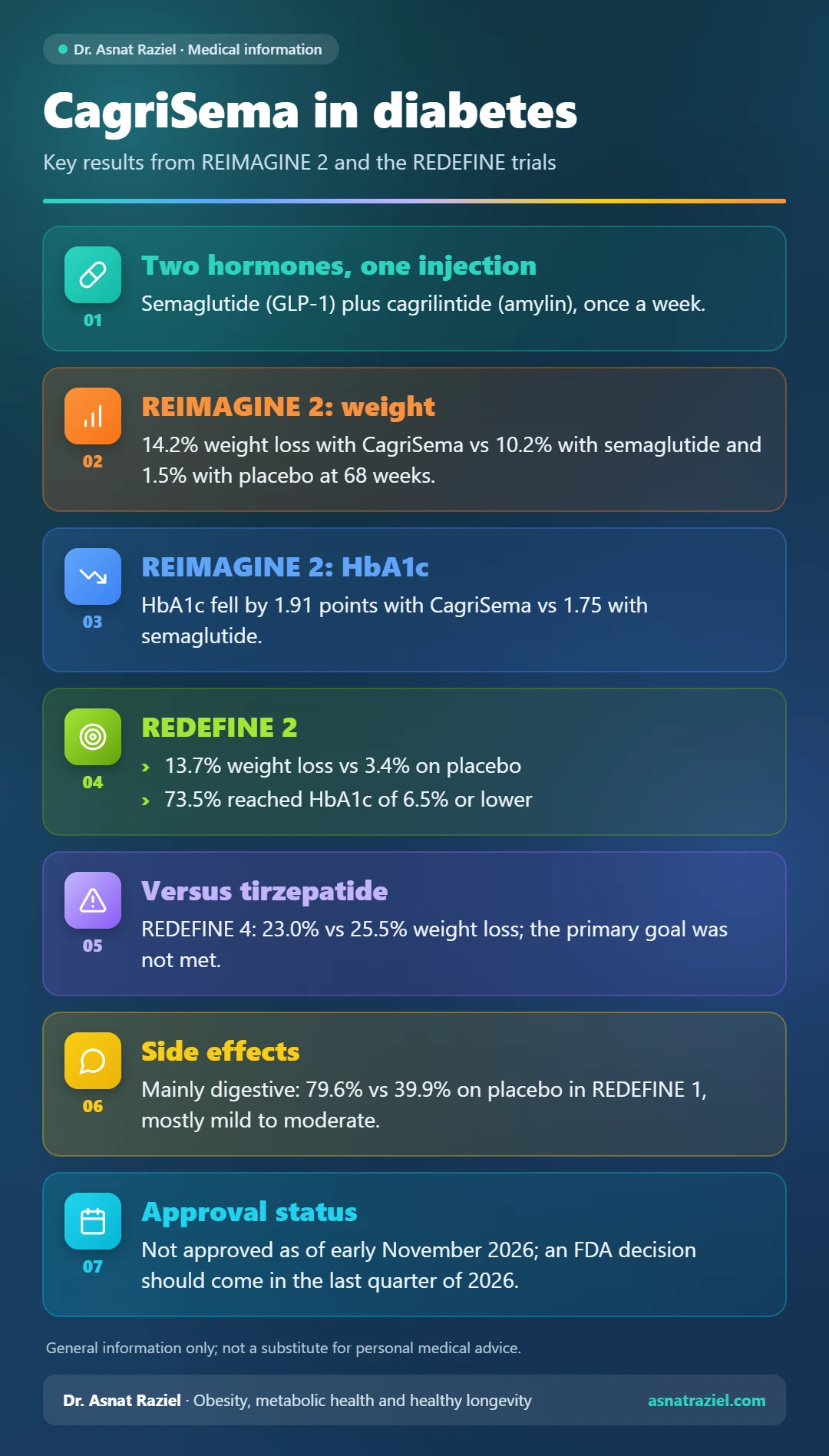
In the CagriSema 2.4/2.4 mg group, weight dropped by 14.2% on average. By comparison, semaglutide 2.4 mg lowered weight by 10.2%, and placebo by 1.5%. In addition, HbA1c fell by 1.91 percentage points with CagriSema, compared with 1.75 with semaglutide. Both differences were statistically significant. The researchers did not see weight leveling off by week 68.
It is important to be precise about these numbers. They refer to participants who stayed on treatment. In the analysis that included all participants, weight loss was 12.9% with CagriSema, compared with 9.2% with semaglutide. The researchers presented the full results in June 2026 at the American Diabetes Association (ADA) meeting and published them in The Lancet Diabetes & Endocrinology. I reviewed more data in my article on the results with the lower dose of the drug.
What do the REDEFINE trials tell us?
The REDEFINE program tested the drug in people with obesity. The REDEFINE 1 trial included 3,417 adults without diabetes. After 68 weeks, weight dropped by 20.4% with CagriSema, compared with 3.0% with placebo.
The REDEFINE 2 trial included 1,206 adults with obesity and type 2 diabetes. Weight dropped by 13.7% with CagriSema, compared with 3.4% with placebo. In addition, 73.5% of patients reached an HbA1c of 6.5% or lower, compared with 15.9% on placebo. That is why CagriSema in diabetes is interesting for blood sugar control as well. You will find a broad review of the program in my article on the REDEFINE trials.
The test against tirzepatide
In the REDEFINE 4 trial, researchers compared CagriSema directly with tirzepatide, the active ingredient in Mounjaro. The trial included 809 adults and lasted 84 weeks. Weight loss was 23.0% with CagriSema and 25.5% with tirzepatide 15 mg. In other words, the trial did not meet its primary goal. There are more details in my article on how CagriSema and tirzepatide compared head to head.
Safety and side effects of CagriSema in diabetes and obesity
The side effect profile is similar to that of GLP-1 drugs. The common side effects affect the digestive system: nausea, vomiting, diarrhea and constipation. In REDEFINE 1, 79.6% of patients on CagriSema reported such side effects, compared with 39.9% on placebo. Most were temporary and mild to moderate, especially while the dose was going up.
Still, we need to balance high efficacy against tolerability and safety. This is especially true for chronic, long-term treatment. You can read more in my guide to the side effects of obesity drugs.
When will CagriSema reach patients?
Novo Nordisk submitted an application for FDA approval on December 18, 2025. The application covers the treatment of obesity, or overweight with a related condition, alongside diet and physical activity. A decision should come in the last quarter of 2026. Meanwhile, the drug is not approved in the United States, in Europe or in Israel.
Even after US approval, the road to Israel is long. The Ministry of Health must first register the drug, and only then does the question of coverage come up. So people who are suitable for treatment today can use the drugs that already exist. Wegovy, Mounjaro and Foundayo are already available, and each suits a different patient profile.
What CagriSema in diabetes means in the clinic
Some patients do not reach their weight loss goals with a GLP-1 drug alone. In others, the effect fades over time. The combination with amylin offers synergy on the hunger and satiety centers in the brain. Clinically, a few extra percentage points of weight loss make a big difference. They improve blood pressure, blood fats and blood sugar control.
Therefore, CagriSema may meet the needs of a challenging group of patients. I mean patients who do not reach optimal control with a GLP-1 drug alone. You can read more about the link between the two diseases in my guide to obesity and type 2 diabetes.
Where is the field heading?
Obesity medicine is moving toward combining mechanisms and personalizing treatment. Instead of activating a single receptor, the new drugs mimic the body’s natural hormonal system. CagriSema is another example of this trend, alongside the next generation of obesity drugs.
At the same time, open questions remain. There are still no data on the drug’s effect on heart events. In addition, long-term data on keeping weight off after stopping treatment are missing. The answers will come from the program’s follow-up trials.
The bottom line on CagriSema in diabetes
CagriSema in diabetes and obesity showed strong results compared with semaglutide alone. On the other hand, against tirzepatide it did not prove to be equivalent. Ultimately, it may expand our toolbox for treating a chronic disease that affects many body systems. The FDA decision should come soon, and we will update when it arrives.
The information in this article is general and does not replace personal medical advice.
References
Coadministered Cagrilintide and Semaglutide in Adults with Overweight or Obesity
Cagrilintide-Semaglutide in Adults with Overweight or Obesity and Type 2 Diabetes
The trials were funded by Novo Nordisk, the maker of the drug.