By Dr. Asnat Raziel, bariatric surgeon specializing in obesity treatment, metabolic health and healthy longevity; Director of the Multidisciplinary Center for Obesity Treatment, Assia Medical, Assuta Ramat HaChayal, Tel Aviv
Managing hunger after stopping injections: why it happens
Managing hunger after stopping injections is the focus of this article: what to eat, how to sleep and move, what to track and when to go back to your doctor. You will find the full explanation of the biology of returning appetite in my separate article on why appetite comes back after stopping GLP-1 drugs.
Hunger after stopping weight loss injections is one of the most common complaints I hear in my clinic. For months, appetite was quiet, and suddenly it comes back with full force. This is not weakness and not a lack of discipline. It is an expected biological response, and there are practical ways to deal with it. In this article, I will explain what happens in the body, what the studies show and how to build a plan that calms the hunger.
What the injections did to appetite
Drugs such as semaglutide, known as Wegovy, and tirzepatide, known as Mounjaro, mimic natural fullness hormones. They act on the appetite centers in the brain and slow stomach emptying. That is why patients feel full quickly, think less about food and eat smaller portions. I wrote about this mechanism in detail in my article on GLP-1 drugs and the brain.
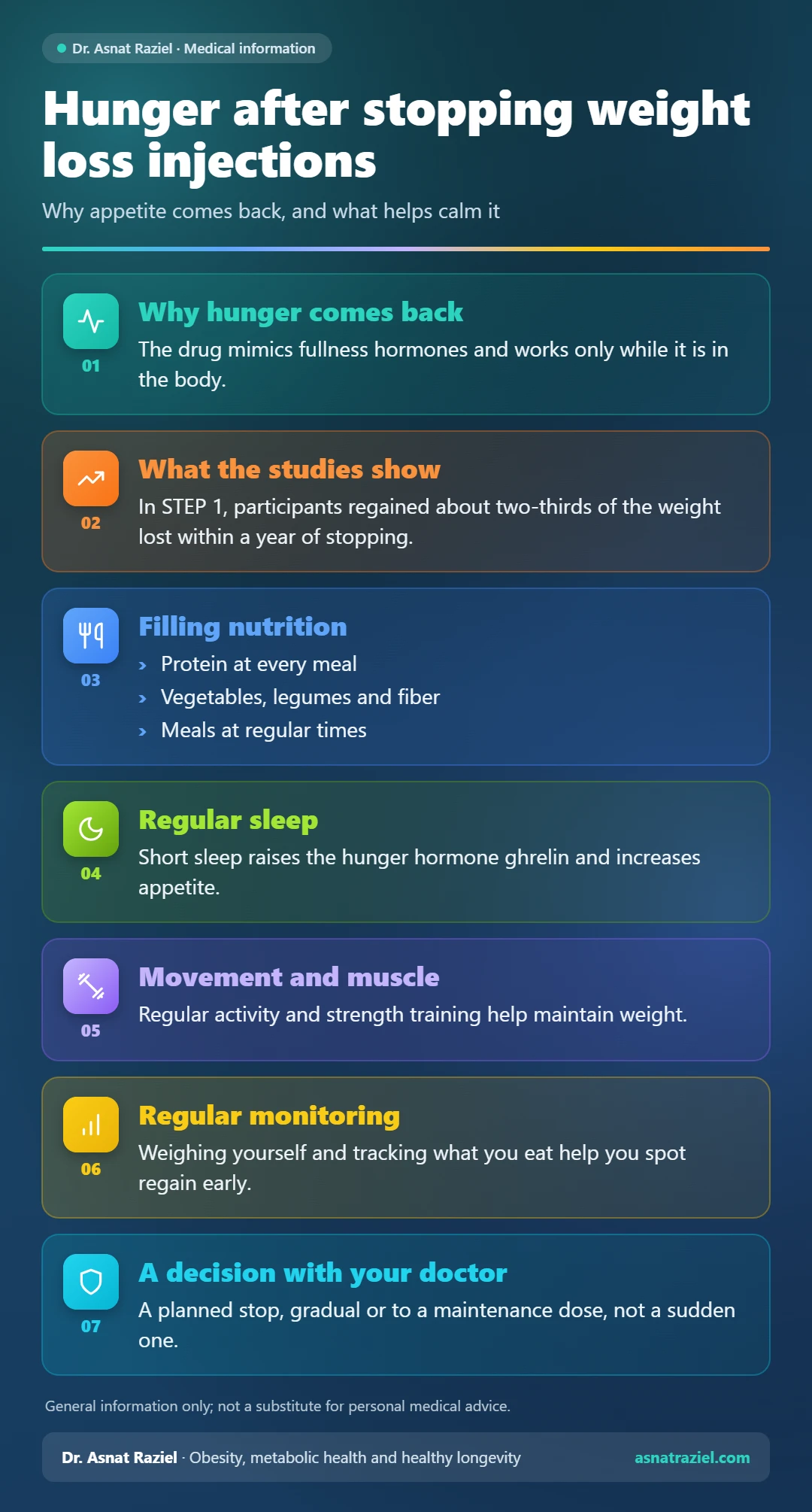
However, the drug does not “fix” the regulation system for good. It works only as long as it is in the body. When you stop it, the artificial fullness signal disappears within a few weeks.
Hunger after stopping weight loss injections: what the studies show
The best data come from studies in which some participants switched to placebo. For example, in the STEP 1 trial extension, researchers followed 327 participants for a year after they stopped semaglutide. During treatment, they lost an average of 17.3% of their body weight. Within a year of stopping, they regained about two-thirds of the loss and were left with a net loss of 5.6%. In addition, blood pressure, blood lipids and blood sugar values mostly returned to their starting point.
The STEP 4 trial showed a similar picture. Participants who switched to placebo gained 6.9% of their body weight over 48 weeks. By contrast, those who continued treatment lost another 7.9%. Likewise, in the SURMOUNT-4 trial with tirzepatide, switching to placebo led to a 14.0% weight gain within a year. Meanwhile, those who continued treatment lost another 5.5%.
In other words, what weight does after stopping mainly reflects the return of hunger.
Hormones: what drives hunger after stopping weight loss injections
The body treats weight loss as a threat, so it switches on defense mechanisms. A classic study in NEJM examined appetite hormones in 50 people who lost weight on a low-calorie diet. Even a year after the weight loss, levels of the fullness hormones leptin, PYY and CCK remained low. At the same time, the hunger hormone ghrelin stayed high, and so did the feeling of hunger itself. This study did not involve injections, but it explains the biology of any weight loss.
So when the drug stops blocking these signals, you feel them at full strength. Some patients describe the return of food noise, meaning nonstop thoughts about food. In addition, fullness arrives late, and portions grow almost without notice.
Managing hunger after stopping injections with nutrition
There is no magic food, but there are principles that increase the fullness you get from each meal. The goal is to eat a reasonable amount and feel full for a long time.
Protein at every meal
Protein is especially filling, and it also helps preserve muscle mass. It is worth including a protein source at every meal: eggs, yogurt, low-fat cheese, fish, chicken, tofu or legumes. That way, the meal lasts for hours, not minutes.
Fiber, volume and water
Vegetables, legumes and whole grains fill the stomach with fewer calories. For example, a plate that is half vegetables slows the pace of eating and gives fullness time to arrive. In addition, a glass of water before a meal helps some people tell thirst from hunger.
Regular meals instead of snacking
Skipping meals leads to strong hunger in the evening. So it is better to set three regular meals plus one planned snack, as needed. Highly processed food, sweet or salty, triggers more eating. It is best not to keep it within easy reach. You will find more ideas in my guide to reducing constant hunger.
Sleep, stress and movement: more ways of managing hunger after stopping injections
Short sleep measurably increases hunger. In a small study of 12 young men, cutting sleep short for two nights lowered leptin by 18% and raised ghrelin by 28%. As a result, hunger rose by 24%, and the desire for high-carbohydrate food rose by 33% to 45%. That is why regular sleep is part of the treatment.
Emotional stress also triggers eating, especially in the evening hours. A short walk, deep breaths or a conversation with a friend can break the cycle. In addition, regular physical activity helps maintain weight, and strength training preserves muscle. According to Harvard’s strategies for maintaining weight loss, people who keep weight off over time tend to be active, weigh themselves regularly and keep track of what they eat. All of these are part of a healthy lifestyle that also protects the heart.
A daily plan for managing hunger after stopping injections
When patients ask me about managing hunger after stopping injections, I build a simple daily plan with them. Breakfast, lunch and dinner each include a protein source and half a plate of vegetables. Before each meal, it helps to drink a glass of water. In addition, we plan one snack as needed and keep highly processed food out of the house. In the evening, when stress triggers eating, a short walk or a few deep breaths can help. Throughout the week, we combine regular activity and strength training and keep a regular sleep schedule. Finally, weighing yourself regularly and tracking what you eat helps you spot weight regain early.
When managing hunger after stopping injections is not enough: when to see your doctor
Obesity is a chronic disease, so stopping treatment is not always the right choice. Studies show that continuing treatment preserves results much better than stopping. If you still decide to stop, it is better to plan it in advance with your doctor. Sometimes we lower the dose gradually, and sometimes patients switch to a maintenance dose. I wrote about this in my article on tapering weight loss drugs gradually.
It is worth going back for a checkup if your weight keeps rising, if hunger is hurting your quality of life or if your blood sugar and blood pressure rise. Likewise, it is worth going back for a checkup when eating feels out of control. There are several medications for obesity and metabolic disease today, and we can tailor a personal solution.
The bottom line on managing hunger after stopping injections
Hunger after stopping weight loss injections is a natural response of the body, not a personal failure. Studies show that without a structured plan, most of the weight comes back within a year. Even so, protein, fiber, regular meals, good sleep and movement help calm the hunger. In addition, you should make the decision to stop together with your doctor, not suddenly.
The information in this article is general and does not replace personal medical advice.
Questions and answers
How long does hunger last after stopping weight loss injections?
There is no single answer. The drug’s effect fades within weeks, but appetite hormones can stay out of balance for a long time. In the study on diet-induced weight loss, the hormone differences lasted at least a year.
Will I regain all the weight?
Not necessarily. In the STEP 1 trial, participants regained on average about two-thirds of the loss within a year, but there was great variation between people. A plan for nutrition, movement and follow-up improves the chance of keeping much of the result.
What should I eat when hunger comes back?
Meals with a protein source, vegetables and fiber, at regular times. It is worth cutting down on highly processed food and sweetened drinks, which are not very filling.
Can I go back on treatment after stopping?
Yes, in many cases you can. The decision depends on why you stopped, your health status and side effects. It is worth discussing this at an appointment with a doctor who knows the field, such as Dr. Asnat Raziel.
References
Long-term persistence of hormonal adaptations to weight loss