By Dr. Asnat Raziel, bariatric surgeon specializing in obesity treatment, metabolic health and healthy longevity; Director of the Multidisciplinary Center for Obesity Treatment, Assia Medical, Assuta Ramat HaChayal, Tel Aviv
Steps to prevent muscle loss: why they matter in any weight loss
This is a hands-on checklist: six steps to prevent muscle loss, in the order you should take them, with a special focus on how to measure and track your muscle along the way. Preventing muscle loss is one of the most important goals in any weight loss journey, not just for athletes. When you lose weight, your body loses fat, but also some muscle. Strong muscles protect your physical function, your blood sugar control and your independence as you age.
If you would like the bigger picture first, read my overview of preserving muscle mass during weight loss and my medical guide to protecting muscle on weight loss medication. Here, we focus on what to actually do.
How much muscle is lost?
The amount depends on the method, your age and your activity level. For example, in the STEP 1 trial of semaglutide, 5.3 kg of the 13.6 kg lost on average was lean body mass, or about 38%. This figure appears in the joint recommendations from obesity and nutrition organizations. Lean body mass, however, also includes water and organs, not only muscle.
The risk is especially high in older age. In that setting, sarcopenia may develop, meaning a loss of muscle mass and strength that impairs function. The combination of obesity and weak muscles is particularly dangerous, and I wrote about it in my article on sarcopenic obesity.
Step 1: measure before you start
Weight alone does not tell the whole story. That is why it is worth measuring your body composition at the start, for example with a DXA scan, a bioelectrical impedance device or ultrasound. I wrote separately about measuring body composition after sleeve gastrectomy.
In addition, it is worth checking strength and function. Simple tests include grip strength, walking speed and standing up from a chair five times. You can read on the site about the importance of grip strength for health and longevity.
Step 2: protein as the foundation to prevent muscle loss
According to the joint recommendations, the target during active weight loss is 1.2 to 1.6 grams of protein per kilogram of body weight per day. Alternatively, you can aim for 80 to 120 grams a day. It is best to spread protein across your meals rather than concentrating it in one meal.
Good sources include dairy foods, eggs, fish, chicken, tofu and legumes. If you have kidney disease, your target should be set with your doctor. You will find more details in my guide to protein intake for weight loss.
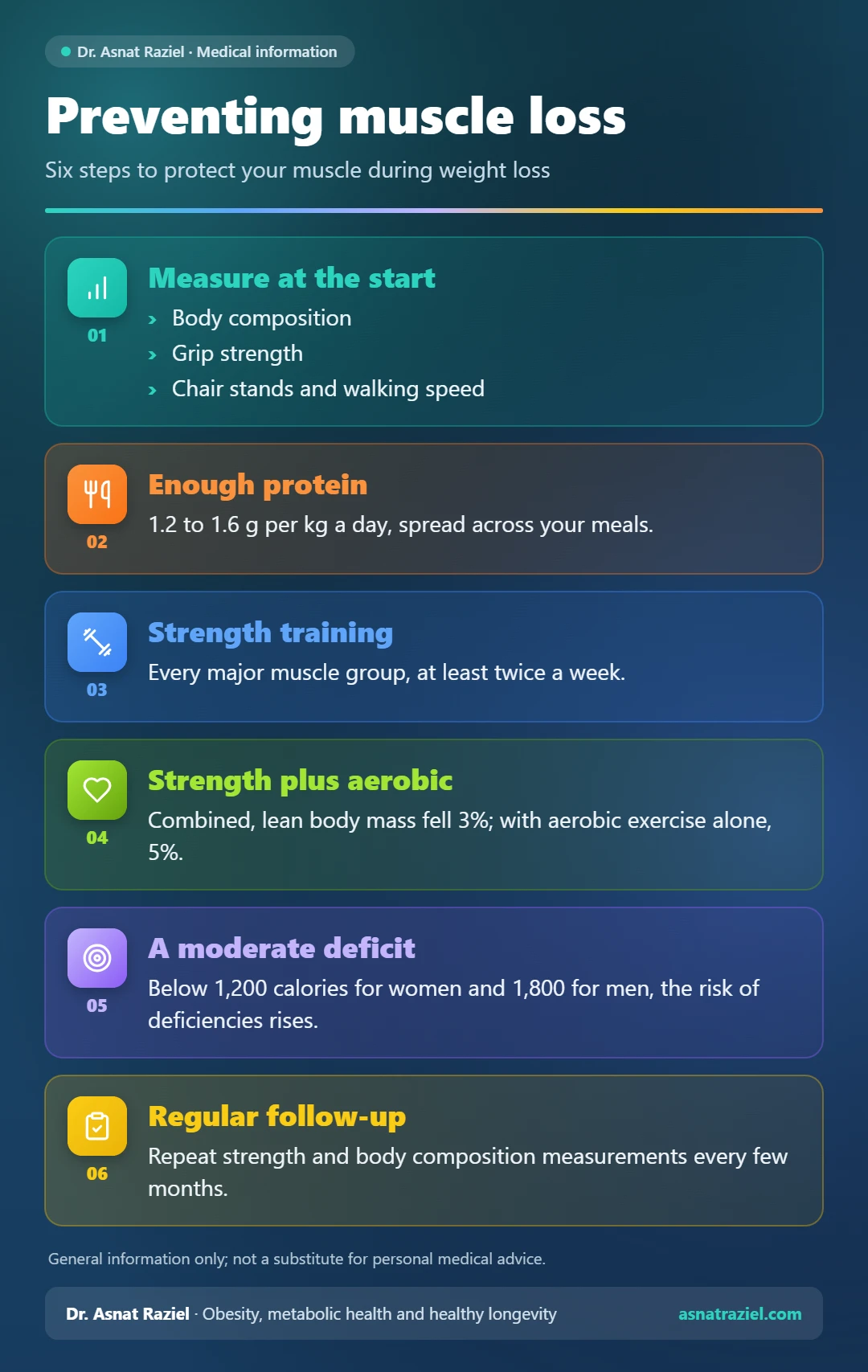
Step 3: strength training is the main tool
Protein alone is not enough. Muscle needs a stimulus to stay. A meta-analysis of six controlled trials looked at older adults with obesity who were restricting calories. In those who added strength training three times a week, the training prevented 93.5% of the loss of lean body mass.
According to the updated ACSM position stand, from the American College of Sports Medicine, it is worth training each major muscle group at least twice a week. The type of equipment did not consistently change the results. In other words, free weights, machines, resistance bands and body weight can all work. What matters is consistency and a gradual increase in load.
If you want to get started, I have prepared a guide to strength training and the deadlift, including safe technique.
Step 4: combine aerobic and strength training
In a study published in NEJM, 160 older adults with obesity lost weight while doing different types of exercise. In all the exercise groups, weight fell by 9%. However, in the aerobic-only group, lean body mass fell by 5%. By contrast, with strength training it fell by only 2%, and with the combination of both, by 3%. In addition, the combination improved physical function compared with either type of training alone.
Step 5: a reasonable pace and adequate nutrition
An extreme diet increases the risk of deficiencies and muscle loss. The joint recommendations point to a risk of nutritional deficiencies when intake falls below about 1,200 calories a day for women and 1,800 for men. So a moderate deficit, with regular and varied meals, is the better choice.
Very rapid weight loss also affects your appearance. I wrote about this in my article on how the face changes with weight loss.
Step 6: track your progress to prevent muscle loss
It is worth repeating the strength and body composition measurements every few months. If your strength drops, change the plan: increase protein, add a workout or slow the pace of weight loss. In our clinic, we do this as a routine part of follow-up.
Your muscle tracking checklist
Measuring is what turns these steps from good intentions into a plan you can check. Here is a simple way to organize it, using only the tools described above:
- At the start: a body composition test (DXA, bioimpedance or ultrasound) plus three strength tests: grip strength, walking speed and five chair stands.
- Every few months: repeat the same tests, ideally with the same method, so the results are comparable.
- Between tests: watch your strength, not just the scale. A fast drop in weight can hide muscle loss.
- If strength falls: raise protein, add a workout or slow down the weight loss.
Preventing muscle loss on medication and after surgery
Medications such as Wegovy and Mounjaro reduce appetite dramatically. As a result, it is easy to eat too little protein without noticing. After bariatric surgery, too, weight loss is fast and meal volume is small. In both situations, this checklist is especially important, and it is best to go through it with a dietitian.
Common mistakes when trying to prevent muscle loss
The first mistake is relying on walking alone. Walking is excellent for the heart and for your mood, but it is not enough to preserve muscle. That is why you also need resistance training.
The second mistake is waiting until the end of the diet. Start training and eating enough protein in the very first week, not after the muscle is already gone.
The third mistake is judging progress by weight alone. A fast drop on the scale can hide muscle loss. On the other hand, in people who train, weight sometimes falls slowly while body composition improves.
The bottom line
The steps to prevent muscle loss are simple: measure at the start, eat enough protein, do strength training at least twice a week, add aerobic exercise, keep a moderate deficit and track your progress regularly. Studies show that strength training greatly reduces muscle loss during weight loss. That way, you lose fat and keep your strength.
The information in this article is general and does not replace personal medical advice.
Frequently asked questions
Is it possible to lose weight without losing any muscle at all?
Usually some lean body mass is lost as well. However, protein and strength training greatly reduce that loss.
How many times a week should I train to prevent muscle loss?
At least twice a week for each major muscle group. In addition, it is worth including aerobic activity.
Which matters more, protein or exercise?
Both. Protein provides the building blocks, and exercise gives the muscle a reason to stay.
How do I know whether my steps to prevent muscle loss are working?
Through strength tests, such as grip strength and chair stands, and through repeat body composition measurements.
Sources
Aerobic or Resistance Exercise, or Both, in Dieting Obese Older Adults




