By Dr. Asnat Raziel, bariatric surgeon specializing in obesity treatment, metabolic health and healthy longevity; Director of the Multidisciplinary Center for Obesity Treatment, Assia Medical, Assuta Ramat HaChayal, Tel Aviv
Diet and aging: what did the large study find?
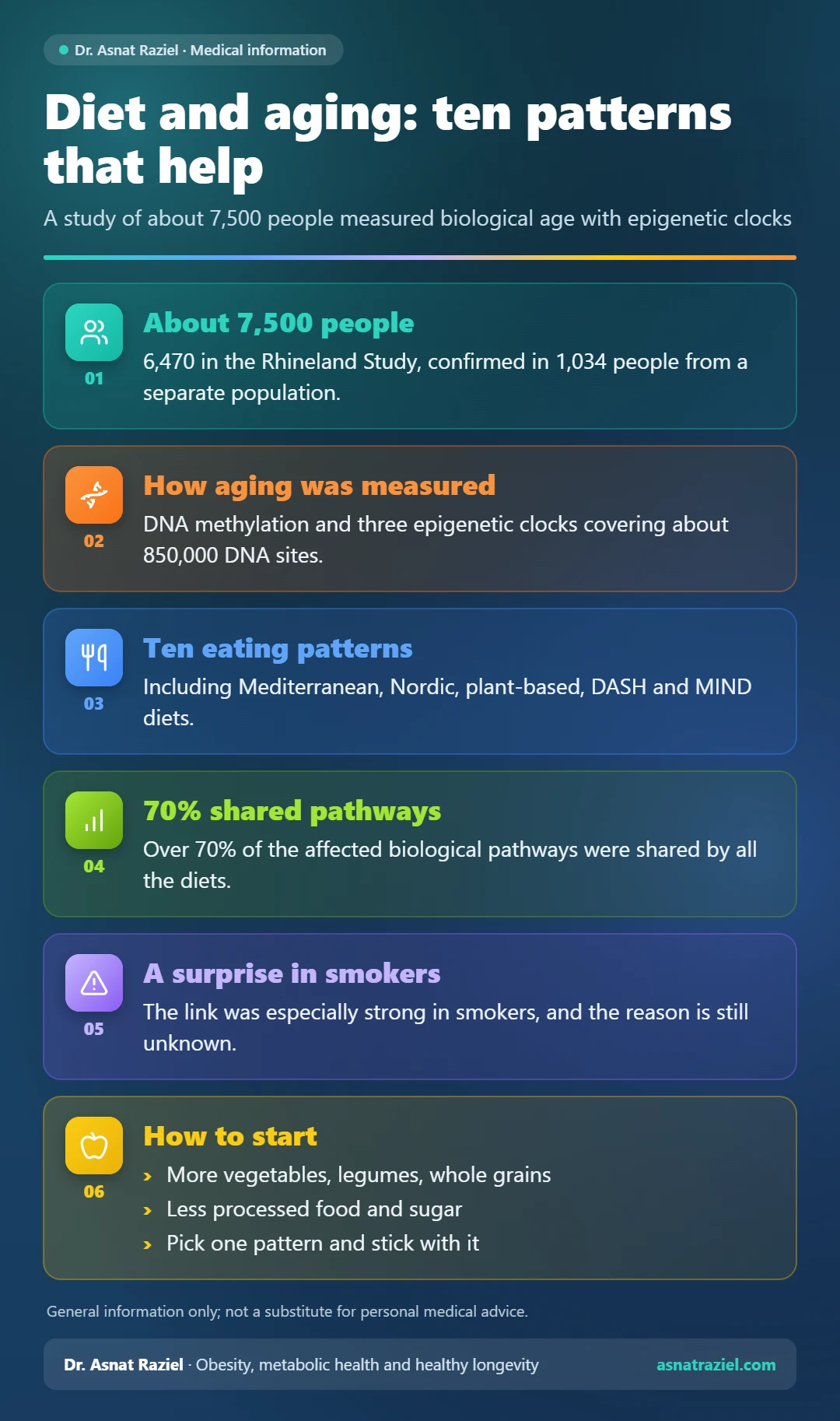
Diet and aging are far more closely linked than we once thought. A large German study looked at about 7,500 people. The researchers found that ten healthy eating patterns slow biological aging. So the conclusion is simple: there is no single “right” diet.
The study was carried out by researchers at the German Center for Neurodegenerative Diseases (DZNE) and published in the journal Nature Communications. First, they analyzed about 6,470 participants in the Rhineland Study. Then they confirmed the results in 1,034 additional people from a separate population. Because of this, the results are especially reliable.
How was biological aging measured?
To examine the link between diet and aging, the researchers did not rely on the age listed on people’s ID cards. Instead, they measured biological age from blood. The measurement was based on DNA methylation, a chemical marker that reflects how fast cells are aging, and on three “epigenetic clocks.” Together, these clocks examined about 850,000 sites on the DNA. For a look at the same kind of clock in pets, see my article on dog aging.
This method makes it possible to detect a slowing or speeding up of the aging process. In effect, it makes aging measurable. You can read more about the biological clocks of aging in a separate article. I also look at these measurements in my article on weight-loss injections and biological age.
Which eating patterns were studied?
First, the team examined ten well-known eating patterns. Among them were the Mediterranean diet, the Nordic diet and plant-based eating. They also included the DASH diet, designed to lower blood pressure, and the MIND diet, designed to support the brain. Each pattern was compared with the participants’ pace of aging to better understand the link between diet and aging.
Good adherence to any of these patterns slowed the pace of aging. However, the effect was modest, though consistent. Interestingly, more than 70% of the biological pathways affected were shared by all the diets. In other words, what they have in common matters more than the details, although each pattern also kept some unique pathways of its own.
Diet and aging: what is the practical takeaway?
In fact, the main message takes the pressure off. You do not need to hunt for the one perfect diet. What is more, the overall quality of what you eat matters far more than the name of the diet. That is why it makes sense to choose a healthy pattern that suits your culture, budget and personal taste, and to stick with it.
The link between diet and aging fits into a broader approach to extending your healthy years. A healthy overall lifestyle also contributes to the same goal. If you are unsure where to begin, my guide to the Mediterranean diet is an excellent starting point.
How do you get started?
First, add vegetables, legumes and whole grains to your plate. Next, cut back on processed food and sugar. Also, pick one eating pattern and stay with it for a few weeks. Finally, remember that consistency matters more than perfection. A small, steady change beats any extreme short-term diet.
To learn more, you can read about eating for longevity, about a menu designed around the epigenetic clock and about plant protein sources.
A surprising finding in smokers
The link between healthy eating and slower aging was especially strong in smokers. This was true even though smokers did not eat any more healthily than other people. The researchers cannot yet explain why. On the other hand, the finding highlights that good nutrition helps even people who are at risk.
Diet and aging: the bottom line
The link between diet and aging is clear, yet flexible. Ten different eating patterns showed similar benefits. So choose a healthy approach based on whole foods, mostly plants and plenty of variety, one you can keep up over time. In the end, sticking with it matters far more than the name of the diet.
The information in this article is general and does not constitute personal nutritional or medical advice. Consult a professional before making any major change to your diet.
Sources
Scientists find 10 different diets linked to slower aging
Associations between diet quality, epigenetic aging and epigenome (Nature Communications)




