By Dr. Asnat Raziel, bariatric surgeon specializing in obesity treatment, metabolic health and healthy longevity; Director of the Multidisciplinary Center for Obesity Treatment, Assia Medical, Assuta Ramat HaChayal, Tel Aviv
Wellness and longevity: the real goal is healthspan
Wellness and longevity are two concepts everyone is talking about today. It seems we all want one thing: to live for many years. But it quickly becomes clear that the real goal is much broader. We want to extend our years of health, independence and vitality.
This is where three popular concepts come in. Wellness is the field of personal well-being. Lifestyle medicine is a branch of medicine built on daily habits. Longevity is the medicine of a long, healthy life. People sometimes use these terms as if they describe the same thing. In practice, they are three very different approaches.
Wellness: between personal well-being and marketing promises
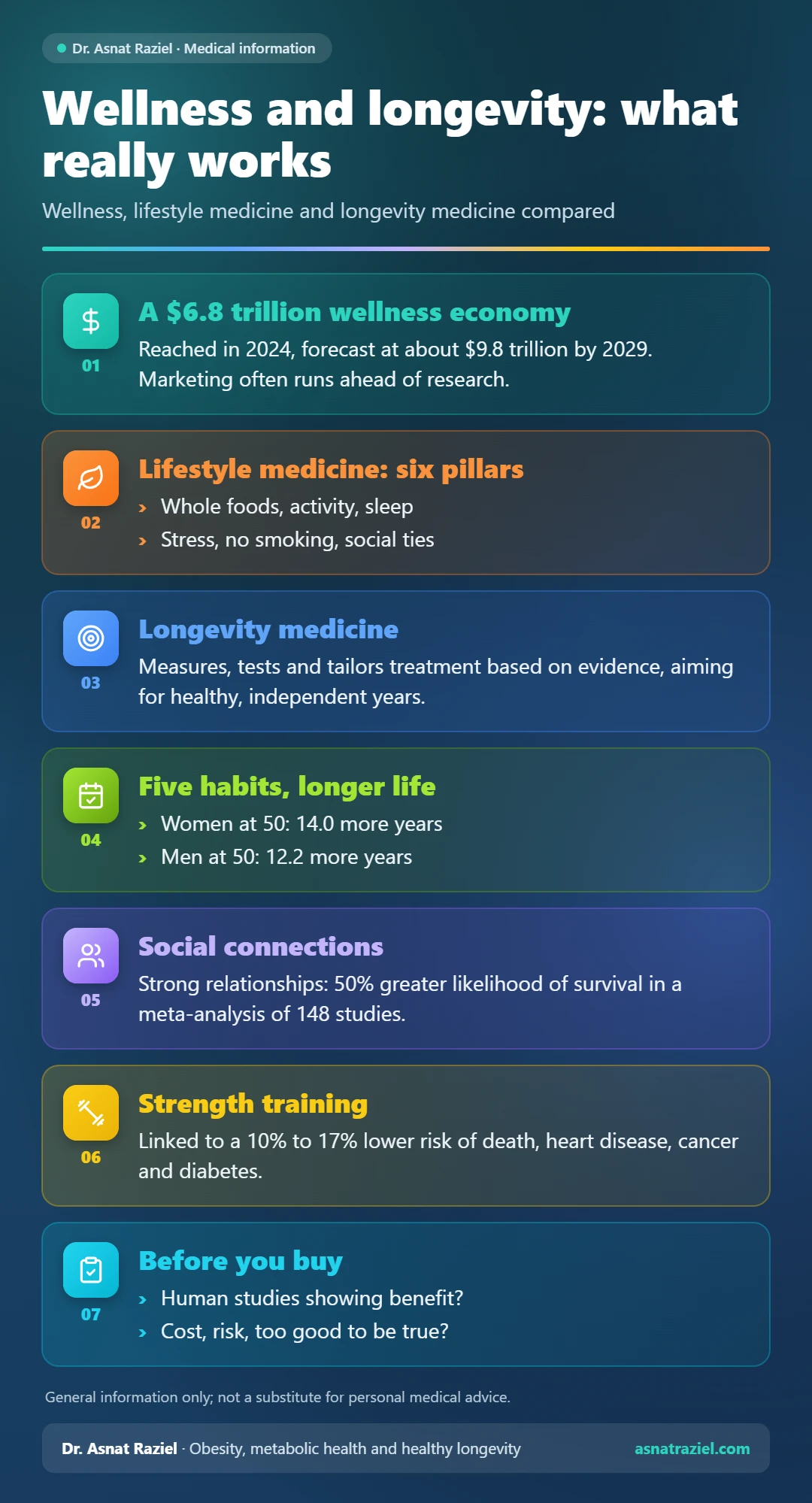
The wellness industry has become one of the fastest-growing industries in the world of health. According to the Global Wellness Institute’s 2025 report, the wellness economy reached a record $6.8 trillion in 2024. The forecast points to about $9.8 trillion by 2029.
This broad heading covers countless products and services. For example, dietary supplements, advanced tests, cold and heat therapies, vitamin infusions, meditation, smartwatches, apps and oxygen chambers. The same question applies to the current peptide craze. Some of these tools may contribute to personal well-being and body awareness. However, not everything that sounds innovative and luxurious actually rests on high-quality scientific evidence. Often, the marketing runs ahead of the research, and the promises are far bigger than the proof.
So alongside the positive potential, we also need critical thinking. Criticism of the field is growing. Large parts of it have become luxury products that most people cannot access. In addition, they sometimes blur the line between feeling good and evidence-based medicine. Even healthy habits can become harmful when taken too far, as I wrote in my article on overdoing healthy habits.
Lifestyle medicine: the science behind health
Lifestyle medicine, by contrast, is not a trend. It is an evidence-based medical discipline. It grew out of thousands of studies that examined how daily habits affect disease and quality of life. According to the six pillars of the American College of Lifestyle Medicine, the foundation includes:
- A whole-food diet, with an emphasis on plant foods.
- Regular physical activity.
- Sufficient, restorative sleep.
- Stress management.
- Avoiding smoking and harmful substances.
- Meaningful social connections.
These habits may seem simple. Yet they are exactly what lowers, again and again, the risk of obesity, diabetes, heart disease, fatty liver, certain cancers and cognitive decline. I wrote about the link to obesity in detail in my article on lifestyle medicine in obesity.
Wellness and longevity: what is the difference?
Longevity is the broad vision. The goal is not to reach 100 at any cost. The goal is to get there with a body that functions, a sharp mind, good muscle mass, independence and quality of life. Unlike wellness, medical longevity measures, tests and tailors treatment based on evidence.
To do this, longevity medicine combines preventive medicine, timely diagnosis and treatment of risk factors. It also includes managing chronic diseases and protecting metabolic health. At times it also uses new technologies and drugs, when they have a solid scientific basis. GLP-1 drugs, advanced monitoring, artificial intelligence and personalized medicine are among the new tools. Still, they do not replace the foundation. Instead, they strengthen it.
So what really matters most?
This may be the most important point. Many people are looking for the “secret” to a long life: a new supplement, an innovative test or an expensive treatment. But most research on aging points to a much more consistent message. What affects healthspan most is what we do every day, for years.
The data are impressive. A study that followed about 123,000 Americans looked at five habits: not smoking, a healthy weight, 30 minutes of activity a day, moderate alcohol and a high-quality diet. At age 50, women who adopted all five habits could expect to live 14.0 more years on average than those who adopted none. In men, the gap was 12.2 years.
Social connections matter too. A meta-analysis of 148 studies found that strong social relationships were linked to a 50% greater likelihood of survival over the follow-up period. In addition, a review of cohort studies found that strength training was linked to a 10% to 17% lower risk of death, heart disease, cancer and diabetes.
These, then, are the factors that most affect health and the pace of aging. First, balanced eating. Next, keeping muscle mass through strength training, alongside aerobic exercise, as I explained in my article on aerobic vs. strength training. Then quality sleep, as I described in my article on sleep and metabolic health. And finally, a healthy weight, stress management, good relationships and meaning in life.
How to choose wisely between wellness and longevity
Before you buy a product, test or treatment, it is worth asking a few simple questions. First, are there high-quality studies in humans that show a benefit? Second, what is the cost, and what is the risk? Third, is the promise too good to be true? Finally, does the treatment replace a healthy habit, or simply add to it?
When the answers are clear, it is easy to tell wellness and longevity apart. Good wellness can add enjoyment, calm and motivation. Longevity medicine, on the other hand, starts with a medical assessment, sets goals and checks whether they were met. In many cases, combining the two works well, as long as the foundation rests on evidence.
Wellness and longevity in the future: science and medicine together
I believe the future does not belong to any one approach alone. It does not belong to wellness that promises miracles. Nor does it belong to technology that tries to replace the person. And it certainly does not belong to medicine that steps in only after disease has already appeared.
The future belongs to a smart combination of lifestyle medicine, longevity medicine, medical innovation and advanced technology. The goal is not only to add years to life, but to add life to years. If you want to start with simple steps, you will find ideas in my article on small changes for a longer life.
Bottom line
In the end, wellness and longevity are not the same thing. Healthy longevity does not start in the lab or in the supplement store. It starts with the small decisions we make every day, guided by evidence-based medicine.
The information in this article is general and does not replace personal medical advice.
References
2025 Global Wellness Economy Monitor
The Six Pillars of Lifestyle Medicine (ACLM-Aligned)
Impact of Healthy Lifestyle Factors on Life Expectancies in the US Population
Social relationships and mortality risk: a meta-analytic review




