By Dr. Asnat Raziel, bariatric surgeon specializing in obesity treatment, metabolic health and healthy longevity; Director of the Multidisciplinary Center for Obesity Treatment, Assia Medical, Assuta Ramat HaChayal, Tel Aviv
Yoga and metabolic health: what we really know
The link between yoga and metabolic health interests many of the patients who come to see me. They ask whether a yoga class can help their blood sugar, their blood pressure or their weight. The short answer: yes, but to a certain extent and under certain conditions. Studies show improvements in blood sugar control and blood pressure, whereas the effect on weight itself is small.
In this article, I’ll explain what the studies showed, who yoga is especially suited to, and how to fit it properly into a treatment plan.
What yoga is from a medical point of view
Yoga combines three components: body postures, breathing work and mindfulness practice. Medical studies mainly examine yoga as exercise, meaning styles such as hatha and Iyengar. On the other hand, there are dynamic, strenuous styles, and there are calm chair-based classes. That makes it hard to compare studies, and it is important to keep this in mind when you read headlines.
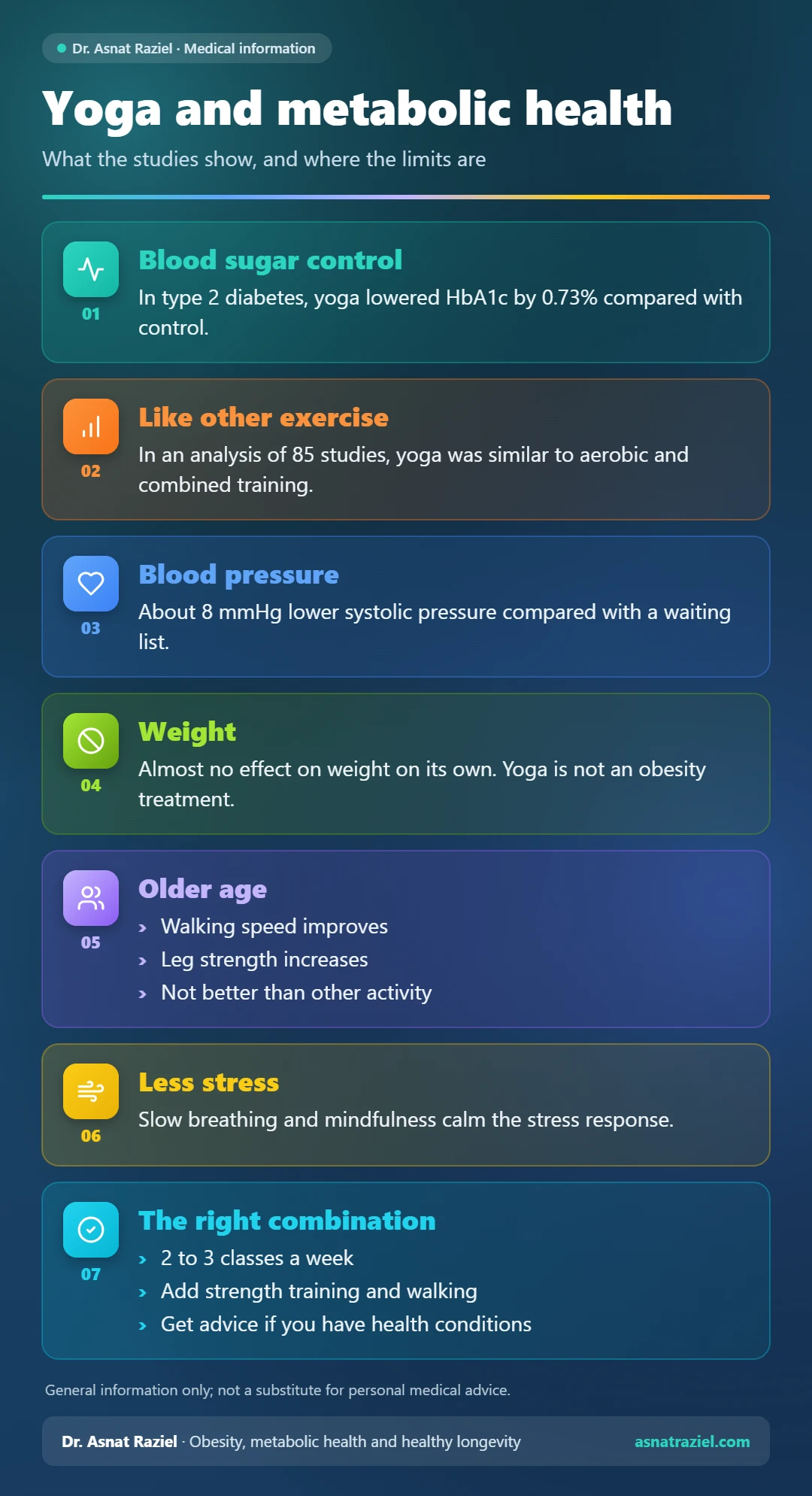
In addition, yoga also works through the nervous system. Slow breathing and mindfulness practice calm the stress response. This matters, because chronic stress raises cortisol and disrupts blood sugar control. I covered this side in more detail in my article on stress relief techniques.
Yoga and metabolic health: blood sugar control
This is where the evidence is strongest. A review and meta-analysis of 16 studies included 1,820 participants with type 2 diabetes, most of them on oral medication. Compared with a control group without regular exercise, yoga lowered glycated hemoglobin (HbA1c, average blood sugar over the past three months) by 0.73%. In addition, fasting blood sugar fell by 32 mg/dL on average.
However, it is important to see the bigger picture. A network analysis of 85 studies with 5,535 people with diabetes compared different types of exercise. Yoga lowered HbA1c by 0.45%, high-intensity interval training by 0.78% and combined aerobic and strength training by 0.54%. In other words, yoga falls in the same range as other types of exercise. The researchers found no significant difference between the types and rated the quality of the evidence as low.
Yoga and metabolic health: blood pressure and fat tissue
A recent meta-analysis of 30 studies examined 2,283 people with high or borderline-high blood pressure. Compared with a waiting list, yoga lowered systolic pressure (the upper number) by about 8 mmHg and diastolic pressure by about 5. By contrast, compared with another active intervention, the difference in systolic pressure was not significant. Here too, the quality of the evidence is very low, mainly because of the variation between studies.
And what happens in the fat tissue itself? A randomized study from Hong Kong included 97 adults with metabolic syndrome. About half of them practiced yoga three times a week, for an hour each time, for a year. In the yoga group, levels of leptin and chemerin, inflammatory substances secreted by fat tissue, went down. At the same time, levels of adiponectin, a hormone that improves insulin sensitivity, went up.
Does yoga help you lose weight?
Here we need to be honest. A review of 30 studies with 2,173 participants found no overall effect on weight, body mass index (BMI) or waist circumference. Only in people with excess weight was there a drop in BMI compared with usual care, and even that did not hold up in every quality check.
Therefore, yoga is not a treatment for obesity. It can, however, help indirectly: through less stress, better sleep and mindful eating. I also wrote about this link in meditation and weight and in my article on stress and obesity. When obesity is a chronic disease, medication is sometimes needed too, and yoga fits in alongside it.
Beyond yoga and metabolic health: healthy longevity
With age, the biggest threat is not only disease but frailty: a decline in strength, walking and balance. A systematic review of 33 studies included 2,384 participants over 65. The researchers found moderate-certainty evidence that yoga improves walking speed and leg strength. Both of these measures are linked to a long, independent life.
That said, the Harvard research on yoga and frailty highlighted an important point. Yoga was not better than other physical activity or tai chi. Grip strength did not improve, and the evidence for better balance was weak. In other words, yoga is a good option, not the only option.
There is a lot of noise in the longevity field today. Patients ask me about NAD+ supplements and about red light and mitochondria. In contrast, regular movement has a much broader research base, and it is cheap and safe.
How to fit yoga and metabolic health into everyday life
- First, start with a beginner class, two or three times a week.
- Second, add strength training and walking. Yoga alone does not replace them, as I explained in my article on aerobic vs. strength training.
- In addition, choose a regular spot at home to practice. A tidy corner, with a set place for your mat and shoes, makes it easier to stick with it.
- Finally, make use of your free time too. On a relaxed weekend, you can start the morning with a short practice.
If you have back pain, joint problems, raised eye pressure or are pregnant, it is best to get advice before you start. In an earlier review on blood pressure, more side effects were reported in the yoga groups than with usual care, so a qualified instructor is important. Likewise, patients with diabetes who are treated with insulin should check their blood sugar around their practice.
The bottom line
Yoga and metabolic health are linked, but not by magic. Yoga improves blood sugar control, slightly lowers blood pressure and contributes to strength and walking in older age. On the other hand, it hardly reduces weight on its own. So it is best to see it as part of a broader plan of nutrition, strength training, sleep and medical treatment as needed. If you are wondering how to build such a plan, you are welcome to contact me for a consultation with Dr. Asnat Raziel.
The information in this article is general and does not replace personal medical advice.
Questions and answers
Can yoga replace diabetes medication?
No. Most participants in the studies kept taking their medication. Yoga is an addition to treatment, and you should not stop medication without your doctor.
How many times a week should I practice?
In most studies, sessions lasted about an hour, two to three times a week, over periods of weeks up to a year. Consistency matters more than intensity.
Is yoga suitable for older adults?
Yes. Many studies included chair yoga for people aged 65 and over. It is important to choose an experienced instructor and adapt the postures to your limitations.
Which type of yoga is best?
There is no single winning style. Most studies examined hatha and Iyengar yoga. The best style is the one you will stick with.
Sources
A systematic review and meta-analysis of yoga for arterial hypertension
A systematic review and meta-analysis of yoga for hypertension
Yoga training modulates adipokines in adults with high-normal blood pressure and metabolic syndrome
A systematic review and meta-analysis on the effects of yoga on weight-related outcomes
Effect of Yoga on Frailty in Older Adults: A Systematic Review
Strong evidence that yoga protects against frailty in older adults




