By Dr. Asnat Raziel, bariatric surgeon specializing in obesity treatment, metabolic health and healthy longevity; Director of the Multidisciplinary Center for Obesity Treatment, Assia Medical, Assuta Ramat HaChayal, Tel Aviv
GLP-1, emotional eating and binge eating: what’s the link?
The link between GLP-1 and binge eating, along with emotional eating, is on the minds of many patients and doctors today. In recent years, these medications have revolutionized obesity treatment. Ozempic, Wegovy and Mounjaro act not only on the body but also on the brain. So a natural question arises: do they also affect emotional eating and binge eating? The evidence from 2026 shows a modest, encouraging effect, but these are not yet dedicated treatments.
Emotional eating and binge eating: far more than hunger
Emotional eating doesn’t come from physical hunger. Instead, it comes from using food to regulate emotions such as stress, sadness, boredom or anxiety. I list the warning signs of emotional eating in a separate article. Binge eating, in research terms, means eating large amounts of food quickly. It comes with a feeling of loss of control, and often with guilt and distress afterward.
These patterns are tied to brain systems of reward, impulse and emotional regulation. That’s why treating them is complex and goes well beyond dietary advice. It’s also worth knowing that binge eating disorder is not a lack of self-control but a genuine medical condition.
How do GLP-1 medications affect the brain and behavior?
The hormone GLP-1 is part of the communication system between the gut and the brain. The drugs that mimic it reduce hunger, slow stomach emptying and increase fullness. Beyond that, they act on brain areas linked to reward, cravings and impulse control. You can read more about this in my article on the brain, hunger and satiety.
Many patients describe a drop in “food noise,” the intrusive, nonstop thoughts about food. In addition, they describe feeling calmer and more in control of their eating, even in difficult emotional situations. I have written about this phenomenon at length in an article on why we think about food all the time.
What does the research say about GLP-1 and binge eating?
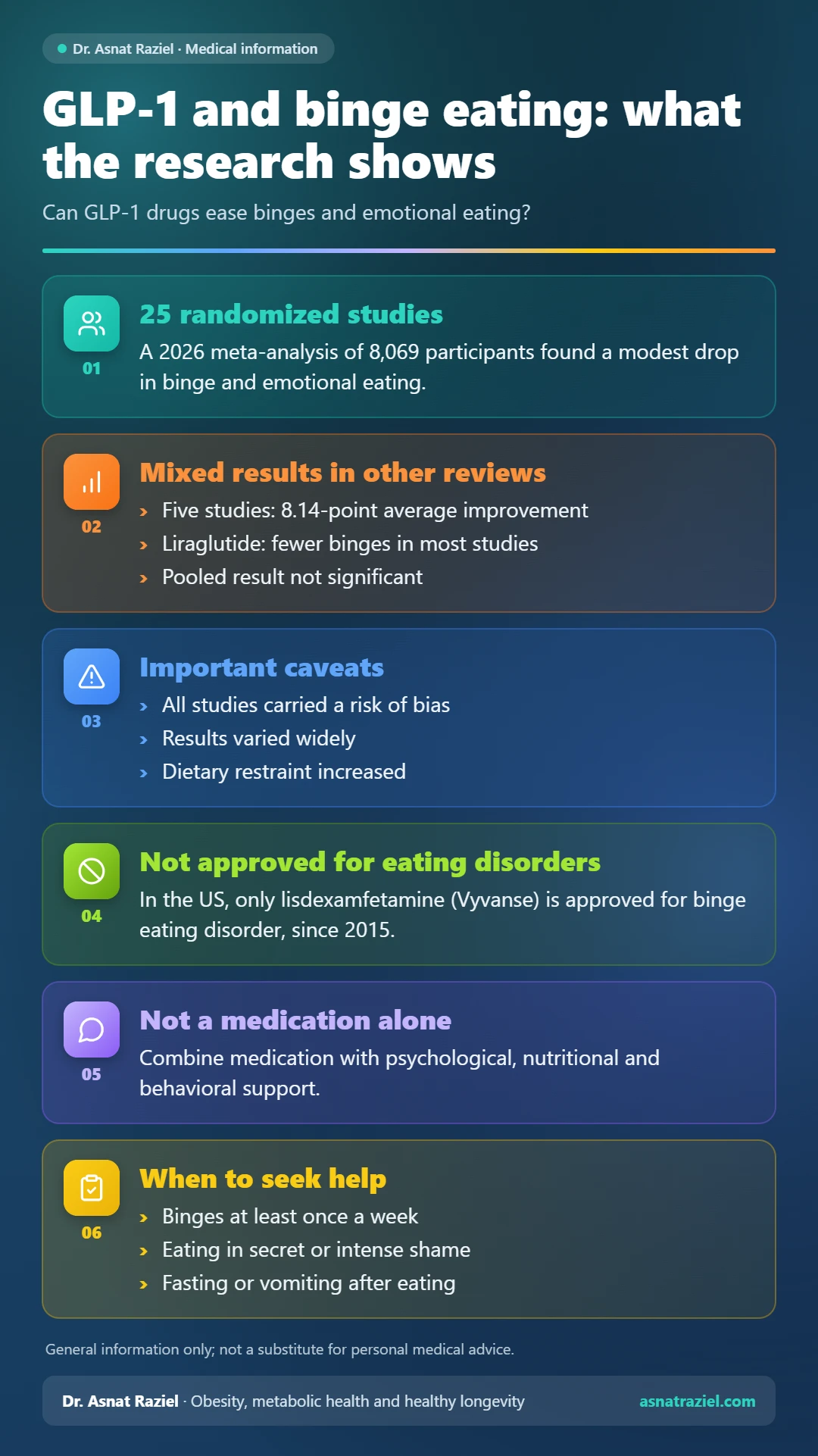
The evidence has grown much stronger since I first wrote about this topic. In 2026, EClinicalMedicine published a meta-analysis of 25 randomized studies with 8,069 participants. The researchers found a modest reduction in binge eating, uncontrolled eating and emotional eating in the groups that received GLP-1 drugs. The effect was especially large in studies of people diagnosed with binge eating disorder.
However, the researchers note important limitations. All of the studies carried a risk of bias, and the results varied widely from study to study. In addition, the drugs increased dietary restraint, meaning deliberate control over how much one eats. It is still unclear whether this restraint is healthy or problematic for people with an eating disorder.
Other reviews paint a similar picture. A small meta-analysis of five studies showed an average improvement of 8.14 points on a binge eating questionnaire. On the other hand, a review of eight randomized studies found that liraglutide reduced binges in most of the individual studies. Yet in the pooled analysis, the result did not reach statistical significance.
No official approval yet for treating eating disorders
It’s important to stress this point: health authorities have not approved GLP-1 drugs as a dedicated treatment for eating disorders. In the United States, the only drug approved for binge eating disorder is lisdexamfetamine, sold as Vyvanse. It received that approval in 2015.
A 2026 review in Biological Psychiatry concludes that the real-world data are promising. It also notes that concerns about a link between these drugs and suicidality have not been supported by the data. Still, the researchers emphasize that large randomized trials are missing. Such trials are needed to determine who the treatment suits, at what doses and for how long.
GLP-1 and binge eating: not a medication alone
Even if the drugs have a good effect on urges and cravings, they don’t replace emotional or behavioral therapy. Emotional eating and binge eating are often rooted in deep coping patterns, life experiences and emotional regulation. When the medication stops, these patterns may come back. For this reason, the recommended approach combines medication with psychological, nutritional and behavioral support.
This matches the view of Israeli health funds. Maccabi’s medical page on binge eating disorder (in Hebrew) describes cognitive behavioral therapy as the preferred treatment.
In practice, it helps to work on several layers at once. For example, identify your emotional triggers, build a regular meal routine and find ways to soothe yourself that don’t involve food. You’ll find practical ideas in my guide to coping with emotional eating. Medical follow-up is also especially important for anyone with a history of an eating disorder. You can read about the mental health side of treatment in my article on GLP-1 drugs and mental health.
Signs it’s time to seek professional help
Not all emotional eating is a disorder. All of us sometimes eat out of fatigue, joy or sadness. Some signs, though, call for attention. Examples include binges that recur at least once a week, eating in secret or intense shame afterward. Fasting or vomiting after eating is also a warning sign. In such cases, it’s wise to see a doctor or an eating disorder professional, even before starting medication. Living with excess weight also has an emotional side that deserves care.
GLP-1 and binge eating: who should consider treatment?
Today, GLP-1 drugs are intended for people with obesity, or overweight with related conditions, and for people with type 2 diabetes. Some of these patients also struggle with emotional eating or binge eating. For them, fewer cravings may be an added benefit. By contrast, people with restrictive eating disorders, such as anorexia, need great caution. The decision should be made with a doctor who knows the full picture.
Further reading: a controlled trial of Wegovy in binge eating.
The bottom line
GLP-1 medications open a new window into the connection between obesity, the brain and eating behavior. Studies from 2026 show that the link between GLP-1 and binge eating is real, though modest. Even so, this is one more tool in the toolbox, not a stand-alone solution. Ultimately, long-term success requires a broad, multidisciplinary approach tailored to each patient.
The information in this article is general and does not replace personal medical advice.
References
Glucagon-Like Peptide-1 Receptor Agonists in Psychiatry: A Pharmacoepidemiological Scoping Review
Vyvanse Now Indicated for the Treatment of Binge Eating Disorder