By Dr. Asnat Raziel, bariatric surgeon specializing in obesity treatment, metabolic health and healthy longevity; Director of the Multidisciplinary Center for Obesity Treatment, Assia Medical, Assuta Ramat HaChayal, Tel Aviv
Winter hunger: why are we hungrier in the cold months?
If you feel winter hunger too, you are definitely not alone. Winter brings cravings for chocolate, for a latte with something on the side, for comfort food and for long hours on the couch. Many people feel less balanced in the cold months and tend to gain weight. The good news: this is not a lack of discipline or a loss of control. Your body is simply responding to the season, and you can use this understanding to start losing weight in a healthy way.
What science says about winter and weight
A 2022 systematic review pooled studies on weight changes throughout the year. In non-farming populations, body weight and body fat rose in the colder seasons, autumn and winter. At the same time, people consumed more energy, fat, carbohydrates and sweetened drinks, and ate fewer vegetables and less fiber.
In a study published in the NEJM, researchers weighed 195 adults throughout the winter. Over the holiday season, they gained an average of 0.37 kg. By the end of winter, the gain had reached 0.48 kg, and it did not disappear in spring or summer. In other words, the gain is small, but it adds up from year to year.
Less light, less serotonin, more sugar cravings
In winter, for example, the days are short and the sun is weak. In a study published in The Lancet, researchers examined 101 healthy men. Serotonin activity in the brain was lowest in winter, and it rose as the hours of sunlight grew longer. According to the US National Institute of Mental Health, winter seasonal depression sometimes includes overeating, carbohydrate cravings and weight gain. This is one reason for winter hunger and the urge to snack on winter evenings.
Melatonin, fatigue and sleep
The hormone melatonin rises as darkness falls, and the body feels heavy and tired. When we are tired, we eat more and move less. Short sleep adds to winter hunger as well. In a small trial of 12 young men, two nights of short sleep lowered the satiety hormone leptin by 18%. At the same time, the hunger hormone ghrelin rose by 28%, and hunger rose by 24%. Cravings for carbohydrate-rich foods rose by 33% to 45%. I wrote more about this link in my article on sleep and night eating.
Does metabolism really slow down in winter?
Many people believe that metabolism slows down in winter to store energy. In humans, however, the opposite is true. Exposure to cold actually activates brown adipose tissue, which burns energy to produce heat. However, most of us spend the winter in a warm home. So winter weight gain comes mainly from eating more and moving less, not from a slower metabolism.
Rich, comforting winter food
Slow-cooked stews, thick soups, baked goods and, in Israel, also sufganiyot (jelly doughnuts) at Hanukkah. They are all warm, comforting and high in calories. As a result, winter food combines emotional warmth with biological hunger.
Obesity is biology, not a choice and not a fault
Today it is clear that obesity is not a personal failure. It is the result of brain, hormone and gut mechanisms that work differently in each person. Researchers at Mayo Clinic identified four phenotypes, that is, four different patterns of obesity. A full explanation appears in my guide to the four phenotypes:
- Hungry brain: satiety signals arrive late.
- Hungry gut: hunger returns quickly after a meal.
- Emotional hunger: eating in response to emotions.
- Slow burn: low energy expenditure at rest.
Moreover, many people have a combination of several patterns. That is why one diet for everyone cannot succeed. In my clinic, I see that seasonal hunger also shows up differently in each type. People with emotional hunger feel the winter mood intensely. By contrast, people with a hungry brain are especially drawn to large winter portions.
Tailored treatment for winter hunger
The new weight-loss medications, such as Wegovy (semaglutide) and Mounjaro (tirzepatide), are not just appetite suppressants. They are a biological treatment that targets the mechanisms of hunger and satiety. Their main effects:
- They reduce baseline hunger.
- They prolong fullness for hours.
- They stabilize blood sugar and energy levels throughout the day.
- They help quiet constant preoccupation with food.
Razin (phentermine, an Israeli brand) works differently. It is an older appetite suppressant that acts on the brain to reduce hunger, and a doctor decides whether it suits you.
In addition, the doctor chooses the treatment according to each person’s phenotype, not as a generic solution.
Why is winter a good time to start?
First, there are fewer social temptations. In winter there are fewer weddings, fewer events and fewer vacations. This makes it easier to build a new daily routine without getting swept up in festive meals.
Second, the evenings are long and the pace is slow. It is an excellent time to build habits of healthy eating, gentle movement and regular sleep. Finally, if you start now, you prevent the winter weight gain, which, as we saw, does not go away on its own in spring. This way, you reach summer after a few good months of treatment.
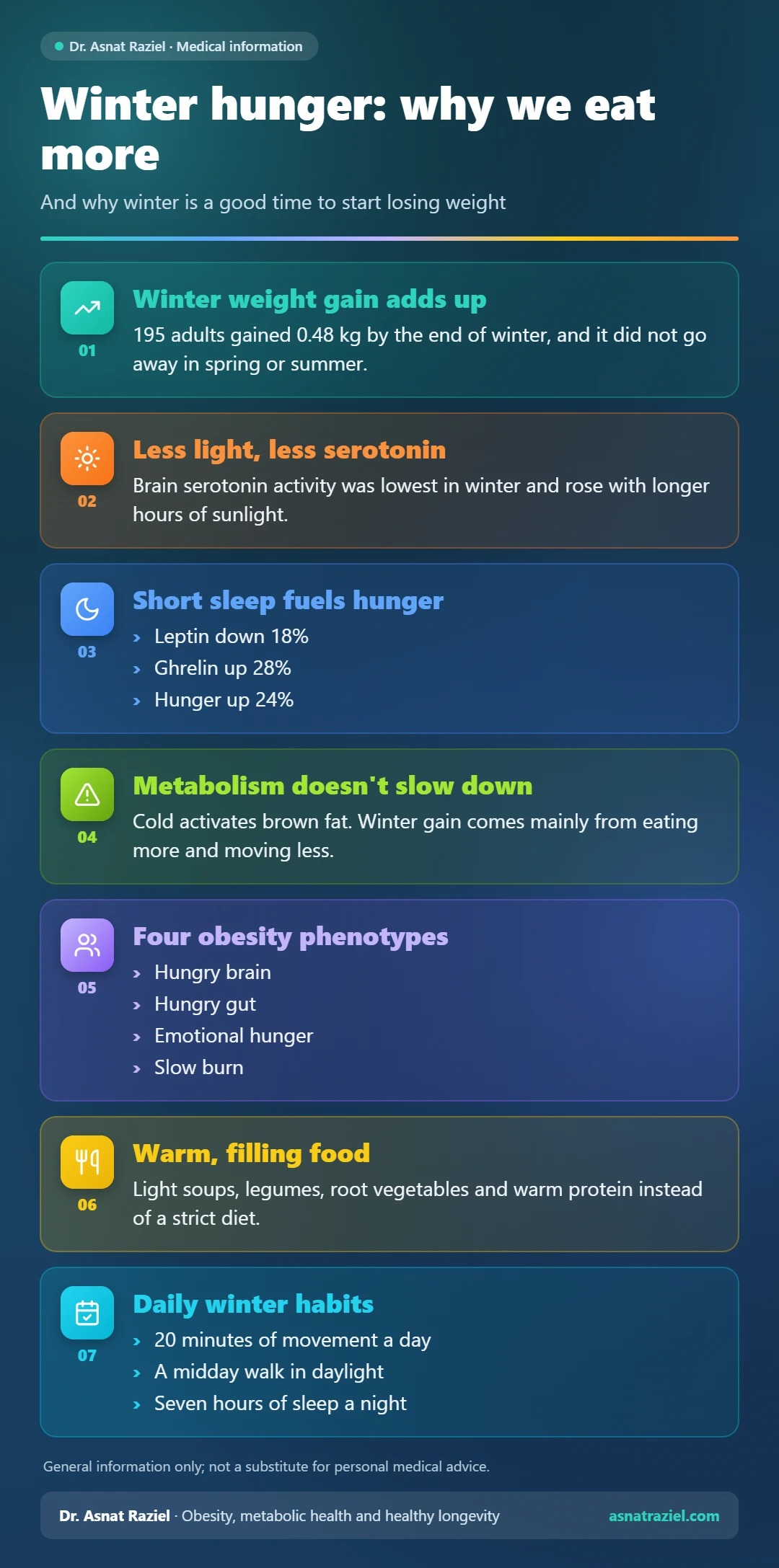
How to start losing weight when winter hunger hits
Warm, filling food. Instead of a strict diet, choose light soups, legumes, root vegetables, roasted vegetables and warm protein. The goal is to adapt to the season, not to count calories. For example, lentil soup with chicken provides protein that keeps you full longer.
Short bouts of movement at home. In fact, even 20 minutes a day makes a difference. Walking, stretching or light strength training is enough to get started.
Daylight. According to the US National Institute of Mental Health, light therapy is one of the treatments for winter depression. So a midday walk in the sunlight helps twice over: you get both movement and light.
Regular meals. Similarly, meals at fixed times, with protein and vegetables, prevent evening snacking. It also helps to prepare soup or cut vegetables in advance for the tough hours.
Good sleep. Seven hours a night balances the hunger and satiety hormones, as the sleep trial showed.
Matching medication to your phenotype. This is the cornerstone. When you understand your type of obesity, you can choose a precise treatment that lasts over time.
Questions and answers
Is all winter hunger a sign of seasonal depression?
No. In general, most people feel a slight change in appetite and mood, and that is natural. However, if you have persistent sadness, low energy and excessive sleep for weeks, it is worth seeing a doctor.
Can I start medication in the middle of winter?
Yes. Treatment does not depend on the season. The decision is based on each person’s health, goals and type of obesity, so any time is a good time for a first assessment.
The bottom line on winter hunger
Winter does not have to be the season of weight gain. Once you understand the biology, you discover that it is actually a good time to start. With tailored treatment, smart nutrition and a calm routine, winter can become the season when you finally find your balance. In the end, this is how you reach summer feeling light and healthy.
The information in this article is general and does not replace personal medical advice.
References
A prospective study of holiday weight gain
Effect of sunlight and season on serotonin turnover in the brain