By Dr. Asnat Raziel, bariatric surgeon specializing in obesity treatment, metabolic health and healthy longevity; Director of the Multidisciplinary Center for Obesity Treatment, Assia Medical, Assuta Ramat HaChayal, Tel Aviv
Semaglutide for young adults with severe obesity: new hope
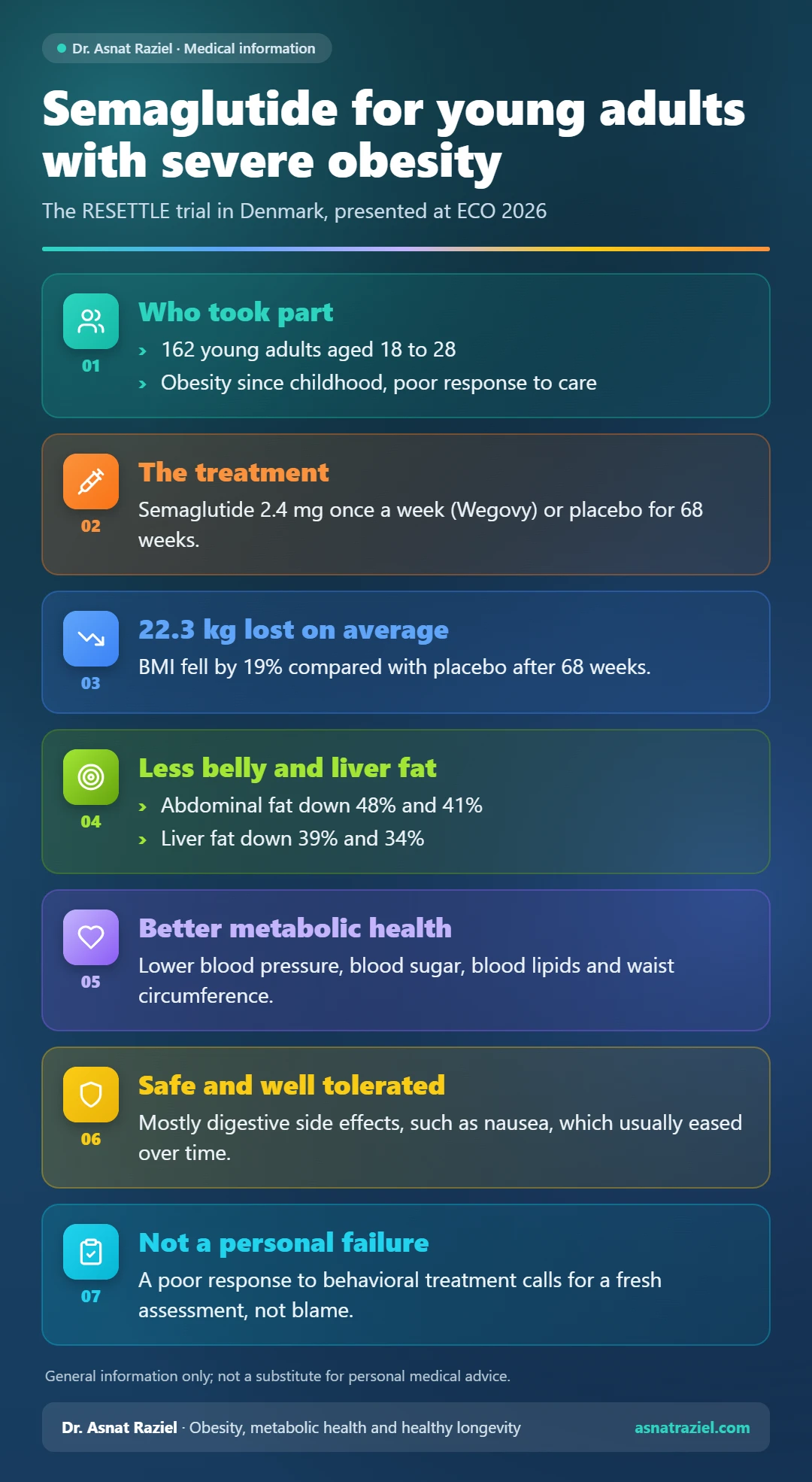
In a new Danish study, semaglutide for young adults with severe obesity led to an average weight loss of 22.3 kg. The participants were young people who had lived with obesity since childhood and had not improved enough with behavioral treatment. The researchers presented the study at the European Congress on Obesity, ECO 2026, in Istanbul. It shows that even after years of frustration, real change is possible.
Childhood obesity is not a “passing phase”
Severe obesity that starts in childhood is a chronic disease with long-term consequences. Children and teens with obesity are at high risk of carrying it into adulthood. In addition, they may develop type 2 diabetes, heart disease, fatty liver and a lower quality of life at a young age. For example, an Israeli study of 2.3 million adolescents linked obesity in adolescence to a higher risk of cancer in midlife. You can read more about this in my article on childhood obesity treatment.
Intensive treatment programs combine nutrition, physical activity, behavior change and family support. However, some patients don’t achieve meaningful, lasting improvement with them. This is exactly the group the new study focused on.
The RESETTLE trial: when classic treatment isn’t enough
Researchers from the University of Copenhagen and Holbæk Hospital in Denmark led the RESETTLE trial. They tested whether semaglutide, the active ingredient in Wegovy, at 2.4 mg once a week, would help young adults who had not responded well to treatment as children. The researchers published the study protocol in advance in the journal BMJ Open.
The study included 246 young adults aged 18 to 28, with an average age of 23. All of them had received treatment as children at the Children’s Obesity Clinic in Holbæk, a leading center in Denmark. The researchers divided them into groups according to their response to childhood treatment and their current BMI. In the end, 162 participants with a low or moderate response in childhood received either semaglutide or placebo at random for 68 weeks. Of these, 152 (94%) completed the final visit.
Semaglutide for young adults: dramatic weight loss
The results were impressive. According to the data presented, BMI fell by 19% compared with placebo after 68 weeks. The average weight loss was 22.3 kg.
In the group that had responded least to childhood treatment, BMI fell by an average of 7.3 kg/m² from 40.5. By contrast, it actually rose by 0.5 in the placebo group. Similarly, BMI fell by 6.7 from 38.0 in the moderate-response group, compared with a rise of 0.6 on placebo. In other words, both groups benefited to a similar degree.
Semaglutide for young adults: less belly and liver fat
Weight loss was only part of the story. Total fat mass fell by 17.4 kg in the low-response group and by 15.1 kg in the moderate-response group, compared with placebo. Abdominal fat dropped by 48% and 41%, respectively. Liver fat also fell, by 39% and 34%. In addition, the severity of metabolic syndrome decreased, including blood pressure, blood sugar, blood lipids and waist circumference.
These findings matter a great deal. Belly fat and liver fat are directly linked to diabetes, heart disease and chronic inflammation. You can read about semaglutide and the liver in my article on Wegovy for fatty liver.
Not a personal failure, but biology
One of the study’s key messages is that obesity is not a lack of willpower. It is a biological disease that involves hunger, satiety, reward in the brain, hormones, genetics and environment. I explain this further in my article on obesity as a chronic disease. Social attitudes also play a role. Weight stigma harms health and keeps people away from treatment.
Semaglutide belongs to the GLP-1 drug family. It mimics a natural hormone of the digestive system and the brain. The drug reduces hunger, increases fullness and acts on the brain’s reward centers. In this way, it helps people cope with the urge to eat and maintain change over time. Many young people with long-standing obesity have spent years dealing with stigma, frustration and repeated setbacks. Therefore, real improvement may also change their self-confidence, social life and quality of life.
When should medication be considered?
The researchers stress the importance of identifying these patients in time. Children and teens who don’t respond well enough to behavioral treatment need a fresh assessment. According to the researchers, delaying appropriate drug treatment may allow the disease to progress and deepen the metabolic damage.
At the same time, medications don’t replace a healthy lifestyle. Good nutrition, physical activity, quality sleep, family support and mental health remain the foundation. Moreover, the STEP TEENS trial had already shown the benefit of semaglutide in adolescence. Following that trial, the FDA approved Wegovy in December 2022 for teens aged 12 and older with obesity. I cover the details in my article on the STEP trials. In Israel, the 2026 national health basket covers the Wegovy injection only for ages 12 to 18. This means young adults over 18 need to check their funding options with their health fund (HMO). Read more in my guide to teen obesity treatment.
Semaglutide for young adults: an encouraging safety profile
According to the researchers, the treatment was safe and well tolerated. The most common side effects were digestive, such as nausea and abdominal pain. In most cases, they eased over time and did not lead people to stop treatment. However, so far the results have only appeared at a conference, not yet in a full journal publication. So it’s wise to wait for the complete data.
What does this mean for young patients?
What can we learn from the study in practice? First, a young person who hasn’t managed to lose weight with behavioral treatment has not failed. Their body simply needs additional treatment. Second, a comprehensive assessment is worthwhile: blood sugar, blood lipids, liver function, blood pressure and sleep. Third, if drug treatment begins, it’s important to combine it with nutritional guidance and physical activity. This helps preserve muscle mass and build long-term habits. Finally, remember that obesity is a chronic disease. That’s why treatment continues over time and doesn’t end once you reach your goal.
The bottom line
This study joins a series of studies showing that drug treatment for obesity is not about appearance. Its purpose is to prevent chronic disease and improve metabolic health. For young people who have lived with severe obesity for years, semaglutide for young adults offers a real chance to change course. Ultimately, just like high blood pressure or diabetes, obesity requires chronic, multidisciplinary and sometimes drug treatment.
This article provides general information and does not replace personal medical advice.
References
Semaglutide significantly reduces obesity in treatment-resistant young adults
Childhood obesity care nonresponders lose weight on semaglutide
Once-Weekly Semaglutide in Adolescents with Obesity