By Dr. Asnat Raziel, bariatric surgeon specializing in obesity treatment, metabolic health and healthy longevity; Director of the Multidisciplinary Center for Obesity Treatment, Assia Medical, Assuta Ramat HaChayal, Tel Aviv
Postpartum weight loss: what you should know
Postpartum weight loss is on the mind of almost every woman in the first months with a new baby. Your body has gone through nine months of change, and getting back to balance takes time. The good news is that you can lose weight safely, even while breastfeeding. The key is a gradual pace, nourishing food, movement and as much sleep as you can get.
In this article, I have gathered what matters most: when to start, how to combine breastfeeding and dieting, and what about weight loss medications. In addition, you will find the warning signs that call for a visit to your doctor.
What happens to your body in the first months
Right after birth, you lose several kilograms at once: the baby, the placenta and the amniotic fluid. Over the following weeks, your body also clears excess fluid. By contrast, the fat tissue that built up during pregnancy comes off much more slowly.
At the same time, hormone levels shift, sleep comes in short stretches and stress runs high. All of these affect appetite and food choices. So there is no point in comparing yourself to other women. Every woman has her own pace, and it also depends on how much weight she gained in pregnancy and what she weighed before it.
When should postpartum weight loss start?
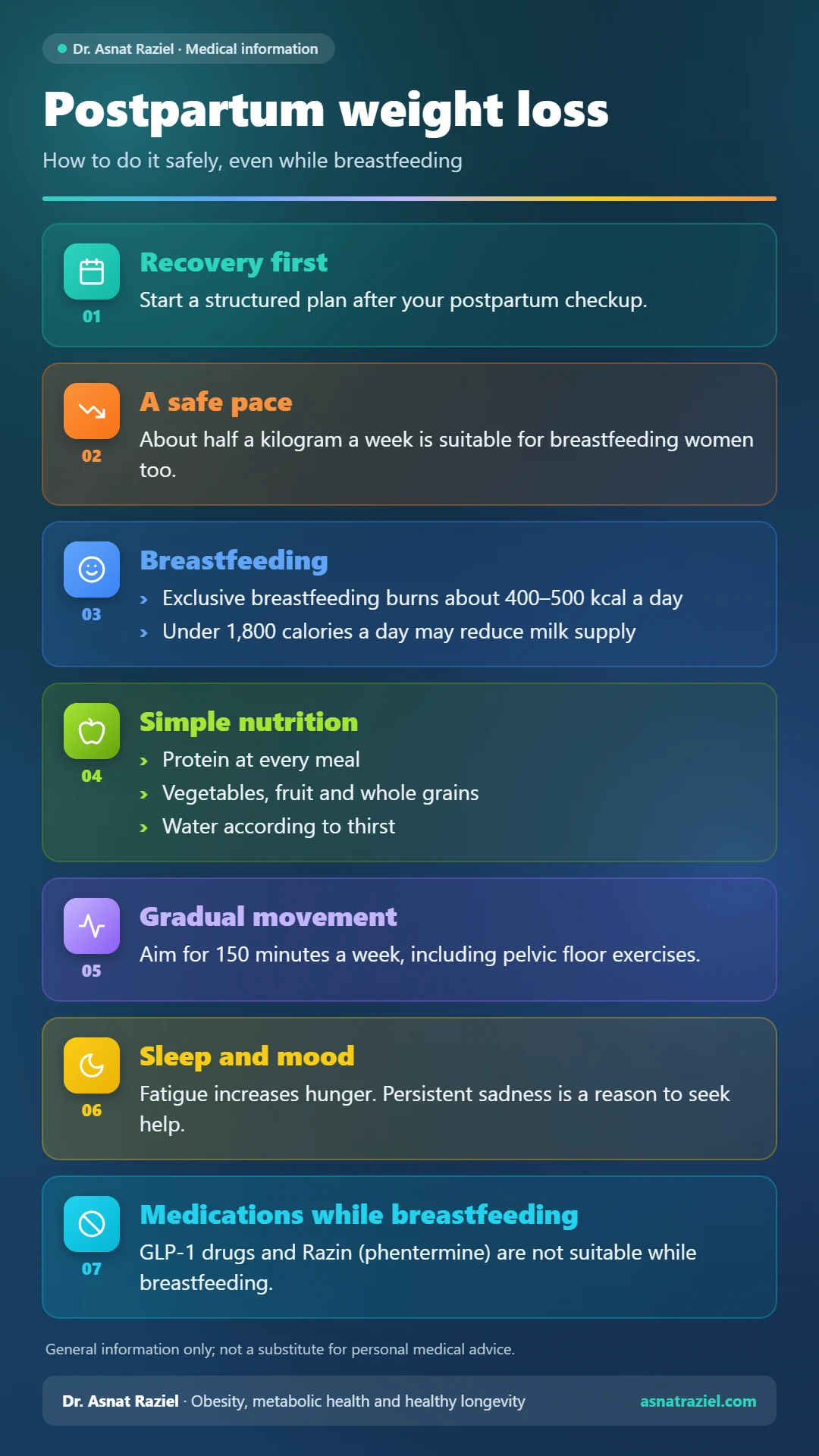
In the first weeks, the goal is recovery, not dieting. Your body needs energy to heal from the birth, especially after a cesarean section. That is why it is best to wait for your postpartum checkup, and only then build a structured plan.
A gradual pace is best. According to the Academy of Nutrition and Dietetics, losing about half a kilogram a week is a reasonable and safe pace while breastfeeding. Much faster loss increases fatigue and may reduce your milk supply.
Breastfeeding and postpartum weight loss
Full breastfeeding uses a lot of energy. A woman who breastfeeds exclusively burns about 400 to 500 extra calories a day compared with a woman who does not. Part of this energy comes from the fat stores your body built during pregnancy.
However, breastfeeding alone does not guarantee weight loss. Some women feel very hungry during this period and eat accordingly. It is also important not to restrict too much. Eating fewer than 1,800 calories a day may reduce milk production.
It helps to keep the bigger picture in mind. The World Health Organization recommends exclusive breastfeeding for the first six months, and continued breastfeeding up to age two or beyond. In other words, your weight loss plan should fit around breastfeeding, not the other way around.
Healthy eating for postpartum weight loss
There is no need for an extreme diet. Instead, build a routine of simple, nourishing meals. Three meals a day plus small snacks help keep your energy steady.
- Protein at every meal: eggs, yogurt, legumes, chicken or fish.
- Vegetables and fruit every day, ideally in a variety of colors.
- Whole grains instead of white bread and pastries.
- Drinking according to thirst, mostly water.
- Fewer sweetened drinks, snacks and processed foods.
A practical tip: prepare healthy snacks ahead of time that you can eat with one hand. For example, cut vegetables, nuts or cheese. In addition, protein helps preserve muscle during weight loss, as I explain in my guide to protein intake.
Exercise after giving birth
The American College of Obstetricians and Gynecologists (ACOG) recommends encouraging women to return to physical activity after birth. According to its guidance, exercise also helps prevent postpartum depression. The general target is 150 minutes a week of moderate-intensity activity.
Start with short walks with the stroller, and build up gradually. Pelvic floor and deep core exercises are especially important. After a cesarean section, or if you have pain or urine leakage, check with a physical therapist first. Moderate activity, such as brisk walking, does not reduce milk supply.
Sleep, mood and emotional eating
Lack of sleep increases hunger and cravings for sweets. This is a biological mechanism, not a weakness. So try to rest when the baby sleeps, and ask your partner and family for help.
Emotional strain matters too. Fatigue, loneliness and stress often lead to emotional eating. In addition, the changes in your body affect your body image, and that is completely natural.
Still, ongoing sadness, anxiety or trouble functioning are not “just part of it.” These may be signs of postpartum depression, and it is important to seek professional help early. Centers such as Hope Therapy Center combine psychiatric care and psychotherapy. In Israel, you can turn to your family doctor, your Tipat Halav (mother-and-baby) clinic or your health fund (HMO).
Postpartum weight loss medications while breastfeeding
Many women ask whether they can go back to a medication they stopped before pregnancy. The short answer: while breastfeeding, usually not. I wrote about stopping these drugs at the start of pregnancy in my guide to weight loss drugs and pregnancy.
GLP-1 drugs and Mounjaro after giving birth
According to guidance from the UK medicines regulator (MHRA), you should not take GLP-1 medicines while breastfeeding. The reason is a lack of safety data for the baby. This drug family includes, for example, Wegovy (semaglutide) and Mounjaro (tirzepatide). The US prescribing information for Mounjaro describes a small study of 11 breastfeeding women. The drug level in breast milk was low or undetectable, but there is no information on the effect on the baby.
It is also important to plan ahead for your next pregnancy. According to the same guidance, you should stop semaglutide at least two months before trying to conceive, and tirzepatide at least one month before. If you take birth control pills and start Mounjaro, you need an additional non-pill method for four weeks from the start of treatment and after each dose increase.
Razin and other medications
Razin (phentermine, an Israeli brand) is not suitable during breastfeeding either. According to Mayo Clinic, there are reports of harmful effects in babies of mothers who took it. Therefore, choose a different medication, or wait until you finish breastfeeding. Make any decision about drug treatment during this period together with a doctor.
When does postpartum weight loss need medical support?
Sometimes the scale does not budge, despite real effort. In that case, it is worth checking for medical causes, such as an underactive thyroid or anemia. Women who had gestational diabetes also need a blood sugar test after giving birth.
Beyond that, extra weight that remains a year after birth can accumulate from one pregnancy to the next. In such cases, a structured metabolic rehabilitation program with a multidisciplinary team helps you get back to balance. What’s more, a mother’s healthy habits affect the whole family, and even the risk of obesity in early childhood. If you would like personal guidance, you are welcome to contact my clinic.
The bottom line on postpartum weight loss
Postpartum weight loss takes patience. A pace of about half a kilogram a week, nourishing food and gradual movement also suit breastfeeding women. Weight loss medications, such as GLP-1 drugs and Razin, are not recommended while breastfeeding. If your weight is not coming down, or your mood is low, it is a good idea to seek medical advice.
The information in this article is general and does not replace personal medical advice.
Frequently asked questions
How long does postpartum weight loss take?
For most women, the process takes months. A safe pace while breastfeeding is about half a kilogram a week.
Does breastfeeding help you lose weight?
Full breastfeeding uses about 400 to 500 calories a day. However, appetite also rises, so the result varies from woman to woman.
Can I go back to weight loss injections while breastfeeding?
No. According to the guidance, you should not take GLP-1 medicines while breastfeeding. You can consider them with your doctor after you finish breastfeeding.
When can I start exercising?
You can start light walks early on. Before intense workouts, and especially after a cesarean section, it is best to get medical clearance.
References
Losing Weight While Breastfeeding
Infant and young child feeding – WHO fact sheet
GLP-1 medicines for weight loss and diabetes: what you need to know