By Dr. Asnat Raziel, bariatric surgeon specializing in obesity treatment, metabolic health and healthy longevity; Director of the Multidisciplinary Center for Obesity Treatment, Assia Medical, Assuta Ramat HaChayal, Tel Aviv
Low appetite on GLP-1: why what you eat matters more
A low appetite on GLP-1 medications is exactly what these drugs are designed to achieve. But as your plate shrinks, every bite has to work harder. That is why nutrition is part of the treatment itself, not a minor add-on. The new medications curb appetite powerfully, so you eat less, and sometimes much less. The real question is what goes onto that smaller plate.
In this article, I focus on the practical side: how to eat well when you are barely hungry. I explain what happens to eating during treatment, how much protein to aim for, how to cope with nausea and constipation, and which vitamins may run low. If you are looking for a full personal meal plan with a sample day, see my broader guide on what to eat on weight loss injections. The recommendations here rely mainly on a joint advisory from four US professional organizations, published in 2025.
How GLP-1 drugs change the way you eat
GLP-1 medications such as semaglutide and tirzepatide act on the hunger and fullness centers in the brain. They also slow down stomach emptying. As a result, you feel full quickly, and the feeling lasts a long time. You can read more about anti-obesity medications and how they differ from one another.
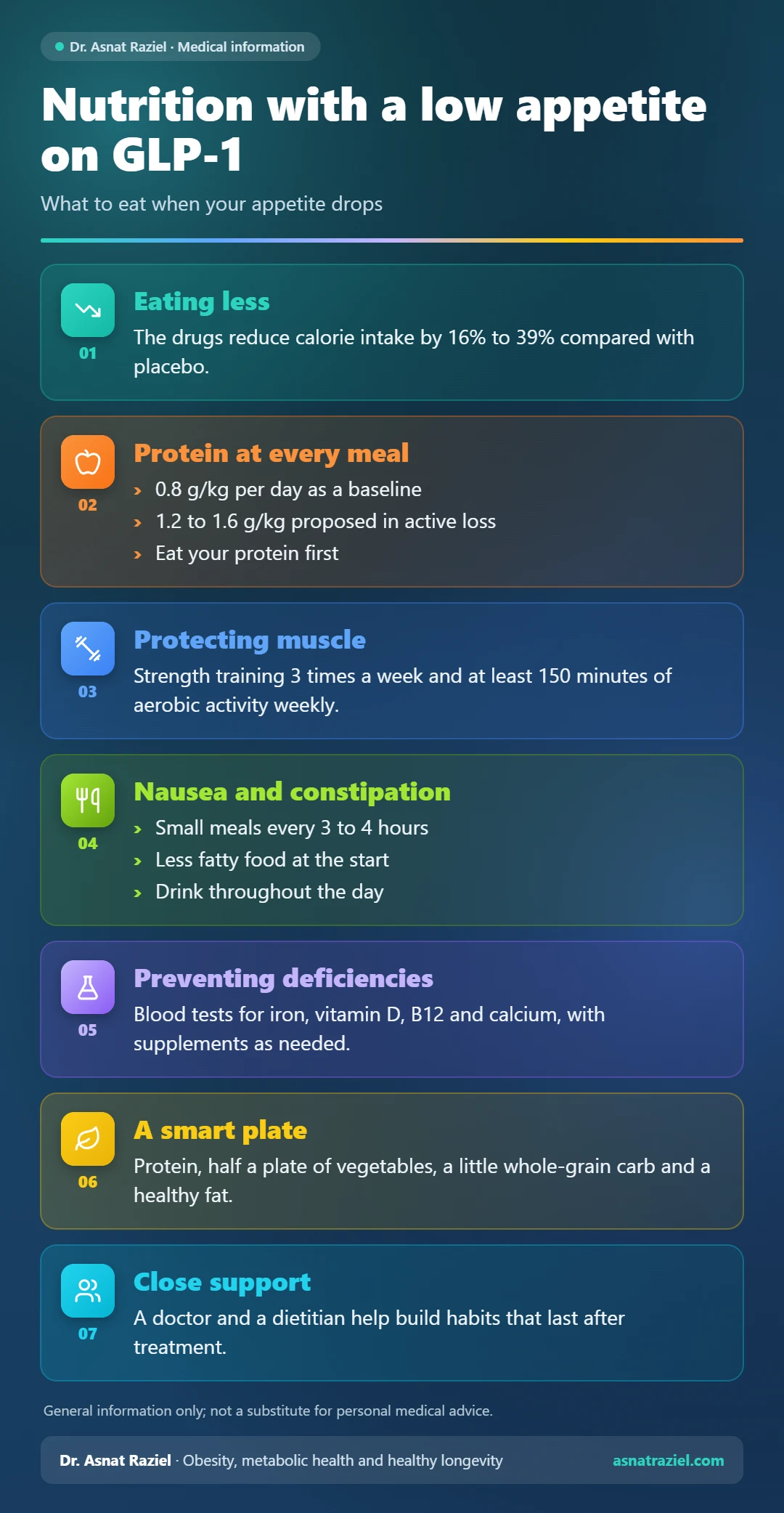
According to the advisory, these drugs reduce calorie intake by 16% to 39% compared with placebo. In addition, many patients describe quieter food noise, meaning the constant thoughts about food. For many people, cravings for fatty foods, sweets and alcohol also fade. For this reason, a low appetite on GLP-1 treatment is a great opportunity to build new habits.
Some patients also notice that food tastes different. Ynetnews reviewed how weight-loss drugs may affect taste and smell, including a large Israeli study. Still, the absolute risk was low, and the research cannot prove cause and effect.
However, there is a flip side. When you eat very little, it is easy to fall short on protein, vitamins and minerals. So planning your meals matters most right now.
Protein first when appetite is low on GLP-1
Protein is the building block of muscle. The general recommendation for adults is 0.8 grams of protein per kilogram of body weight per day. During active weight loss, experts have proposed a higher target of 1.2 to 1.6 g/kg per day. Still, there is no agreement yet on which body weight to use for this calculation in people with obesity. For that reason, it is best to set your target together with a dietitian.
In practice, I recommend putting protein on your plate at every meal and eating it first. Good options include eggs, yogurt or cottage cheese, fish, chicken, tofu and legumes. When your appetite on GLP-1 is very low, a protein shake can help. You will find meal ideas in my sample daily menu on Mounjaro and in our complete guide to protein intake.
Protecting muscle and bone while you lose weight
Rapid weight loss removes both fat and lean tissue. In a body-composition substudy of the STEP 1 trial, participants lost an average of 13.6 kg with semaglutide. Of that, 8.3 kg (62%) was fat and 5.3 kg (38%) was lean tissue, which includes muscle and other tissues.
That is why diet alone is not enough. The advisory recommends strength training at least three times a week, plus at least 150 minutes of moderate aerobic activity per week. Together, protein and exercise help preserve both muscle and bone. You can read more in my article on how to prevent muscle loss.
Low appetite on GLP-1 with nausea or constipation
Digestive side effects are most common at the start of treatment and after each dose increase. In clinical trials, nausea affected 25% to 44% of participants, and constipation affected 17% to 24%. The good news is that fewer than 10% stopped treatment because of these effects.
When you feel nauseous
- Eat a small breakfast, then small meals every 3 to 4 hours.
- Avoid fatty foods and very high-fiber foods in the first few days.
- Stop eating as soon as you feel full, even if there is food left on your plate.
- Ginger or mint tea may bring relief for some patients.
When you are constipated
Drink throughout the day, even when you are not thirsty. Water-rich vegetables and fruits, along with fiber from food, also help keep your bowels moving. On the other hand, vomiting and diarrhea can lead to dehydration and, in rare cases, kidney injury. If that happens, it is important to contact your doctor.
Low appetite on GLP-1: vitamins and minerals that may run low
When a low appetite on GLP-1 drugs pushes intake below 1,200 calories a day for women, or below 1,800 for men, the risk of deficiencies rises. The list includes iron, calcium, magnesium and zinc, as well as vitamins A, D, E, K, B1, B12 and C. Therefore, it is worth having blood tests before and during treatment.
Warning signs that call for testing include unusual fatigue, increased hair loss, dry or itchy skin, muscle weakness and wounds that heal slowly. Depending on your needs, your doctor may recommend vitamin D, calcium, B12 or a multivitamin. This is exactly where working with a dietitian during drug treatment comes in, because supplements should be tailored to each patient.
Low appetite on GLP-1: a simple daily routine
So what does all of this look like on an ordinary day? Start with a small breakfast, even if you do not feel hungry. After that, eat a small meal every 3 to 4 hours. At each meal, begin with a portion of protein, move on to vegetables, and finish with a little whole-grain carbohydrate and healthy fat. Between meals, keep drinking, even without feeling thirsty. When you feel full, stop, even if food is left on your plate. This way, even with a low appetite on GLP-1 treatment, your body gets protein, fiber, vitamins and fluids throughout the day. If unusual fatigue or hair loss still shows up, it is time for blood tests.
What to put on a smaller plate
The goal is to get as much nutritional value as possible from every bite. That is why the recommendation is whole, minimally processed food: vegetables, fruits, whole grains, legumes, lean protein, nuts and seeds. In contrast, it is wise to limit white flour and sugar, sweetened drinks, red and processed meat, and fast food.
Here is a simple way to build a meal. First, a portion of protein. Next, half a plate of vegetables. Finally, a little whole-grain carbohydrate and a healthy fat, such as olive oil or avocado. This way, even a small plate gives your body what it needs. For a detailed explanation, see my guide on nutrition tailored to weight loss injections.
Building habits for the long term
In studies, most participants who stopped the medication regained weight, even when they had received general dietary advice during treatment. Put simply, the habits you build now are your insurance for the future. Moreover, an international expert consensus recommends planning nutrition before treatment starts, during it, and in the weight maintenance phase.
At our clinic, we support patients with a multidisciplinary team that includes a doctor and a dietitian. This kind of planning complements drug treatment for obesity and also supports a heart-healthy lifestyle.
The bottom line
With a low appetite on GLP-1 drugs, what you eat determines not only how many kilograms you lose, but also what you lose: fat or muscle. Protein at every meal, plenty of vegetables, enough fluids and strength training are the foundation. Blood tests and support from a dietitian help prevent deficiencies. These habits will also help you keep your results after treatment ends.
The information in this article is general and does not replace personal medical advice.
Frequently asked questions
How much protein do I need on weight loss injections?
The basic recommendation is 0.8 grams per kilogram per day. During active weight loss, targets of 1.2 to 1.6 g/kg have been proposed. It is best to set your personal target with a dietitian.
Do I need supplements during drug treatment?
Not always. However, eating very little raises the risk of iron, vitamin D, B12 and calcium deficiency. Blood tests will show whether you need a supplement.
What should I eat when I feel nauseous?
Small meals every 3 to 4 hours, little fat, and fluids throughout the day. If the nausea does not go away, contact your treating doctor.
Does eating well with a low appetite on GLP-1 prevent weight regain?
It does not guarantee it, but it helps. Eating and exercise habits built during treatment make weight maintenance much easier.