By Dr. Asnat Raziel, bariatric surgeon specializing in obesity treatment, metabolic health and healthy longevity; Director of the Multidisciplinary Center for Obesity Treatment, Assia Medical, Assuta Ramat HaChayal, Tel Aviv
GLP-1 eating habits: how you eat shapes your side effects
GLP-1 eating habits, meaning how fast, how much and when you eat, have a direct effect on how you feel during treatment. Digestive side effects are the most common complaint with drug treatment for obesity. They appear mainly with incretin-based drugs such as semaglutide and tirzepatide. Nausea, diarrhea, constipation and bloating can hurt your quality of life. However, in most cases they can be greatly reduced. In this article I focus on habits, not just on menus. For a detailed guide to food choices rather than habits, read my article on what to eat on weight loss injections.
How common are these side effects?
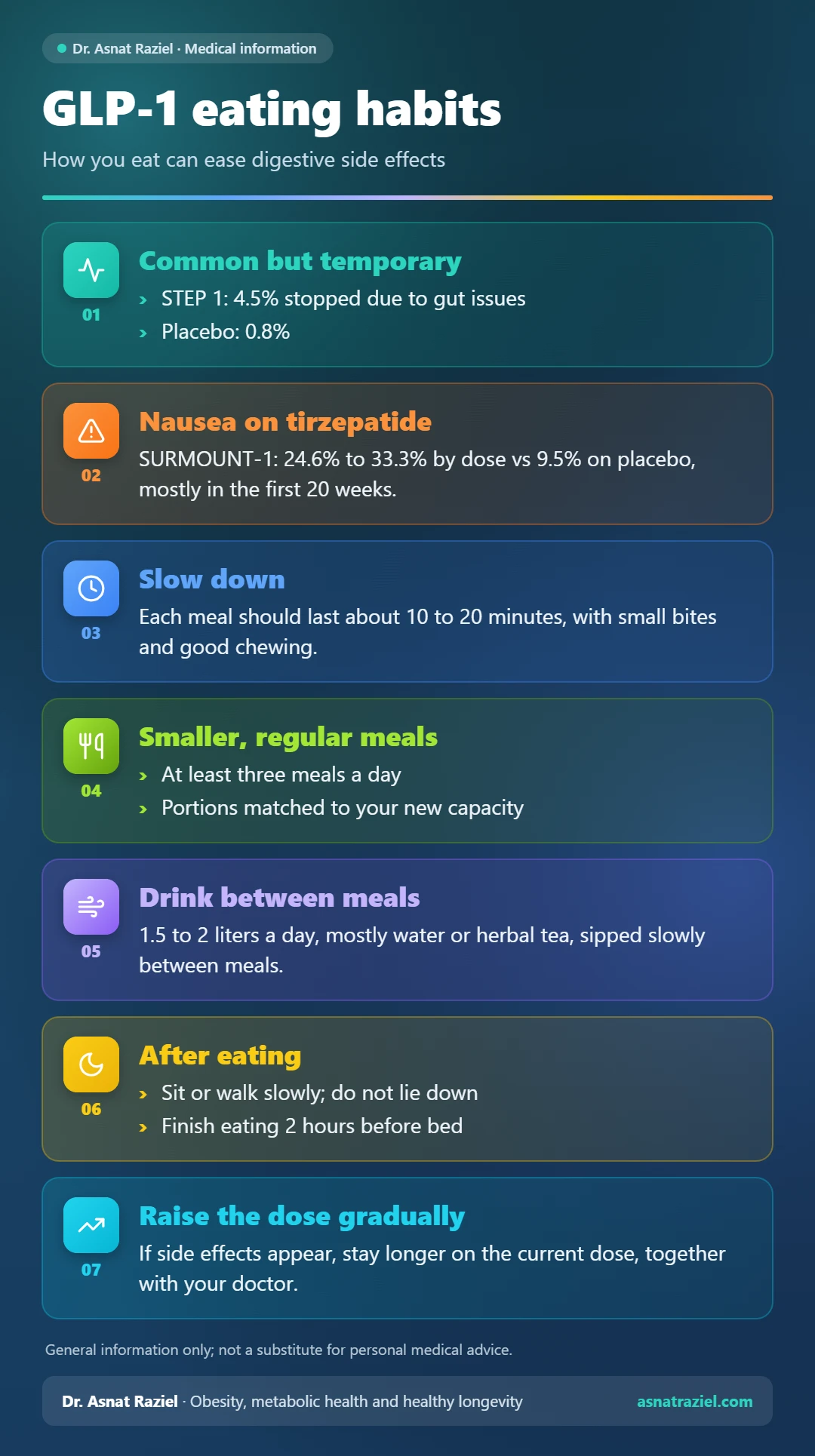
In the STEP 1 trial, 1,961 adults received semaglutide 2.4 mg or placebo for 68 weeks. Nausea and diarrhea were the most common side effects. They were usually mild to moderate and faded over time. In the end, only 4.5% stopped treatment because of digestive problems, compared with 0.8% on placebo.
The picture is similar with tirzepatide in the SURMOUNT-1 trial. According to the trial data, nausea occurred in 24.6% to 33.3% of patients, depending on the dose, compared with 9.5% on placebo. Most side effects appeared during the dose-increase period, in the first 20 weeks. In addition, a meta-analysis of 21 trials and 99,599 patients found a 63% increase in digestive disorders with GLP-1 drugs. In other words, these effects are common, but usually temporary and manageable.
Why digestive side effects happen
These drugs mimic natural satiety hormones. They slow down stomach emptying and act on the appetite centers in the brain. As a result, food stays in the stomach longer, and fullness comes quickly. If you keep eating at your old pace and in your old portions, you will feel overly full, nauseous and have heartburn. In other words, many of the symptoms come from the gap between the “new stomach” and old habits. I explain the mechanism in more detail in my article on satiety hormones and the brain.
GLP-1 eating habits that reduce side effects
The way you eat matters just as much as what you eat. These are the habits I recommend in my clinic:
- Pace and chewing: eat slowly and chew well. A meal should last about 10 to 20 minutes. Take small bites and put your fork down between bites.
- Timing: have at least three meals a day. Avoid fasting for many hours and skipping meals, so one meal does not carry the whole load.
- Volume: shrink your portions to match your new capacity. Small plates help, and it is best not to eat straight from serving dishes.
- Hunger and fullness: start eating when you are moderately hungry. Stop at a pleasant feeling of fullness, before you feel ready to “burst”.
- Setting: eat sitting down, without screens. That way you will notice the food and your body’s signals.
- After the meal: do not lie down right away. It is better to sit or walk slowly. On the other hand, strenuous exercise right after eating is not recommended. Also, finish eating at least two hours before bedtime.
A sample day with healthy GLP-1 eating habits
To make this practical, here is how the same advice looks over one day. Breakfast, lunch and dinner are spread out, with no long fasts, and each meal lasts 10 to 20 minutes. Every plate includes protein, whole grains and vegetables, in a smaller portion than before. Between meals, you sip water or herbal tea, for a total of 1.5 to 2 liters. After dinner you sit or take a slow walk, and the kitchen closes at least two hours before bed. If nausea appears, you switch that day to 3 to 6 small meals instead of large ones.
GLP-1 eating habits: what to eat and drink
The basis is a varied menu of fresh or minimally processed food. Include protein at every meal, along with whole grains and vegetables. In contrast, cut down on fatty and fried food, which slows stomach emptying even more. Likewise, a joint advisory from four professional organizations from 2025 puts managing digestive symptoms and protein at the top of the priority list. So it is worth building a tailored menu, ideally with a dietitian.
In addition, drink at least 1.5 to 2 liters a day, or 8 to 10 glasses. Prefer water or herbal teas. Sweetened and carbonated drinks may worsen symptoms and slow weight loss. Sip slowly, mainly between meals and not during them. It also helps to skip straws, so you do not swallow extra air.
Adjusting your GLP-1 eating habits by symptom
Nausea
Choose dry, cold and mild-tasting foods, such as crackers, rusks or pretzels. A ginger drink may help. On the other hand, avoid spicy, heavily seasoned, fatty and fried foods. Separate drinking from eating, and do not lie down in the hour after a meal. Instead of large meals, eat 3 to 6 small meals a day.
Diarrhea
Cut down on simple sugars, such as juices and sweets. In addition, avoid fatty and fried food, and limit caffeine and alcohol. Low-lactose dairy products, such as cottage cheese and hard cheeses, are better than regular milk. It is especially important to drink plenty, to prevent dehydration.
Constipation
Increase your dietary fiber: fruit and vegetables with the peel, legumes and whole grains. Alongside this, drink 8 to 10 glasses of water a day. Daily physical activity helps keep the bowel moving. It is also worth setting aside a regular, calm time for the bathroom.
Burping and bloating
The goal here is to swallow less air. So do not talk while eating, and skip chewing gum, straws and smoking. Also, avoid carbonated drinks completely.
Gradual dose increase: the most important tool
Beyond diet, the pace of treatment itself has a big impact. An expert consensus recommends reaching the maintenance dose gradually. If side effects appear, you can stay on the current dose longer before the next step. Sometimes the doctor will temporarily go back to the previous dose. Further clinical recommendations stress that explaining this to patients in advance helps them stick with treatment. Therefore, it is important to plan the dose increase together with your doctor, right at the start of drug treatment.
When digestive side effects need a doctor
Most side effects are mild and fade within weeks. However, some signs must not be ignored. Repeated vomiting or ongoing diarrhea can cause dehydration and kidney damage. Severe, persistent abdominal pain that spreads to the back needs urgent assessment. In addition, pain in the upper right abdomen, fever or yellowing of the skin may point to a gallbladder problem. I cover these risks in my articles on pancreatitis and GLP-1 drugs and on gallstones with Wegovy and Mounjaro.
The bottom line on GLP-1 eating habits
Digestive side effects are not inevitable. Small, frequent meals, slow chewing and quality, unprocessed food make a big difference. In addition, drinking plenty of water and increasing the dose gradually ease most symptoms. That way you can stay on treatment and enjoy its benefits. For a broad review of all side effects, see my article on common and rare GLP-1 side effects.
This article is general information and does not replace personal medical advice.
References
Once-Weekly Semaglutide in Adults with Overweight or Obesity
Tirzepatide Once Weekly for the Treatment of Obesity