By Dr. Asnat Raziel, bariatric surgeon specializing in obesity treatment, metabolic health and healthy longevity; Director of the Multidisciplinary Center for Obesity Treatment, Assia Medical, Assuta Ramat HaChayal, Tel Aviv
What exactly is digital dementia?
Digital dementia is a dramatic term that has taken center stage in public discussion. It describes the fear that screens weaken the brain. According to this fear, endless scrolling, fast-paced content and reliance on external memory erode attention and memory. Think, for example, of searching on Google, automatic navigation and phone reminders.
However, when you look at the research, a much more nuanced picture emerges. Not every screen causes harm, and not every use of technology puts the brain at risk. The big difference is between prolonged passive use and use that is active, social and challenging. It is also important to know that digital dementia is not an official medical diagnosis.
Digital dementia: does technology raise the risk of dementia?
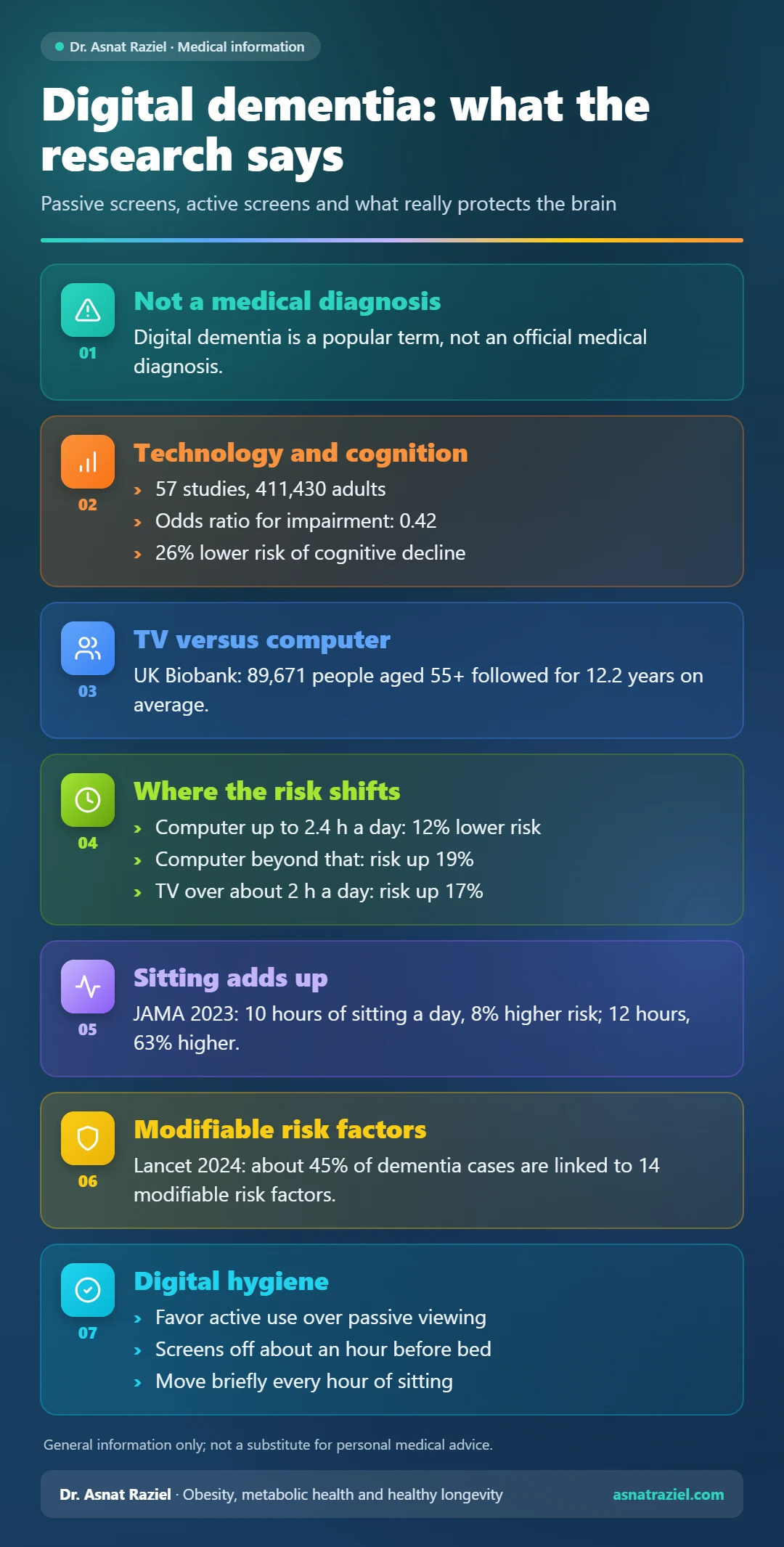
In 2025, a large meta-analysis on the subject was published in Nature Human Behaviour. The researchers analyzed 57 studies that included 411,430 adults with an average age of 68.7. Contrary to the popular fear, they found that using digital technology actually goes hand in hand with a lower risk of cognitive decline.
The odds ratio for cognitive impairment was 0.42. In addition, the risk of cognitive decline over time was 26% lower (hazard ratio 0.74). The researchers called this “technological reserve.” In other words, active use of computers, the internet and smartphones may stimulate the brain and help preserve independence. Still, this is a statistical association. It does not prove that technology prevents dementia.
Not all screens are created equal
When you look at the type of use, a significant difference emerges. A study from the UK Biobank followed 89,671 people aged 55 and older for an average of 12.2 years. All the participants had little leisure or social activity. The study looked at TV watching and computer use.
Long hours of TV watching went along with a higher risk of dementia. In particular, there was an almost linear rise in the risk of vascular dementia, that is, dementia caused by damage to blood vessels in the brain. By contrast, moderate computer use was linked to a lower risk. One possible explanation is that a computer makes the brain work: reading, writing, deciding, solving problems and communicating.
How much screen time is too much?
In the British study, people who used a computer for up to 2.4 hours a day had a 12% lower risk of dementia. Beyond that threshold, the risk rose by 19%. For TV watching, the picture was different. Up to about two hours a day, the researchers found no association. After about two hours, the risk rose by 17%.
These findings show that not all screen time is the same. The effect on the brain depends on both the length of exposure and the nature of the activity. Passive watching is very different from active, interactive use.
Digital dementia and prolonged sitting
Sitting and lack of movement also link screens and dementia. A study published in JAMA in 2023 measured sitting with a wrist-worn sensor in 49,841 people aged 60 and older. As sitting time rose, so did the risk of dementia. For example, 10 hours of sitting a day was linked to an 8% higher risk. At 12 hours a day, the risk rose by 63%.
The brain doesn’t like a whole day in a chair. Prolonged sitting harms metabolism, blood flow, sleep and mood. All of these are also linked to brain health. That is why it is worth building movement into your day. You can read about the recommended types of exercise in my article on aerobic versus strength training.
Screens that switch the brain off versus screens that switch it on
This is where the most important distinction comes in. Long viewing alone, late at night, with snacking and no movement adds to well-known risk factors. These include, for example, poor sleep, obesity, diabetes, high blood pressure, depression and loneliness. You can read about the link between weight and the brain in my article on obesity and brain health.
On the other hand, a video call with family, learning a language or reading an article all activate the brain. Similarly, a thinking game, writing, an online course and managing your own health may support cognitive reserve.
Digital dementia: what about children and teens?
In children and young people, the main concern is different. Reviews point to possible harm to attention, language, sleep, emotional regulation and learning habits. The reason is early and heavy exposure to fast-paced screens. For this reason, the World Health Organization recommends very little screen time in early childhood.
Even so, there is currently no evidence that children with high screen time will develop dementia later in life. The advice for parents is simple: set limits, stay involved and offer alternatives such as play and physical activity. This is an evolving field of research. Sometimes the “digital dementia” headline gets ahead of the evidence.
How to protect your brain in the age of screens
First, it is worth checking what you do in front of the screen, not just how long. An hour of video chatting with grandchildren is very different from an hour of scrolling. Second, you can turn the screen into a health tool. For example, use a step-counting app, a reminder to get up from your chair or an online exercise class. In addition, keep a regular routine for sleep and meals. Even small changes add up over the years.
Finally, remember the emotional side. Screens can connect people, but they can also isolate them. Loneliness is a proven risk factor for dementia. Therefore, any use that brings us closer to other people is an investment in the brain. You can read more in my article on healthy aging.
What really protects the brain?
According to the 2024 Lancet Commission, about 45% of dementia cases are linked to 14 risk factors that can be modified. These include physical inactivity, obesity, diabetes, high blood pressure, depression and social isolation. In addition, the commission lists smoking, excessive alcohol, hearing loss, vision loss and high LDL cholesterol.
So screens are not the only enemy, and perhaps not even the main one. They are part of a whole living environment. Good sleep, for example, is just as important. I wrote about this in my article on sleep and brain health.
Instead of fearing digital dementia: digital hygiene
The practical message is not fear of technology, but digital hygiene. Here are a few simple steps:
- Cut down on passive viewing and favor active use.
- Turn off screens about an hour before bed.
- Take a short movement break for every hour of sitting.
- Scroll less on autopilot and connect more with people.
- Keep up curiosity, learning and regular physical activity.
The bottom line
Digital dementia is a cultural warning sign, not a diagnosis. It reminds us that the brain needs movement, sleep, connection and challenge. A screen can rob us of all of these, but it can also strengthen them. Ultimately, the question is not only how much time we spend in front of a screen. The question is what the screen does to us, and what we do with it.
The information in this article is general and does not replace personal medical advice.
References
A meta-analysis of technology use and cognitive aging
Sedentary Behavior and Incident Dementia Among Older Adults
Dementia prevention, intervention, and care: 2024 report of the Lancet standing Commission




