By Dr. Asnat Raziel, bariatric surgeon specializing in obesity treatment, metabolic health and healthy longevity; Director of the Multidisciplinary Center for Obesity Treatment, Assia Medical, Assuta Ramat HaChayal, Tel Aviv
Chickpea cookies: a healthy dessert that surprises every time
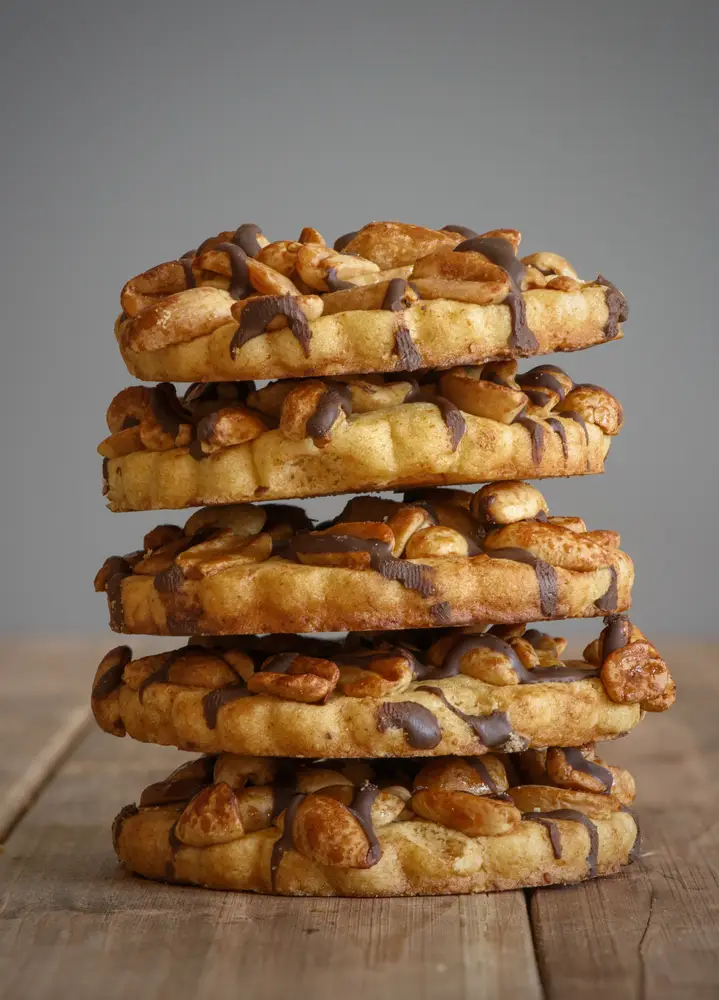
Chickpea cookies are one of the most surprising trends in healthy cooking. In recent years, many people have been looking for ways to enjoy familiar treats with nourishing ingredients and less flour and sugar. One of the more interesting directions is using legumes in desserts. The result here is a pleasant surprise: soft, rich-tasting cookies with no flour and no gluten.
Most of us know chickpeas from savory dishes, like a plate of hummus or falafel. However, when you blend them well, you get a smooth paste that resembles cookie dough. In addition, chickpeas contribute protein and dietary fiber. Both matter for feeling full and for keeping blood sugar balanced.
Why chickpeas?
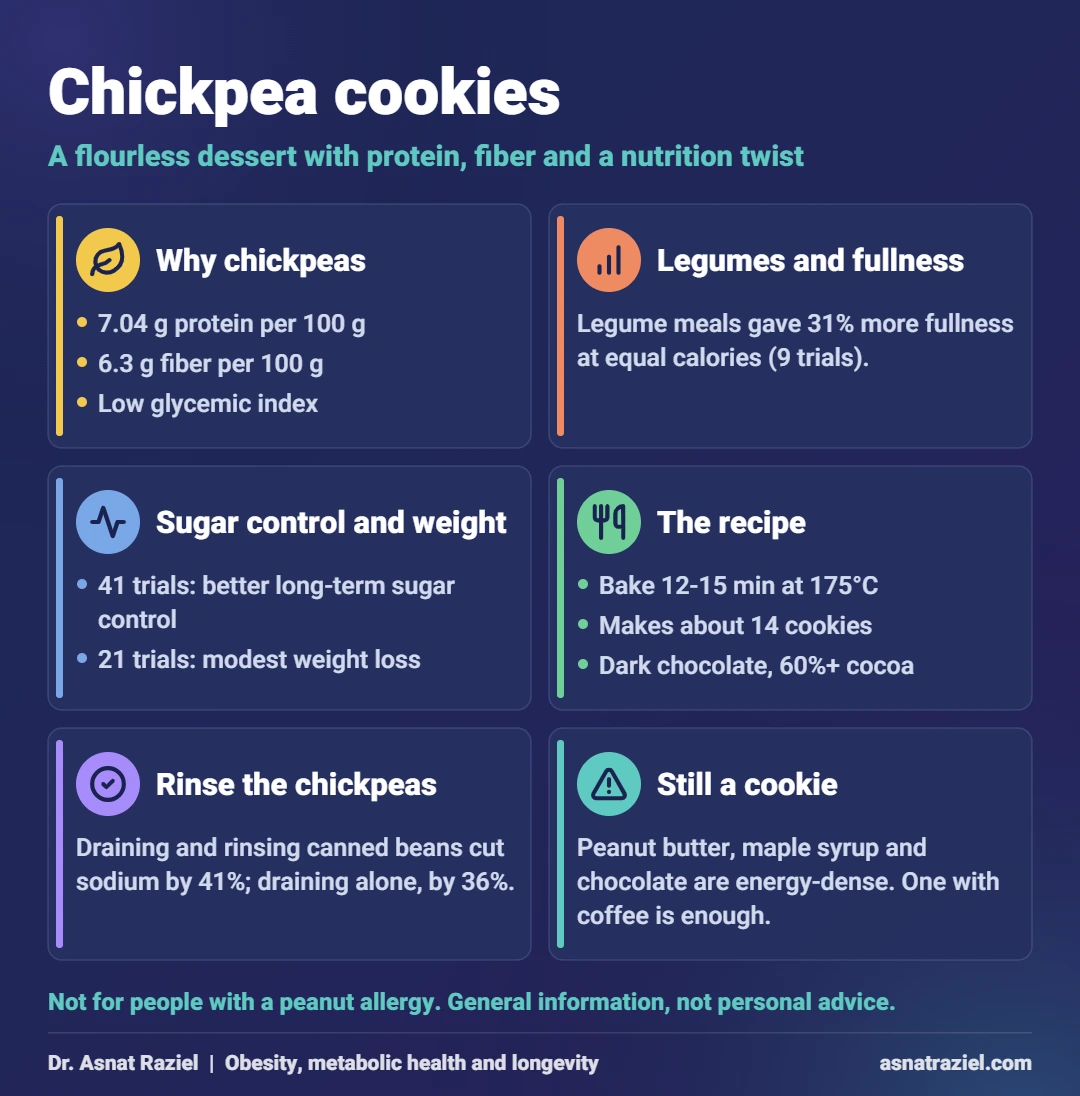
Chickpeas are rich in plant protein, fiber and minerals. According to US Department of Agriculture (USDA) data, 100 grams of canned chickpeas, drained and rinsed, contain 7.04 grams of protein and 6.3 grams of dietary fiber. They also provide iron, magnesium and folate.
Harvard Health also notes that chickpeas have a low glycemic index. In other words, they do not cause the sharp blood sugar spike that refined carbohydrates do. When you combine them with natural peanut butter, you get a cookie with more nutritional value than a standard cookie made from white flour and sugar.
What the research says about legumes and fullness
In a 2014 meta-analysis of nine trials, a meal that included legumes produced 31% greater fullness than a meal with the same number of calories. Even so, the legumes did not reduce how much people ate at the next meal. In a meta-analysis of 41 trials, legumes improved markers of long-term blood sugar control. I have written in detail about ways to improve insulin sensitivity through diet.
Furthermore, a review of 21 trials found modest weight loss on diets that included legumes, even when calories were not restricted. Still, it is important to be precise: these studies looked at legumes as part of the diet, not at cookies. So chickpea cookies are not a “medicine.” Rather, they are a tasty way to bring legumes into your menu. You can read about how fullness works in my article on satiety hormones and the brain.
Who are chickpea cookies right for?
This combination suits people who are trying to cut back on processed flour, as well as anyone following a gluten-free diet. It also works for those looking for a small, satisfying dessert. However, people with a peanut allergy cannot make this version of the recipe.
A note for people with celiac disease: chickpeas themselves are gluten-free, but check the labels on your baking powder and chocolate. According to the FDA, the US Food and Drug Administration, a product labeled “gluten-free” contains less than 20 parts per million of gluten.
The recipe: chickpea cookies with peanut butter and chocolate
Ingredients
- 1 can of cooked chickpeas (about 240 grams after draining)
- ½ cup natural peanut butter
- ⅓ cup pure maple syrup or agave syrup
- 2 teaspoons good-quality vanilla extract
- 1 teaspoon baking powder
- ¼ teaspoon baking soda
- A pinch of salt
- ½ cup chopped dark chocolate (at least 60% cocoa)
How to make chickpea cookies
- Preheat the oven to 175°C and line a baking sheet with parchment paper.
- Rinse the chickpeas well and drain them. This removes the typical bean flavor and gives the cookies a delicate texture.
- Put the chickpeas, peanut butter, maple syrup, vanilla, baking powder, baking soda and salt in a food processor. Blend until you get a smooth, thick paste that resembles cookie dough.
- Add the chopped chocolate and stir gently.
- Scoop small balls with a spoon and place them on the baking sheet. Then flatten each ball slightly into a cookie shape.
- Bake for 12 to 15 minutes, until the edges start to turn golden.
Keep in mind that the cookies are soft when they come out of the oven. After about 15 minutes of cooling, they firm up and reach the perfect texture.
A small tip: why rinse the chickpeas
Rinsing has a health benefit, too. Researchers at the University of Tennessee found that draining and rinsing canned beans cut their sodium content by 41%. Draining alone cut it by 36%. Therefore, it is worth rinsing well, especially if you are watching your salt intake.
Why dark chocolate
For this recipe, I chose dark chocolate with at least 60% cocoa. As a rule, the higher the cocoa percentage, the less sugar the chocolate usually contains, and the deeper and more concentrated its flavor. As a result, a small amount is enough to give each cookie a rich taste. The bitterness also balances the sweetness of the maple syrup and the richness of the peanut butter. If you like a milder taste, choose 60% chocolate. If you enjoy bitterness, go higher.
Chickpea cookies as a small dessert with real nutritional value
The recipe makes about 14 cookies. Thanks to the chickpeas, each cookie contains protein and fiber that help you feel full. That said, peanut butter, maple syrup and chocolate are all energy-dense ingredients. Maple syrup, for example, is sugar in every sense. So this is still a cookie, not a food to eat without limits.
Because it combines legumes, good fats and dark chocolate, this is a small dessert that fits into a balanced diet. When a sweet craving hits, one cookie with a cup of coffee can be a good answer. Moreover, eating slowly and without guilt helps you break out of the “forbidden versus allowed” cycle. I wrote about this in my article on dealing with emotional eating.
The quiet revolution in healthy desserts
Modern cooking is rediscovering the power of simple ingredients. Using legumes in desserts is one example of culinary creativity that connects health and pleasure. Likewise, the new dietary guidelines that favor real food emphasize simple, unprocessed food. And if you are looking for more protein sources for your menu, see my detailed article on protein in your daily diet. For related reading, try my everyday chickpea salad recipe and my guide to plant protein sources.
The bottom line on chickpea cookies
Sometimes a small change in ingredients lets you enjoy a familiar taste in a smarter way. Chickpea cookies are a great example: a simple, surprising and delicious recipe. In the end, they prove that dessert can also be part of a balanced diet.
The information in this article is general and does not replace personal medical or nutritional advice.
References
Chickpeas (garbanzo beans, bengal gram), mature seeds, canned, drained, rinsed in tap water