By Dr. Asnat Raziel, bariatric surgeon specializing in obesity treatment, metabolic health and healthy longevity; Director of the Multidisciplinary Center for Obesity Treatment, Assia Medical, Assuta Ramat HaChayal, Tel Aviv
Teen obesity: why parents matter so much
Teen obesity is not only about food and exercise. In practice, it is tied to home life, mental health and the adults around the teenager. That is why treatment works better when we understand the whole family. This was the central message of a clinical workshop at ObesityWeek 2026.
The workshop focused on the role of parents and other adult caregivers of children and teens with obesity. It also showed how that role changes as the child grows. Dr. Lilianna Suarez led the session, and Dr. Bill Heerman facilitated it. Both are from Vanderbilt University. The full report on the workshop was published by The Obesity Society News.
How the workshop worked
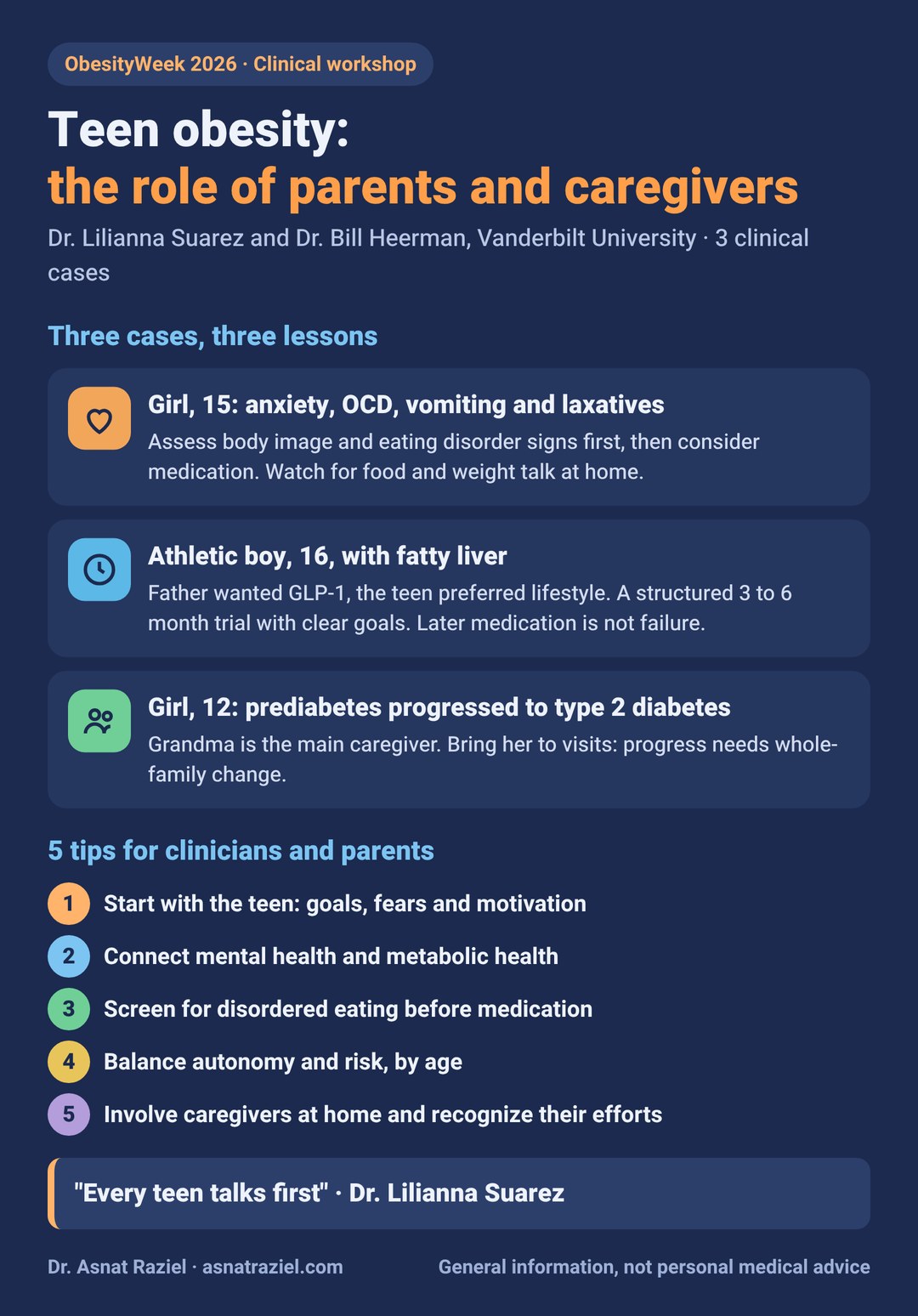
Attendees worked through three complex adolescent cases. For each one, they made decisions step by step, just as in a clinic. One message came up again and again. Treatment decisions must account for family dynamics, motivation, mental health and the teen’s autonomy. Moreover, that autonomy should grow as the teen gets older.
Case one: a 15-year-old girl with eating disorder warning signs
A 15-year-old girl came in with obesity, anxiety and obsessive-compulsive disorder (OCD). She also had a history of self-induced vomiting and laxative use. Most attendees saw warning signs of an eating disorder as the first priority.
Dr. Suarez advised evaluating the girl’s body image before considering medication. She also pointed to the mother. The mother, a breast cancer survivor, had restrictive eating habits that the whole household could see. In Suarez’s view, these habits may have shaped the daughter’s views on food and her body.
So Suarez encourages clinicians to watch for negative talk about food and weight within the family. This happens in the exam room, but also in conversations that shift the focus away from the teen. Dr. Heerman added that direct but compassionate language helps. For example, a clinician can tell the patient that some of what she shared raises concern about her relationship with food.
Teen obesity and medication: who decides?
The second case was an athletic 16-year-old boy. He had significant obesity and fatty liver disease. His father wanted GLP-1 therapy, meaning drugs such as Wegovy and Mounjaro. The teen, however, preferred to try lifestyle change first.
Dr. Suarez recommended respecting the boy’s autonomy while weighing his metabolic risk. Her suggestion was a structured lifestyle trial of 3 to 6 months with clear goals. Medication remains a future option. Just as important, adding it later should not be framed as failure. Attendees also discussed medication and surgery.
Case three: when grandma is the main caregiver
The third case was a 12-year-old girl with severe obesity. She had prediabetes that progressed to type 2 diabetes. Her mother worked long shifts, so her grandmother cared for her most of the time. The grandmother often gave her extra food and snacks when she asked.
Attendees recommended bringing the grandmother to clinic visits. Dr. Suarez agreed that meaningful progress requires change across the whole family. The case also highlighted two things: recognizing caregivers’ efforts, and helping families understand what drives metabolic disease.
The teen talks first
"Every teen talks first," Suarez said. At the start of a visit, she barely engages with the parents. This way she builds trust with the teen and learns what motivates them, what they fear and what they hope to achieve.
She also connects mind and body. In her words, our mental health drives our physical health. That is why it pays to understand how mental health in young people affects weight and metabolism too.
Five recommendations for treating teen obesity
The workshop produced five practical recommendations for clinicians and parents:
First, start with the teen. Ask about their motivations, fears and goals, and build trust.
Second, connect mind and body. Mental health affects metabolic outcomes.
Third, screen for disordered eating before medication. Look for warning signs before starting any drug.
Fourth, balance autonomy and risk. Adjust how involved parents are to the teen’s age.
Finally, involve caregivers at home. When the home environment affects treatment, bring the adults in and recognize their efforts.
What this means for you as a parent
The message for parents is fairly simple. Your child needs to feel that they are at the center. Still, parents, grandparents and caregivers largely shape what food is at home and how the family talks about it. So try not to comment on weight or bodies, including your own. Instead, build healthy eating and shared activity for the whole family.
The American Academy of Pediatrics (AAP) supports this approach too. Its 2023 guideline recommends treatment that involves the whole family.
Further reading: treatment options for adolescents and cutting screen time at home and school. See also where fat sits in teenagers.
The bottom line on teen obesity
Treating teen obesity works better when we see the whole picture. That includes the teen, their mental health and the adults around them. In the end, listening to the teen, checking body image and involving the family form the foundation. Medication and surgery are important tools, but they work best on top of that foundation.
This article is general information and does not replace personal medical advice.
References
How Understanding Adult Influence Improves Outcomes in Pediatric Obesity Clinical Care