By Dr. Asnat Raziel, bariatric surgeon specializing in obesity treatment, metabolic health and healthy longevity; Director of the Multidisciplinary Center for Obesity Treatment, Assia Medical, Assuta Ramat HaChayal, Tel Aviv
Pancreatic fat: an Israeli trial shows it can be reduced
Pancreatic fat can disrupt blood sugar control, but a new Israeli study shows it is not set in stone. In the DIRECT-PLUS trial, a green-Mediterranean diet cut pancreatic fat by 14% over 18 months. A standard healthy diet, by contrast, reduced it by only 0.8%. What’s more, as pancreatic fat went down, the body’s response to insulin improved.
Why the pancreas matters for blood sugar
The pancreas makes insulin, the hormone that moves sugar from the blood into the cells. When fat builds up in it, pancreatic cells may work less well. This fat is also linked to insulin resistance, a state in which the body responds poorly to insulin and needs more of it. For this reason, researchers see pancreatic fat as an important link on the road to prediabetes and type 2 diabetes.
Until now, we mostly knew about belly fat and waist circumference as predictors of risk. This study adds the pancreas to the picture.
The study: 294 participants and three diets
Prof. Iris Shai of Ben-Gurion University of the Negev led the DIRECT-PLUS trial. The researchers randomly assigned 294 adults with abdominal obesity or high blood lipids to three groups:
- A standard healthy diet based on common guidelines.
- A Mediterranean diet with 28 grams of walnuts a day.
- A green-Mediterranean diet with walnuts, green tea and Mankai, an aquatic plant rich in protein and polyphenols.
All participants also received a physical activity program. Their average age was 51, their average BMI was 31.3, and 88% were men. The researchers measured pancreatic fat with MRI scans at the start and after 18 months. They published the results in the American Journal of Clinical Nutrition.
The results: how much pancreatic fat each group lost
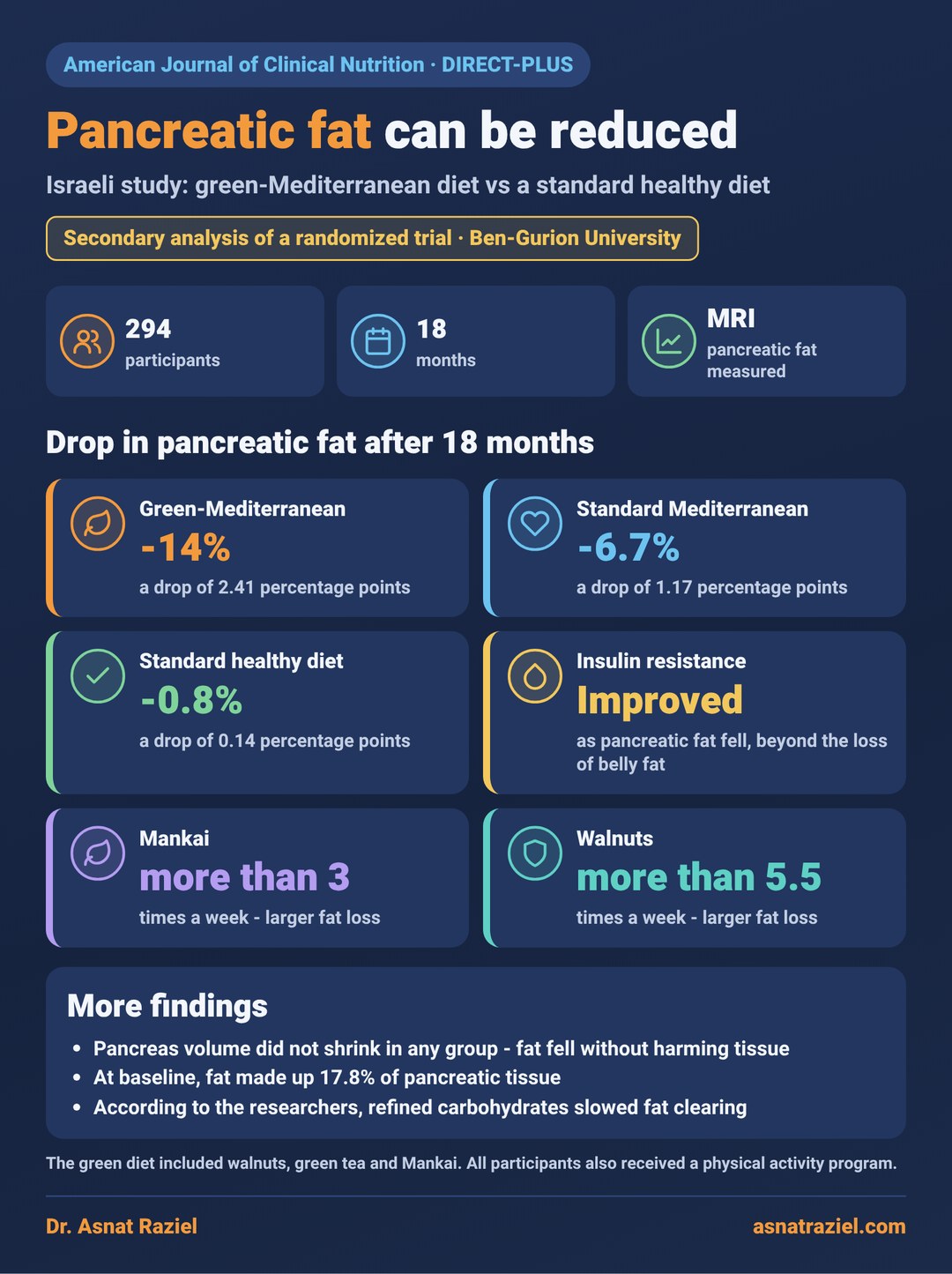
At the start, fat made up an average of 17.8% of pancreatic tissue. After 18 months:
- Green-Mediterranean: a drop of 2.41 percentage points, or 14%.
- Standard Mediterranean: a drop of 1.17 percentage points, or 6.7%.
- Standard healthy diet: a drop of 0.14 percentage points, or 0.8%.
The differences between the groups were statistically significant. Even more important, the volume of the pancreas itself did not shrink in any group. In other words, the fat went down without harming the working tissue.
Pancreatic fat and insulin resistance
The more pancreatic fat went down, the more insulin resistance improved. This link held even after the researchers accounted for the loss of belly fat. The researchers also saw a weaker link with lower HbA1c, the average blood sugar over the past three months.
The researchers also looked at which foods tracked with the result. The largest drops appeared in people who ate Mankai more than 3 times a week, or walnuts more than 5.5 times a week. On the other hand, according to the researchers, refined carbohydrates such as white bread, breakfast cereals and pasta slowed the clearing of fat.
What to keep in mind about the study
This is a secondary analysis of a randomized trial, so the links between foods and results do not prove cause and effect. In addition, most participants were men, and the findings should also be tested in women. Still, this is a long study with MRI imaging, which is a real strength.
What you can do today
The good news is that you can start these steps tomorrow morning:
- A green-Mediterranean diet: vegetables, legumes, olive oil, fish, and a handful of walnuts a day.
- Polyphenols: a cup of green tea, and Mankai, which you can find in Israel frozen or in smoothies.
- Fewer refined carbohydrates: swap white bread and sweet cereals for whole grains and legumes.
- Physical activity: combine aerobic exercise with strength training to burn fat and protect muscle.
- Tests: fasting glucose, HbA1c and blood lipids. If diabetes runs in your family, test earlier.
You can read more about type 2 diabetes remission through lifestyle and about preventing diabetes in prediabetes. At our center, a dietitian, a psychologist and an exercise coach build a personal plan together. When needed, medication or bariatric surgery join the plan.
Bottom line: pancreatic fat can be reduced
The Israeli study shows that pancreatic fat is a store you can change. A green-Mediterranean diet, together with physical activity, reduced it several times more than a standard healthy diet, and the drop went hand in hand with better insulin resistance. In the end, it is one more good reason to start making changes today.
This article is general information and is not a substitute for personal medical advice.
References
Effects of Green-MED Diet Via the Gut-fat-brain Axis (DIRECT-PLUS)