By Dr. Asnat Raziel, bariatric surgeon specializing in obesity treatment, metabolic health and healthy longevity; Director of the Multidisciplinary Center for Obesity Treatment, Assia Medical, Assuta Ramat HaChayal, Tel Aviv
Healthy Passover recipes that work for your weight and your blood sugar
Healthy Passover recipes do not have to be heavy, sweet or loaded with matzah. Passover is the weeklong spring holiday when Jews eat matzah (unleavened bread) instead of bread. It brings long meals, lots of matzah and baked goods, and a whole week of broken routine. As a result, it is especially challenging for people with overweight, diabetes or prediabetes. In this guide, I have gathered simple principles for eating during the holiday, along with four easy recipes that suit the whole family.
Why Passover is a metabolic challenge
Matzah is basically flour and water. In other words, as far as your body is concerned, it is close to white bread, and it is easy to eat a lot of it without noticing. In addition, many Passover baked goods are made from matzah meal, sugar and oil. Consequently, blood sugar rises quickly, and hunger comes back quickly too.
What is more, the Seder, the festive holiday meal on the first night, is itself a late, long dinner with four cups of wine and many courses. The vacation days and lack of routine also disrupt sleep and physical activity. Even so, the holiday is also an opportunity: the Passover kitchen is full of fresh vegetables, eggs, fish and herbs.
Before the healthy Passover recipes: principles for eating well
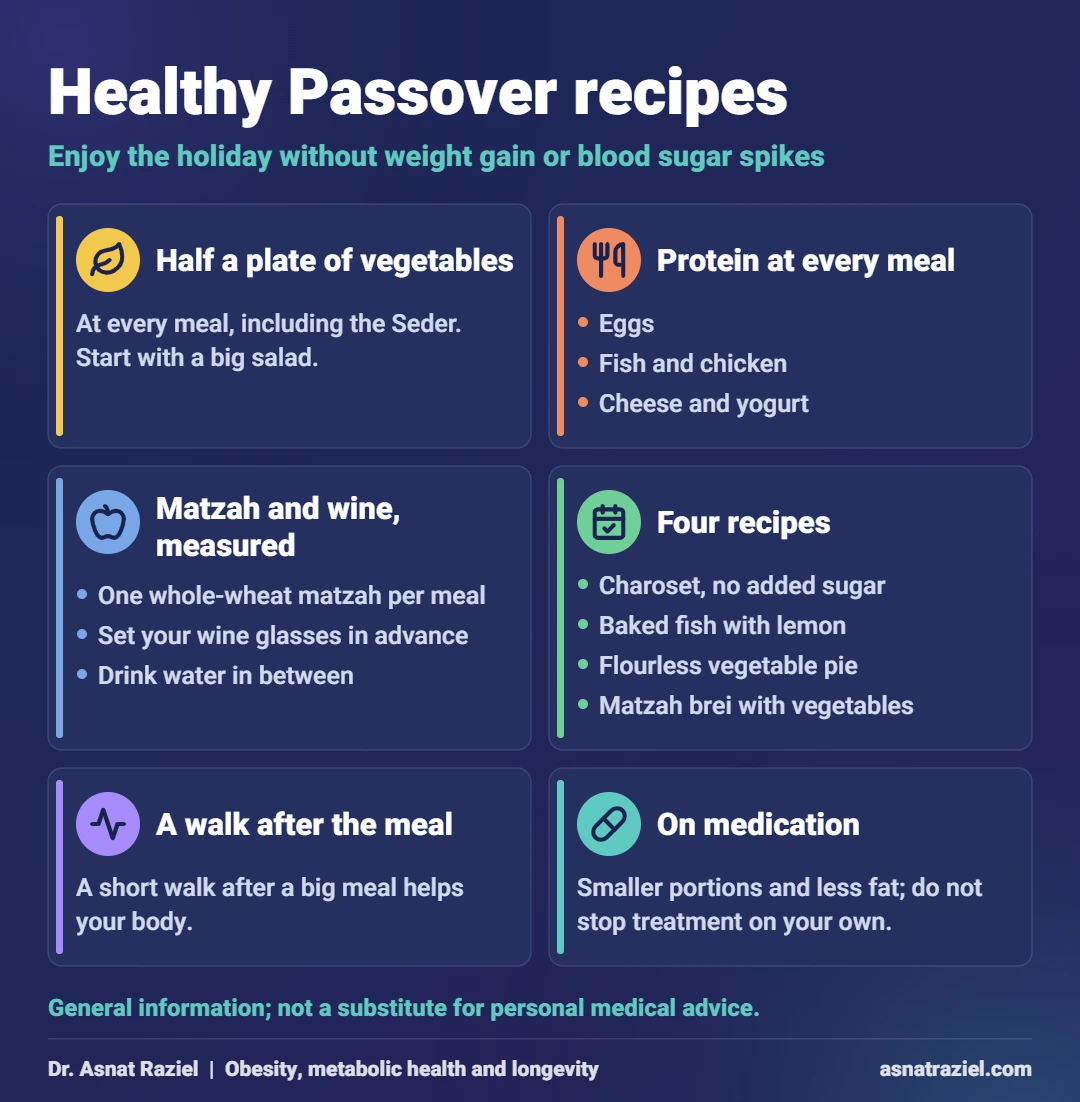
- Fill half your plate with vegetables at every meal, including the Seder.
- Make sure every meal includes protein: eggs, fish, chicken, cheese or yogurt.
- Choose whole-wheat matzah, and stick to one matzah per meal.
- Decide in advance how many glasses of wine you will drink, and have water in between.
- Take a short walk after big meals.
Similarly, the US Obesity Medicine Association’s tips for healthy holiday eating suggest aiming to maintain your weight over the holidays rather than trying to lose weight. They also recommend that you stop eating when you feel about three-quarters full, and get back to your routine right after the holiday.
An Israeli dietitian writing for Ynetnews adds a warning about common holiday diet myths. One of them is skipping meals during the day to save calories for the holiday dinner.
The Seder night: what you should know
The Seder plate holds karpas (a green vegetable), maror (bitter herbs), charoset (a sweet fruit-and-nut paste), an egg and a shank bone. Most of these symbols are actually healthy foods: a green vegetable, bitter greens and a hard-boiled egg. So you can build a balanced meal around them. For example, start the meal with a large salad, and only then move on to the main course.
If you are taking a GLP-1 medication, such as Wegovy (semaglutide) or Mounjaro (tirzepatide), you need to pay special attention. A large, fatty meal can cause nausea and an uncomfortable feeling of fullness. It is also worth reading about managing holiday eating while on medication, and about eating well on weight-loss injections.
Healthy Passover recipes: four simple, nourishing dishes
The following recipes are built on vegetables, protein and healthy fat. They are all simple, and you can make most of them ahead. In addition, none of them contain legumes, so they also suit those who avoid legumes (kitniyot) during Passover, as many Ashkenazi Jews do. The amounts serve four people, and you can easily double them for a big holiday meal.
Homemade charoset with no added sugar
- 2 grated apples and ½ cup chopped walnuts.
- 1 teaspoon cinnamon and 2 tablespoons dry red wine or lemon juice.
- Optional: 2 chopped dates for extra sweetness.
Mix everything in a bowl and chill. The sweetness comes from the apple, while the walnuts add healthy fat and fiber. That way, a spoonful or two of charoset is enough, without a big jump in blood sugar.
Baked fish with lemon and herbs
- 4 fillets of salmon, sea bream or grouper.
- 2 tablespoons olive oil, the juice of 1 lemon and 3 garlic cloves.
- Chopped parsley and cilantro, salt and pepper.
Place the fish in a baking dish and spread the mixture over it. Bake for 15 to 20 minutes at 200°C. You can also add cherry tomatoes and peppers to the dish. This main course is rich in protein and heart-healthy fats.
Flourless vegetable pie
- 3 grated and squeezed zucchini and 1 lightly fried onion.
- 4 eggs, 1 container of cottage cheese and ½ cup grated yellow cheese.
- Seasoning to taste: salt, pepper and nutmeg.
Mix, pour into a greased baking dish and bake for about 40 minutes at 180°C. The pie keeps well in the fridge, so it works for meals throughout the week. Thanks to the eggs and cheese, it is very filling. You will find more on why protein matters in my article on protein intake.
Matzah brei with vegetables
- 1 whole-wheat matzah and 2 eggs.
- A handful of spinach or Swiss chard, ½ chopped bell pepper and green onion.
- 1 teaspoon olive oil and a little grated cheese.
Soak the matzah in water for a minute and squeeze it out. Next, mix it with the eggs and vegetables, and fry in a pan with a little oil. This turns the familiar holiday breakfast into a balanced meal: less matzah, more protein and vegetables.
More recipes and ideas for your holiday kitchen
Alongside the main dishes, it helps to keep ready-made salads in the fridge. For instance, a spiced Moroccan carrot salad works for the holiday and all year round. For dessert, you can choose fresh fruit, or make chickpea and peanut butter cookies after the holiday, if you eat legumes. A little planning helps too: a shopping list made in advance cuts down on buying pastries and store-bought cakes.
Holiday eating habits interest me in a broader context as well. For example, I have written about what Trump eats, and about how to avoid gaining weight on Shavuot, the early-summer Feast of Weeks. The principles are similar: planning, vegetables, protein and moderate portions.
Healthy Passover recipes and weight-loss medications
Many patients ask me whether they need to pause their medication over the holiday. The answer is no, unless your doctor has decided otherwise. That said, it is worth adapting your meals: smaller portions, less fat and enough fluids. That is why healthy Passover recipes based on fish, eggs and vegetables are especially well suited to the treatment period. You will find more information on my page about medications for obesity.
The bottom line
Healthy Passover recipes can be tasty, festive and nourishing all at once. The key is to shift the center of gravity away from matzah and baked goods and toward vegetables, protein and healthy fat. That way, the holiday passes without weight gain and without blood sugar spikes. If you are taking weight-loss medications or living with diabetes, it is worth getting advice before the holiday, for example from Dr. Asnat Raziel.
The information in this article is general and does not replace personal medical advice.
Questions and answers
How much matzah can I eat a day?
There is no single number for everyone. As a rule, one matzah per meal, preferably whole-wheat and alongside protein and vegetables, is a reasonable choice for most people.
Are these healthy Passover recipes suitable for people with diabetes?
Yes. The recipes in this guide are low in carbohydrates and rich in protein and vegetables. However, people who take insulin should check their blood sugar more often during the holiday.
What should I do after a heavy Seder meal?
Don’t punish yourself. The next day, go back to regular meals, drink water and go for a walk.
References
Eating Healthy During the Holidays