By Dr. Asnat Raziel, bariatric surgeon specializing in obesity treatment, metabolic health and healthy longevity; Director of the Multidisciplinary Center for Obesity Treatment, Assia Medical, Assuta Ramat HaChayal, Tel Aviv
GLP-1 and asthma: how are obesity drugs linked to the lungs?
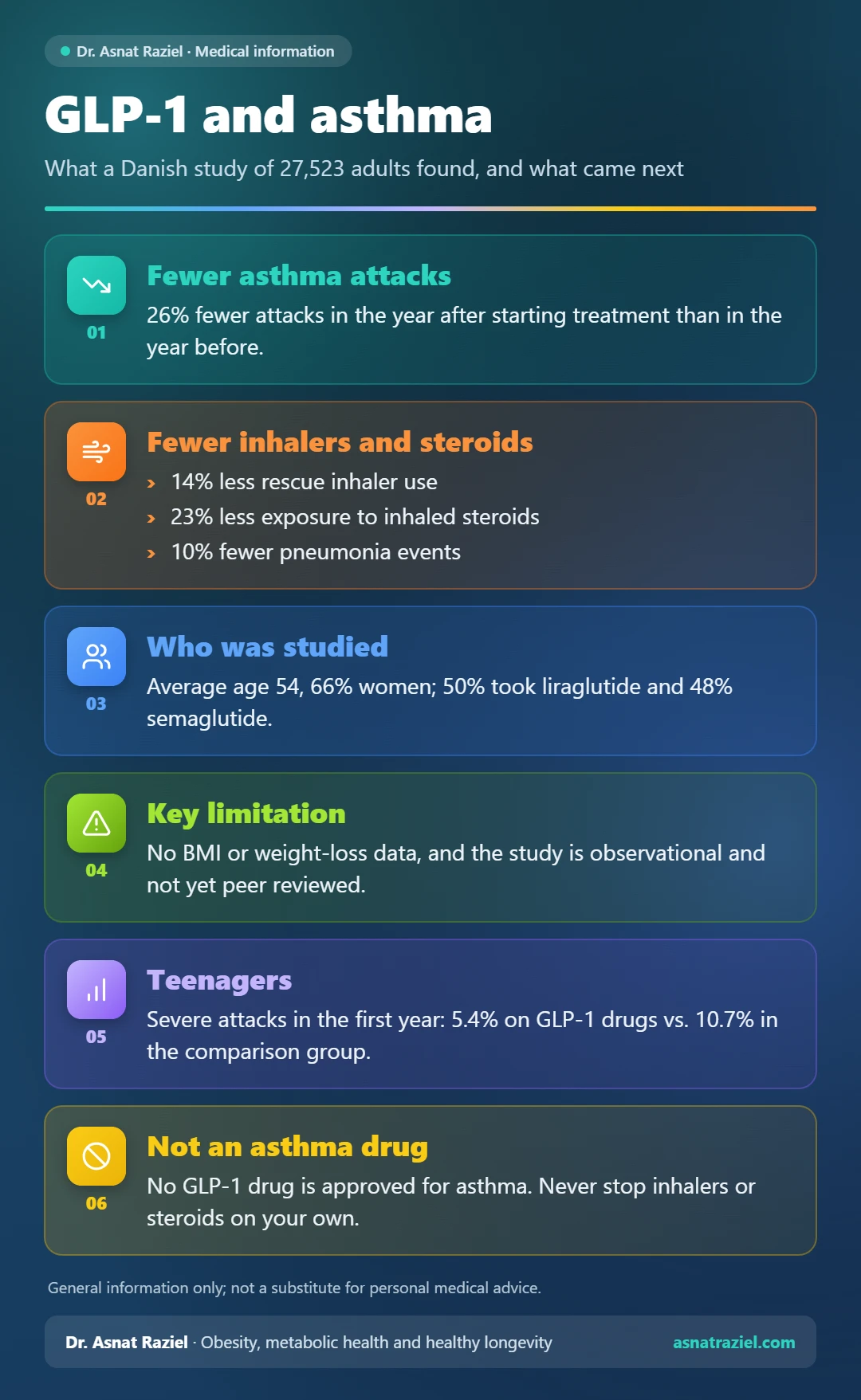
The link between GLP-1 and asthma is one of the most surprising topics in obesity research today. GLP-1 drugs were originally developed for diabetes and obesity. However, new data show that they may also affect chronic lung diseases. A large Danish study presented at the European Congress on Obesity, ECO 2026, found fewer asthma attacks, less inhaler use and even fewer cases of pneumonia.
The study included 27,523 adults with asthma, along with overweight, obesity or type 2 diabetes. The researchers compared the year after starting treatment with the year before. The results reinforce an important message: obesity is not just about weight. It is an inflammatory and metabolic condition that affects almost every system in the body, including the respiratory system.
The link between obesity and asthma
In recent years, evidence has been growing that obesity makes asthma worse. People with excess weight often suffer from shortness of breath and reduced lung function. In addition, their attacks come back more often, and they frequently need steroids and inhalers. A comprehensive review of asthma and obesity describes several mechanisms that work together.
First, fat tissue is not a passive energy store. It releases many inflammatory substances that affect the immune system and the airways. Second, excess fat in the chest and abdomen makes breathing and the movement of the diaphragm mechanically harder. As a result, some patients develop asthma that is hard to control. You can read more about the inflammatory side of the disease in my article on GLP-1 drugs and chronic inflammation.
The Danish study on GLP-1 and asthma
According to the researchers’ release from Copenhagen University Hospital, the study drew on Denmark’s national health registries. The average age was 54, and 66% of the participants were women. About 49% had overweight or obesity, 61% had type 2 diabetes, and 26% had both conditions.
About half of the prescriptions (50%) were for liraglutide. In addition, 48% were for semaglutide, the active ingredient in Ozempic and Wegovy. The other drugs in this family made up only 2%. Each patient served as their own control, meaning the researchers compared each person with their own year before treatment.
A 26% drop in asthma attacks
Compared with the year before treatment, the rate of asthma attacks fell by 26%. In men the drop reached 28%, and in women 23%. Moreover, the effect appeared in both groups: a 22% drop in patients with overweight or obesity, and 26% in patients with type 2 diabetes.
Fewer inhalers, fewer steroids, fewer cases of pneumonia
The findings did not stop at the attacks themselves. The researchers also reported the following results:
- A 14% drop in the use of rescue inhalers.
- A 23% drop in exposure to inhaled steroids.
- A 10% drop in pneumonia events.
These findings may have great clinical meaning. Repeated steroid treatment, especially the pills given during attacks, raises the risk of osteoporosis, diabetes and high blood pressure. This was shown in a long-term study of systemic steroids in asthma. Therefore, any reduction in the need for steroids may improve health over the years.
Is it all due to weight loss?
The researchers themselves point out an important limitation. The study had no access to BMI (body mass index) data or to how much weight each participant lost. So it is impossible to know how much of the improvement comes from weight loss, and how much from an additional biological effect of the drugs. In addition, this is an observational study presented at a conference, and it has not yet been peer reviewed.
Still, the researchers note that excess fat tissue creates a state of chronic inflammation in the body. According to them, this inflammation is different from classic allergic asthma. In other words, GLP-1 drugs may work through several pathways at once: weight loss, metabolic improvement, less general inflammation and perhaps also a direct effect on the airways.
New evidence on GLP-1 and asthma since the congress
Since the congress, more data have come in. A UK study presented at the European Respiratory Society Congress in September 2026 compared patients who started GLP-1 drugs with patients who started an older diabetes drug. Patients on semaglutide had fewer flare-ups of respiratory disease. By contrast, liraglutide, dulaglutide and exenatide showed no significant link. More details appear in my article on semaglutide and asthma attacks.
There are also data for ages 12 to 18. A study published in JAMA Network Open in December 2025 examined 1,070 teenagers with asthma and excess weight. In the first year, severe attacks occurred in 5.4% of patients on GLP-1 drugs, compared with 10.7% in the comparison group. Here too, this is a retrospective study, so it shows a link, not cause and effect.
What this means for patients with asthma and obesity
In my clinic, I meet many patients who live with both conditions. For them, the data suggest a few practical steps:
- Tell your asthma care team about your obesity treatment, and vice versa.
- Track the number of attacks and your rescue inhaler use before and during treatment.
- Do not change the dose of your inhalers or steroids on your own.
- Combine suitable physical activity, good sleep and a balanced diet.
In addition, weight loss often improves sleep quality and exercise tolerance as well. That is why it is worth building a broad plan rather than relying on medication alone. This kind of approach is described in my article on holistic obesity treatment.
A new view of obesity as a disease
One of the key messages of the study is that obesity treatment is not only about the number on the scale. When obesity is treated as a biological and metabolic disease, we often see improvement in many body systems at once. For example, GLP-1 drugs are now also being studied in sleep apnea, heart disease, liver disease and inflammatory skin diseases. One example is the link between obesity and sleep apnea, and another is the effect of these drugs on psoriasis.
It is important to remember that no drug in this family has been approved to treat asthma. The drugs are approved for obesity or diabetes, and you must not stop inhalers or steroids without medical guidance. The decision about treatment is made together with your care team, based on your full health picture.
The bottom line on GLP-1 and asthma
The data on GLP-1 and asthma are still preliminary, but the direction is encouraging. Observational studies from Denmark, the UK and the US show fewer attacks and less need for rescue medication. Ultimately, only controlled trials can determine whether the drugs themselves protect the lungs. In the meantime, for many patients with obesity and asthma, this may mean easier breathing and a better quality of life. You can find broad information on the risks of excess weight in my article on the health risks of obesity.
The information in this article is general and does not replace personal medical advice.
References
Study links use of new obesity drugs to reduction of asthma exacerbations and inhaler use
GLP-1 receptor agonists and asthma outcomes in a nationwide self-controlled cohort
Asthma and obesity: mechanisms and clinical implications
Weight loss injection semaglutide can reduce asthma attacks by up to 40 per cent
Glucagonlike Peptide-1 Receptor Agonists and Asthma Risk in Adolescents With Obesity




