By Dr. Asnat Raziel, bariatric surgeon specializing in obesity treatment, metabolic health and healthy longevity; Director of the Multidisciplinary Center for Obesity Treatment, Assia Medical, Assuta Ramat HaChayal, Tel Aviv
Improving metabolic markers: why it matters to you
Improving metabolic markers is one of the most important steps you can take to prevent diabetes, heart disease and fatty liver disease. The good news is that these markers respond to change, and sometimes very quickly. In fact, losing 5% to 10% of your body weight improves most of them. In this article, I explain which markers are worth knowing, what they tell us, and what really works to improve them.
Which metabolic markers do doctors check?
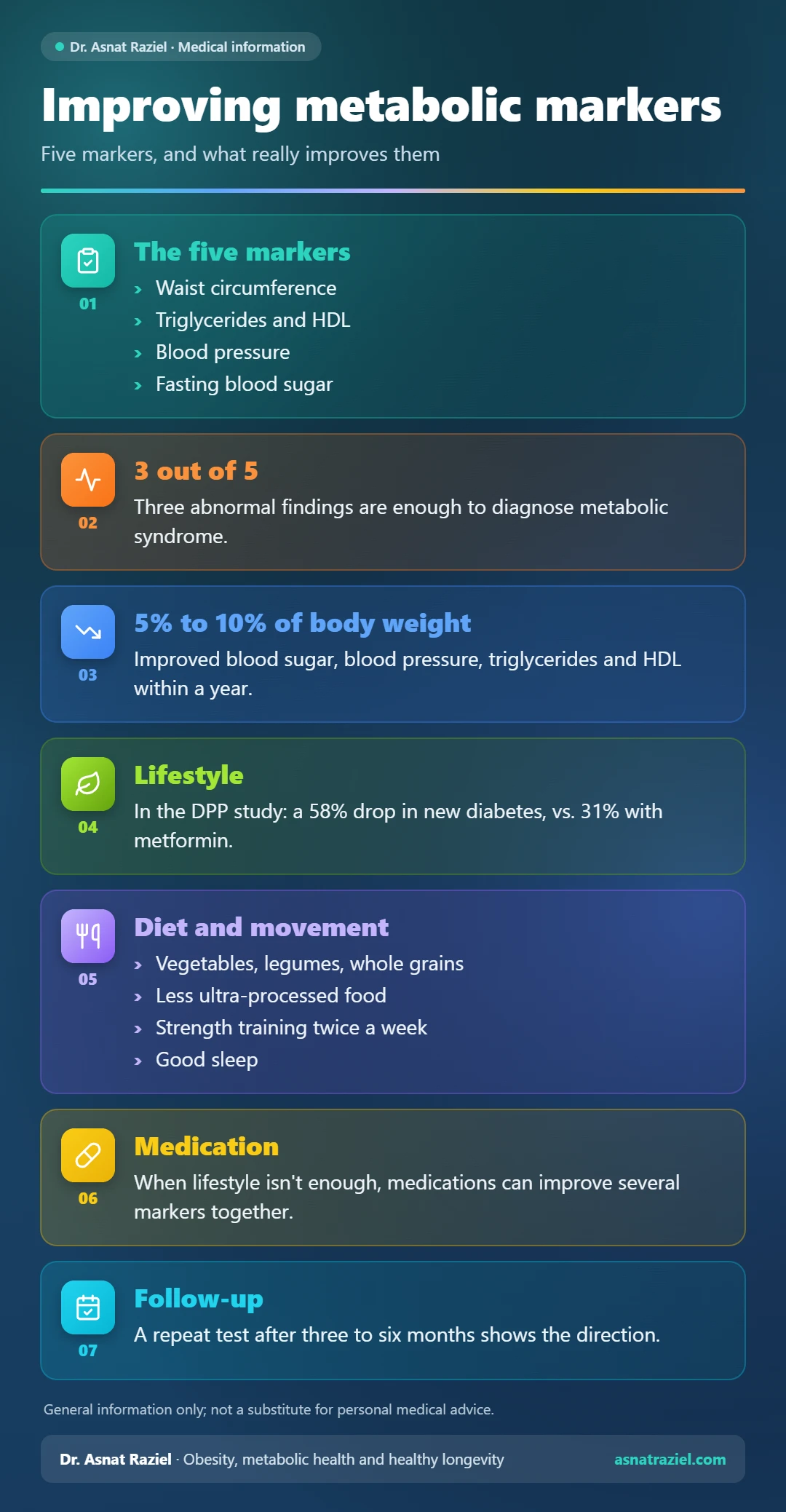
Doctors usually look at five markers. The accepted definition of metabolic syndrome was set in a joint statement by several international organizations. According to this definition, three abnormal findings out of five are enough for a diagnosis:
- A large waist circumference, using different cutoffs for different populations.
- Triglycerides (blood fats) of 150 mg/dL or higher.
- Low HDL cholesterol, the “good” cholesterol: below 40 mg/dL in men and below 50 mg/dL in women.
- Blood pressure of 130/85 mmHg or higher.
- Fasting blood sugar of 100 mg/dL or higher.
Taking medication for any of these markers also counts as an abnormal finding. According to the US National Heart, Lung, and Blood Institute (NHLBI), a healthy lifestyle lowers the risk of the syndrome and its complications.
What lies behind the markers
At the center of the picture there is usually insulin resistance. In other words, the cells respond less well to insulin, so the pancreas has to release large amounts of it. Over time, blood sugar, triglycerides and blood pressure all rise. In addition, deep belly fat around the internal organs makes the process worse.
Moreover, these markers are linked to one another, so the damage spreads. Today, doctors talk about CKM syndrome, which connects the heart, the kidneys and metabolism. On the other hand, this connection also works in your favor: when one marker improves, the others tend to follow.
Weight loss: the step that affects most markers
The Look AHEAD study followed more than 5,000 people with excess weight and type 2 diabetes. The researchers found that losing 5% to 10% of body weight improved blood sugar, blood pressure, triglycerides and HDL within a year. For example, the odds of a half-point drop in HbA1c, a measure of average blood sugar over three months, were 3.52 times higher.
However, LDL cholesterol did not respond to weight loss in this study. That is why it should be checked separately, and sometimes treated with medication. Furthermore, a loss of 10% to 15% brought even greater improvement in most markers.
Improving metabolic markers through lifestyle
The landmark study in this field is the Diabetes Prevention Program (DPP). It included 3,234 people whose blood sugar was above normal. The goals were to lose at least 7% of body weight and to get 150 minutes of physical activity a week. As a result, the rate of new diabetes fell by 58%, compared with 31% for the drug metformin.
Diet for better metabolic markers
No single diet suits everyone. Even so, a few principles come up again and again in the research. First, build your plate around vegetables, legumes, whole grains, fish and olive oil. Second, cut back on sugary drinks and ultra-processed food. In addition, dietary fiber slows the absorption of sugar and improves insulin sensitivity.
Physical activity and sleep
Exercise helps your muscles take up sugar, even without weight loss. You can read more about the health benefits of physical activity on the CDC website. Ideally, combine walking or aerobic exercise with strength training twice a week. Likewise, good sleep affects appetite and blood sugar balance.
Some people look for a shortcut, such as a quick “metabolic reset.” In practice, though, steady habits over time beat any short program.
When medication helps improve metabolic markers
Sometimes lifestyle alone is not enough, especially with significant obesity or diabetes. In such cases, medications for obesity and metabolic disease can help. The newer drugs lower weight and, at the same time, improve blood sugar, blood pressure and blood fats. The decision to start such treatment is personal, and you make it together with your doctor.
Common mistakes along the way
The first mistake is to look only at the scale. Sometimes your weight barely moves, yet your blood sugar, triglycerides and blood pressure are already improving. For this reason, it is worth measuring your waist as well and having regular blood tests.
The second mistake is to look for a magic fix. Supplements, cleanses and extreme diets promise a lot, but they have no real research behind them. By contrast, simple and consistent habits have proven themselves in the large studies.
The third mistake is to ignore the liver. Fatty liver often appears alongside the other markers, usually without symptoms. If you have several abnormal findings, ask your doctor about diagnosing and treating fatty liver. Ultimately, the full picture matters more than any single number.
How to track your progress in improving metabolic markers
Tracking is fairly simple. A fasting blood test includes blood sugar, HbA1c and a lipid profile. At the same time, measure your blood pressure and your waist at home once a month. Usually, a repeat test after three to six months shows whether you are heading in the right direction. It also helps to keep all your results in one table, so you see the trend rather than a single value. That way, it is easier to talk with your doctor about the next step.
The bottom line
Improving metabolic markers is possible at almost any age and at any stage. Losing 5% to 10% of your weight, eating simply, moving regularly and sleeping well improve most of the markers. When that is not enough, medication is a legitimate part of the journey. If you would like an evaluation and a personal plan, Dr. Asnat Raziel and the multidisciplinary team will be glad to support you.
This article provides general information and is not a substitute for personal medical advice.
Questions and answers
How soon can I see an improvement in my markers?
In the Look AHEAD study, a clear improvement appeared after one year. In practice, blood sugar and triglycerides sometimes respond after just a few weeks of change.
Do I have to lose a lot of weight?
No. Even a 5% to 10% weight loss improves most markers. Of course, losing more brings greater benefit.
Is improving metabolic markers possible without weight loss?
To some extent, yes. Physical activity and a high-quality diet improve insulin sensitivity even when your weight stays the same.
Sources
Harmonizing the Metabolic Syndrome: A Joint Interim Statement
Reduction in the incidence of type 2 diabetes with lifestyle intervention or metformin
What Is Metabolic Syndrome? (NHLBI)