By Dr. Asnat Raziel, bariatric surgeon specializing in obesity treatment, metabolic health and healthy longevity; Director of the Multidisciplinary Center for Obesity Treatment, Assia Medical, Assuta Ramat HaChayal, Tel Aviv
Mounjaro skin effects: why the topic matters
Mounjaro skin effects are something many of my patients ask about. The drug revolution in obesity and diabetes does not stop at the borders of endocrinology. It also reaches the skin: through side effects, through changes in appearance after weight loss, and perhaps also through the treatment of skin diseases. In this article, I summarize what we know today and what still needs research.
The article is based on a comprehensive review in the journal Anais Brasileiros de Dermatologia. The review was published in December 2025 and covered the literature up to May 2025. In addition, I updated the picture with data from the drug’s prescribing information and from newer studies.
How Mounjaro works
Mounjaro contains tirzepatide. This drug activates two receptors for gut hormones: GIP and GLP-1. The combination affects appetite, insulin sensitivity and fat metabolism. As a result, it leads to substantial weight loss and good blood sugar control.
For example, in the SURMOUNT-1 trial, patients on the 15 mg dose lost 20.9% of their body weight after 72 weeks. The same mechanism also explains the indirect effects on the skin. The drug was first approved for type 2 diabetes and later for obesity, under the name Zepbound in the United States.
Injection-site reactions
The reassuring news is that the most common skin effects are local reactions. Redness, mild swelling, itching or discomfort at the injection site appear mainly at the start of treatment or after a dose increase. In most cases, they go away on their own within days.
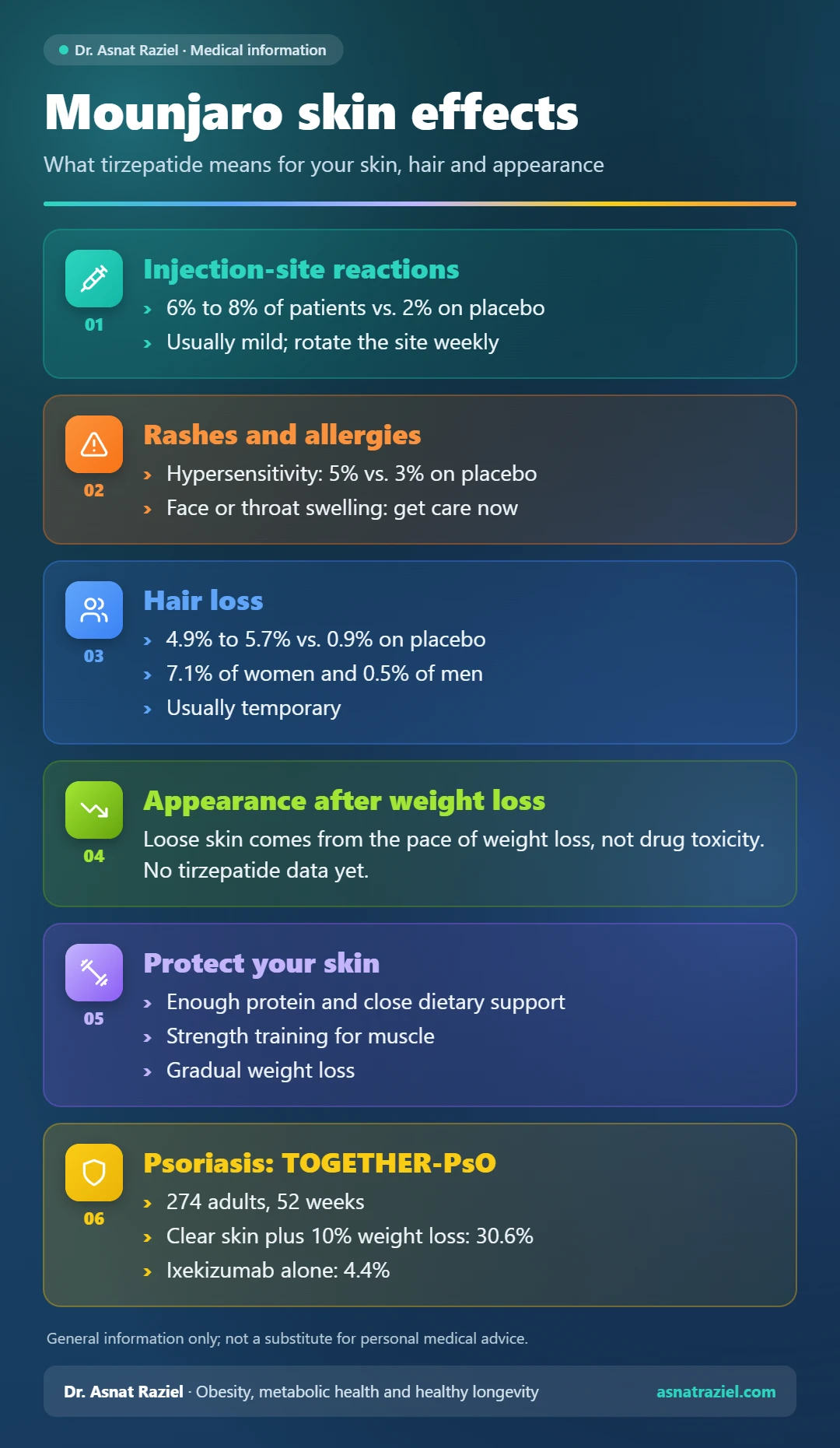
According to the FDA prescribing information, such reactions occurred in 6% to 8% of patients in the obesity trials, compared with 2% on placebo. They are usually mild and do not require stopping treatment. Therefore, simple guidance helps a great deal: rotating the injection site every week, using the right technique and follow-up.
Rashes and allergic reactions
Beyond local reactions, doctors have also described more general reactions, for example hives, widespread itching or a rash. In the prescribing information, hypersensitivity reactions occurred in 5% of patients at every dose, compared with 3% on placebo. Most were mild to moderate.
Doctors have also reported severe allergic reactions, including anaphylaxis, but these are very rare. This is shared by the entire GLP-1 family and is not unique to Mounjaro. Even so, it is important to know the warning signs: swelling of the face or throat, shortness of breath or a spreading rash. In such a case, seek medical care immediately. You’ll find a broad overview in my article on the side effects of Mounjaro.
Hair loss during Mounjaro treatment
Another topic that worries patients is hair loss. According to Lilly’s data from the SURMOUNT-1 trial, 4.9% to 5.7% of patients on the drug reported hair loss, compared with 0.9% on placebo. In addition, according to the prescribing information, hair loss occurred in 7.1% of women and 0.5% of men who received the drug.
This kind of hair loss sometimes follows rapid weight loss from any cause, and it is usually temporary. However, the review notes that the link still needs research. For a broader view of hair health over the years, see my article on hair longevity and aging.
Mounjaro skin effects and appearance after weight loss
One aspect that draws great public interest is appearance. After bariatric surgery and after semaglutide treatment, doctors have described skin changes that result from losing fat under the skin. These include loose skin, folds and a hollowing of facial fat. In popular discussion, this is called “Ozempic face.”
It is important to be precise here: the review found no quantitative data on such an effect with tirzepatide. The author only speculates that a similar effect may appear. Moreover, the change does not stem from any toxicity of the drug. Instead, it comes from the pace of weight loss and the loss of fatty support. Nutritional deficiencies, mainly of protein and vitamins, may add to this when dietary support is not adequate.
Mounjaro skin effects: how to protect your skin during treatment
This is where the importance of multidisciplinary care stands out. The foundation includes three components:
- Close nutritional support, including enough protein.
- Regular strength training, to preserve muscle mass.
- Gradual weight loss, without skipping the dose-increase steps.
In selected cases, aesthetic treatments can also be added, such as agents that stimulate collagen production or energy-based technologies. However, these recommendations are based on experience after bariatric surgery and on expert opinion. Controlled studies of such a combination with Mounjaro do not yet exist.
In addition, it is worth keeping an eye on any new change in the skin. A rash that doesn’t go away, persistent itching or noticeable hair loss warrant a checkup. In my clinic, I recommend reporting it at the very next visit. That way, we can adjust the dose, check for nutritional deficiencies and refer you to a dermatologist when needed. As a rule, treating a small problem early keeps it from becoming a reason to stop treatment.
Potential for treating skin diseases
Beyond the side effects, the review offers an intriguing glimpse. Better blood sugar control may ease diabetes-related skin problems, such as itching, recurrent infections and slow wound healing. In addition, isolated case reports have described improvement in hidradenitis suppurativa, an inflammatory disease of the hair follicles. A few other reports have described hair regrowth in men with resistant hair loss.
Meanwhile, stronger data have arrived for psoriasis. The TOGETHER-PsO trial included 274 adults with moderate to severe psoriasis and excess weight. After 52 weeks, 30.6% of patients on tirzepatide combined with ixekizumab achieved completely clear skin and at least 10% weight loss. By contrast, only 4.4% of patients on ixekizumab alone achieved this. Read about the link between these drugs and psoriasis in my article on GLP-1 and psoriasis.
The bottom line on Mounjaro skin effects
Ultimately, Mounjaro is not only a metabolic breakthrough. It is also a challenge and an opportunity for dermatology. Its skin safety profile is good, and its side effects are usually mild and treatable. The aesthetic changes are expected, and nutrition and exercise can prevent some of them. The therapeutic potential for skin diseases is still in its early days, but the psoriasis data are encouraging. As use expands, we will better understand Mounjaro skin effects over the long term.
The information in this article is general and does not replace personal medical advice.
References
ZEPBOUND (tirzepatide) injection – Prescribing Information
Tirzepatide Once Weekly for the Treatment of Obesity
La perte de cheveux a-t-elle été rapportée dans les essais cliniques de Mounjaro® (tirzépatide) ?
New Phase 3b data on Lilly’s Taltz (ixekizumab) and Zepbound (tirzepatide) used together
Eli Lilly, the drug’s manufacturer, funded the SURMOUNT-1 and TOGETHER-PsO trials.




