By Dr. Asnat Raziel, bariatric surgeon specializing in obesity treatment, metabolic health and healthy longevity; Director of the Multidisciplinary Center for Obesity Treatment, Assia Medical, Assuta Ramat HaChayal, Tel Aviv
Psoriasis and obesity: two diseases with a shared root
Psoriasis and obesity often appear together, and the link between them is no coincidence. Both involve chronic inflammation throughout the body, not just in the skin. That is why weight loss can improve the skin, and sometimes the response to treatment as well. In this article, I will explain what we know about the link, what the studies found and how this knowledge can be used in treatment.
What is psoriasis?
Psoriasis is a chronic inflammatory skin disease. It causes red, scaly plaques, mainly on the elbows, knees, scalp and lower back. The disease affects 2% to 4% of the world’s population. In addition, some patients also develop psoriatic arthritis.
It is important to know that psoriasis is not contagious. It is an abnormal immune response in which skin cells divide too quickly. However, it affects the whole body and raises the risk of diabetes, fatty liver and heart disease.
What studies found about psoriasis and obesity
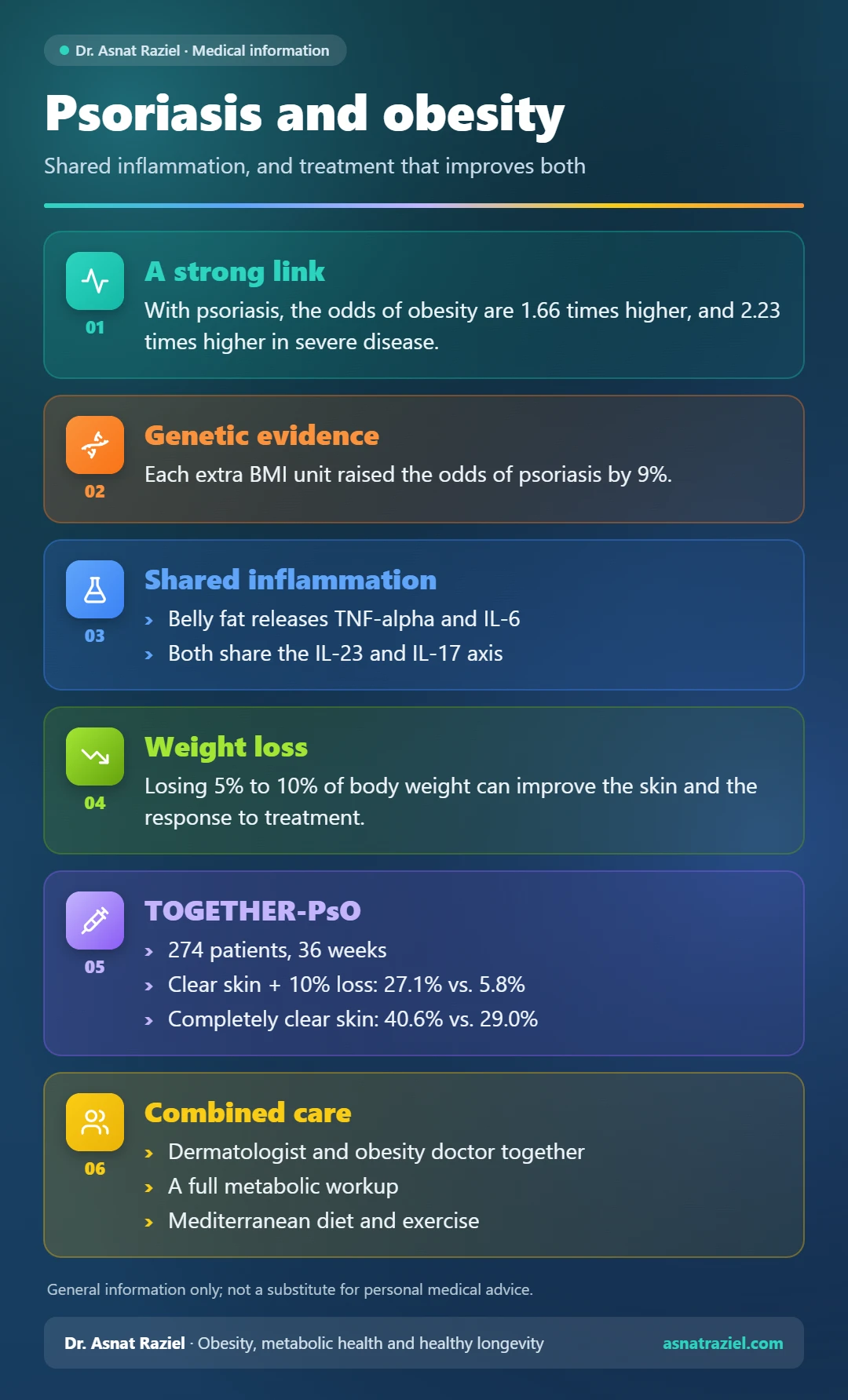
A meta-analysis of 16 studies included about 2.1 million participants. The researchers found that in people with psoriasis, the odds of obesity were 1.66 times higher. In severe psoriasis, the odds were 2.23 times higher. In other words, the more severe the disease, the stronger its link to obesity.
But which disease comes first? A large genetic study used a method called Mendelian randomization, which tests for cause and effect with the help of genes. According to the study, each one-unit increase in body mass index (BMI) raised the odds of psoriasis by 9%. On the other hand, the researchers found no evidence that a genetic tendency to psoriasis causes obesity.
In addition, according to a clinical review of the two-way link between the diseases, obesity is linked to more severe psoriasis, lower quality of life and a weaker response to fixed-dose biologic treatments.
Psoriasis and obesity: the inflammatory mechanism
Fat tissue, especially belly fat, is not a passive store. It releases inflammatory substances such as TNF-alpha and IL-6. These substances also fuel inflammation in the skin. In addition, the IL-23 and IL-17 inflammatory axis is shared by both diseases, and many biologic drugs act on it. I have written at length about fat-driven inflammation in my article on obesity and inflammation.
The link works in the opposite direction too. The inflammation of psoriasis impairs insulin sensitivity and disrupts metabolism. This creates a cycle in which each disease worsens the other.
Does weight loss improve the skin?
A controlled Danish study included 60 patients with psoriasis and excess weight. One group followed a low-energy diet for 8 weeks, followed by 8 weeks of gradual return to normal eating. After 16 weeks, participants in this group had lost an average of 15.4 kg more than the control group. Psoriasis severity tended to improve, but the difference did not reach statistical significance. By contrast, quality of life improved significantly.
According to the clinical review, losing 5% to 10% of body weight can improve the skin and restore the effectiveness of treatment. In other words, even moderate weight loss is worth the effort.
GLP-1 drugs for psoriasis and obesity
The most important evidence so far comes from the TOGETHER-PsO trial, published in JAMA Dermatology. The trial included 274 adults with moderate to severe psoriasis and overweight or obesity. All participants received the biologic drug ixekizumab (Taltz). Half of them also received tirzepatide (Mounjaro).
After 36 weeks, the trial results were clear:
- 27.1% of the combination group achieved both completely clear skin (PASI 100) and 10% weight loss, compared with 5.8% in the biologic-only group.
- Completely clear skin: 40.6% vs. 29.0%.
- Weight loss of 10% or more: 69.2% vs. 9.1%.
- The most common side effects were gastrointestinal and injection-site reactions, with no new safety findings.
PASI is a score that assesses the extent and severity of the lesions. PASI 100 means completely clear skin. I have written about other effects of the drug on the skin in my article on Mounjaro and the skin, and about the early data in my article on GLP-1 drugs and psoriasis.
Still, it is important to be precise. The company that makes both drugs funded the study, and it tested only one specific combination. In addition, no regulator has approved GLP-1 drugs as a treatment for psoriasis itself. Doctors prescribe them to treat obesity or diabetes, according to the accepted criteria.
Combined treatment for psoriasis and obesity
In our clinic, we see psoriasis and obesity as one problem with two faces. That is why the dermatologist and the obesity doctor build the treatment plan together. Here are the main steps:
- A metabolic workup: blood sugar, blood fats, blood pressure and liver function.
- A Mediterranean diet rich in vegetables, fish and olive oil, with little processed food.
- Regular physical activity, including strength training.
- Enough sleep and stress management, since stress also triggers flares.
- Considering medication for obesity when there is an indication.
- Quitting smoking and cutting down on alcohol.
Some patients also include rehabilitation treatments abroad as part of their routine. Coordinate any such treatment in advance with your treating dermatologist. Beyond that, you can read about the link between the new drugs and inflammation in my article on GLP-1 drugs and chronic inflammation.
The bottom line
Psoriasis and obesity are linked through shared inflammation, and genetic research shows that excess weight raises the risk of psoriasis. Weight loss improves quality of life, and sometimes the skin and the response to treatment as well. The TOGETHER-PsO trial shows that combining biologic treatment with obesity treatment achieves better results than treating the skin alone. So it is worth treating both diseases together, as a joint team. You can read about my approach to treatment on the About Dr. Asnat Raziel page.
The information in this article is general and does not replace personal medical advice.
Questions and answers
Does obesity cause psoriasis?
Obesity is not the only cause, but it raises the risk. In a genetic study, each extra BMI unit raised the odds of psoriasis by 9%.
How much weight do I need to lose to see an improvement in my skin?
According to the reviews, losing 5% to 10% of body weight can already improve the skin and the response to treatment.
Are weight loss injections approved to treat psoriasis?
No. Regulators have approved them to treat obesity and diabetes. In patients with psoriasis who meet the criteria, they may improve the skin as well.
Can a biologic drug be combined with tirzepatide?
In the TOGETHER-PsO trial, the combination was safe and effective. The dermatologist and the obesity doctor make the decision together with you.
References
Psoriasis and Obesity: A Clinical Review of the Bidirectional Link and Management Implications
Effect of weight loss on the severity of psoriasis: a randomized clinical study
Eli Lilly, the maker of both drugs, funded the TOGETHER-PsO trial.




