By Dr. Asnat Raziel, bariatric surgeon specializing in obesity treatment, metabolic health and healthy longevity; Director of the Multidisciplinary Center for Obesity Treatment, Assia Medical, Assuta Ramat HaChayal, Tel Aviv
Weight loss injections for teens: what changed in the 2026 basket
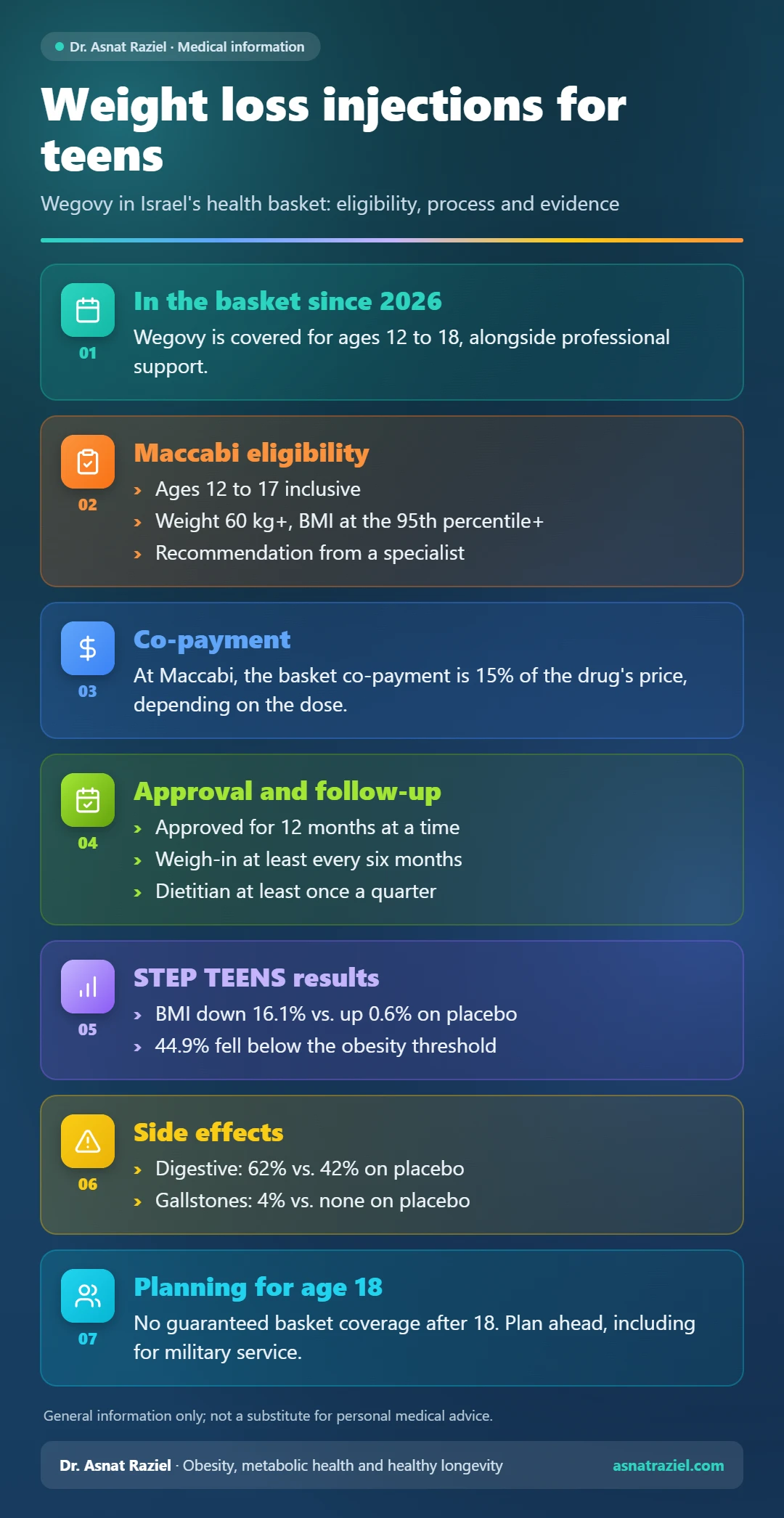
Weight loss injections for teens have entered Israel’s national health basket for the first time. On February 19, 2026, the government approved the new basket of medications, which includes the Wegovy injection for ages 12 to 18 only. Treatment is given alongside professional support. This is the first time an obesity drug has received system-wide recognition in adolescence.
The implications are broad. In the past, treating obesity at a young age relied almost entirely on lifestyle change. Today, an effective medical tool joins it, for those who are suitable. In this article, I explain to parents who qualifies, what the process looks like and what to ask before starting. I have also written about what Israel’s health funds (HMOs) cover, and how coverage compares abroad, in my article on insurance coverage for obesity drugs.
Obesity in adolescence is a disease
Obesity in teens is not a matter of appearance. It raises the risk of type 2 diabetes, high blood pressure, fatty liver and sleep apnea. In addition, it often harms self-image and mood. Teens with significant obesity often carry it into adulthood, along with advanced metabolic disease. That’s why timely treatment may change the course of a whole life. You can read about the long-term effects in my article on the consequences of childhood obesity.
Who qualifies for weight loss injections for teens in the basket?
In practice, each health fund publishes its own eligibility terms. For example, according to Maccabi’s eligibility page, these are the main requirements:
- Age 12 to 17 inclusive.
- A weight of 60 kg or more, and a BMI at or above the 95th percentile for age and sex. BMI is the ratio of weight to height.
- An up-to-date recommendation from a specialist in endocrinology, pediatric endocrinology or a dedicated obesity clinic.
- Weight and height measured in person by clinic staff, not self-reported.
- Documented participation in a supervised nutrition program, for example with a dietitian or at a multidisciplinary clinic.
At Maccabi, the co-payment under the basket is 15% of the drug’s price, depending on the dose. At the other health funds, the terms may differ slightly. So it is worth checking with your fund ahead of time.
What the process actually looks like
First, your teen has an assessment with a specialist. The team weighs and measures, and checks the metabolic profile with blood tests. In addition, they look for complications such as fatty liver, insulin resistance or abnormal blood lipids. After that, you decide together whether to rely on lifestyle change alone or to add a medication.
If you decide on medication, your teen first meets with a dietitian. At Maccabi, for example, approval is granted for 12 months at a time. To continue, your teen must be weighed at least once every six months and see a dietitian at least once a quarter. As experts from Dana-Dwek Children’s Hospital in Tel Aviv have explained, follow-up is close at the start of treatment, about once a month. The goal is a gradual drop in BMI percentile, not a rapid change within a few months.
What the studies showed
The scientific basis comes from the STEP TEENS trial, which included 201 teens. After 68 weeks, BMI fell by 16.1% with semaglutide, the active ingredient in Wegovy. In the placebo group, by contrast, it rose by 0.6%. In addition, a follow-up analysis showed that 44.9% of the teens on the drug fell below the obesity threshold, compared with 12.1% on placebo. You can find more about treatment options for this age group in my article on teen obesity treatment.
Side effects to know about
As expected, the common side effects are digestive: nausea, vomiting and diarrhea. In the trial, they occurred in 62% of teens on the drug, compared with 42% on placebo. Gallstones occurred in 4% of teens on the drug, and in none on placebo. That’s why parents should report any severe abdominal pain to the care team. For a broader review, see my article on Wegovy side effects.
Weight loss injections for teens: what happens at 18
Obesity is a chronic disease. As a result, some patients will need to continue treatment after age 18. However, according to reports on the committee’s decision, there is currently no guaranteed continuity within the basket. Young adults who need to continue will be able to buy the drug through supplementary insurance. It is worth preparing for this ahead of time, with organized follow-up and a periodic assessment of benefits and risks. It is also important to know what happens when you stop weight loss medication.
What’s more, there is a question on many parents’ minds: what happens during military service? The Israel Defense Forces have no regular health fund and no supplementary insurance. This can interrupt treatment at a critical stage. In my view, soldiers who meet the medical criteria should receive the treatment at no cost. Meanwhile, the list of requests submitted for the 2027 basket includes expanding Wegovy coverage to young adults aged 18 to 28.
What the decision means for public health
Including the drug in the basket reflects an understanding of the future burden on the health system. Timely treatment may prevent complications such as diabetes, fatty liver and heart disease. In this way, it may save human and financial costs over the years. Committee members also stressed that it is better to give the injection before related diseases develop.
Questions to ask the care team before starting
- Has obesity already caused complications, and which tests should we do?
- Which nutrition and activity program will accompany treatment?
- How often will we come for follow-up, and who is available for questions along the way?
- What is the plan as age 18 and military service approach?
Not for every teen: finding the balance
Importantly, the drug is not meant for mild overweight or for cosmetic reasons. It is suitable for significant obesity with a health risk, alongside an organized attempt to change lifestyle. In addition, treatment must involve a multidisciplinary team: a specialist, a dietitian, emotional support and guidance for the whole family. Medication alone does not replace a supportive home.
On the other hand, effective treatment should not be withheld from those who need it. Official recognition of obesity as a disease reduces weight stigma. In other words, responsibility shifts from personal blame to medical understanding.
The bottom line on weight loss injections for teens
Weight loss injections for teens are an important, evidence-based medical tool. They can change lives, especially when lifestyle change alone is not enough. However, they are suitable only for teens with significant obesity, with support from a professional team and with parents involved. Ultimately, the goal is not thinness. The goal is health, quality of life and preventing disease in the future.
This article is general information and is not a substitute for personal medical advice. The eligibility terms are correct as of the date of the sources and may change.
References
Once-Weekly Semaglutide in Adolescents with Obesity
Additional sources (in Hebrew): Maccabi Healthcare Services eligibility page for obesity and diabetes injections; a Ynet guide to the teen weight loss injection; an Israel Hayom report on the requests submitted for the 2027 basket.
The STEP TEENS trial was funded by Novo Nordisk, the drug’s manufacturer.




