By Dr. Asnat Raziel, bariatric surgeon specializing in obesity treatment, metabolic health and healthy longevity; Director of the Multidisciplinary Center for Obesity Treatment, Assia Medical, Assuta Ramat HaChayal, Tel Aviv
Weight loss and self-esteem: what really happens in your head
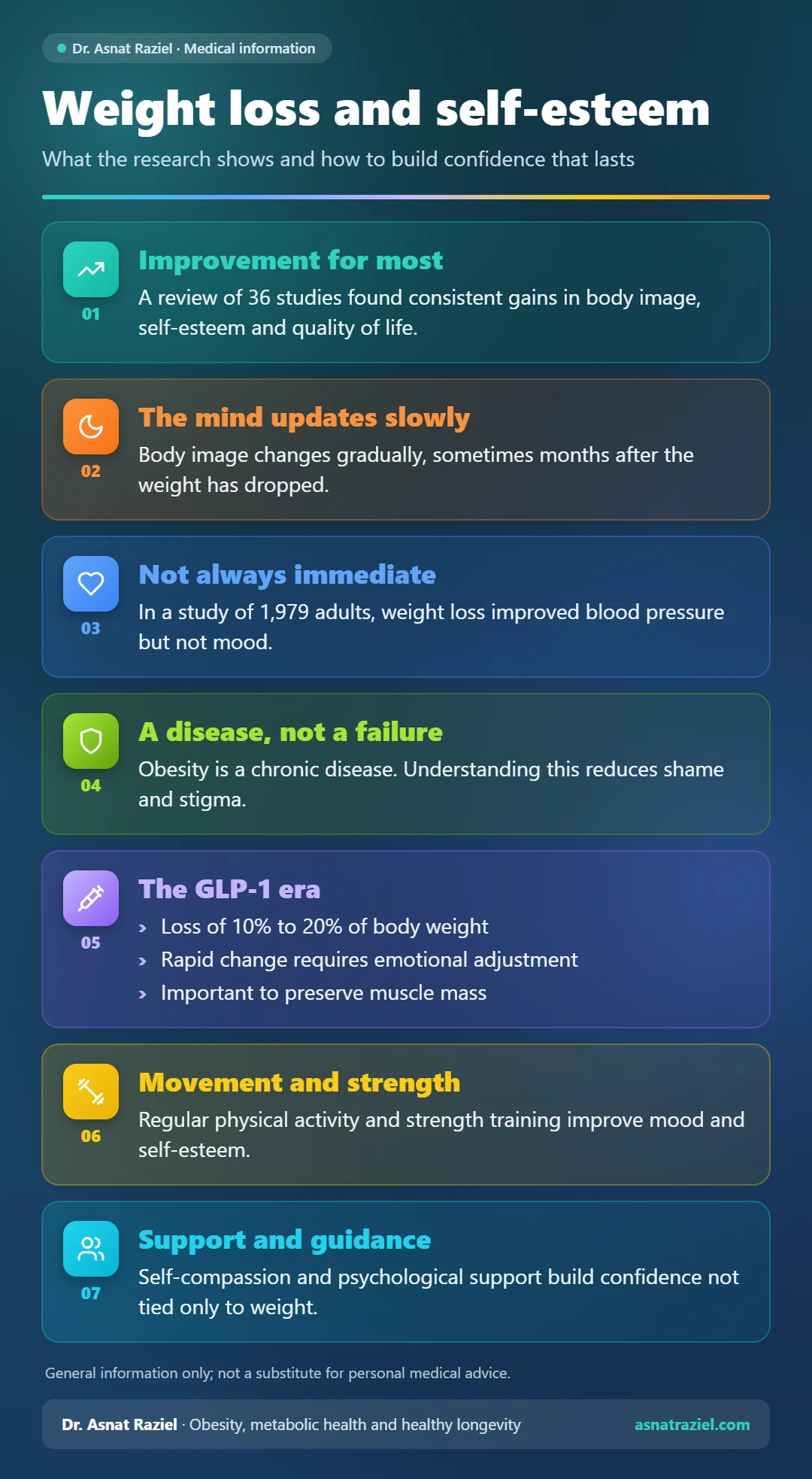
Weight loss and self-esteem is one of the topics I hear about most often in my clinic. Many people expect that once the number on the scale goes down, the shame will disappear too. In reality, the picture is more complex. Studies show improvements in body image and quality of life in most patients, but not in all of them, and not always at the same pace.
That is why it helps to understand the process in advance. This way you can enjoy the change, spot difficulties in time and build confidence that does not depend only on kilograms.
What studies teach us about weight and self-image
A systematic review of 36 studies looked at what happens to the mind after behavioral and dietary weight loss programs. The researchers examined self-esteem, depressive symptoms, body image and quality of life. In most studies, they saw consistent improvement in these measures. Moreover, the improvement sometimes appeared even before significant weight loss.
Still, the review has limitations. Only 9 of the 36 studies included a suitable comparison group. In addition, improvements in body image and vitality went hand in hand with the change in weight, but the size of the effect varied widely between studies. In other words, it is not only the kilograms that change how you feel. Support, success in changing habits and a sense of control also contribute.
Why the effect of weight loss on self-esteem is not always immediate
An interesting British study shows the other side of the coin. The researchers followed 1,979 adults aged 50 and over with overweight or obesity. In those who lost 5% or more of their weight over four years, blood pressure and triglycerides improved. On the other hand, the rate of low mood rose among them compared with people whose weight stayed stable. The researchers saw no psychological benefit of weight loss in this group.
The study does not prove that weight loss itself harms mood. However, it is a reminder of an important fact: the link between weight loss and self-esteem depends on the path, the support and the expectations. An exhausting diet, constant hunger and loneliness can wear down the mind even as the weight drops.
Weight loss, self-esteem and body image
Body image is the thoughts, feelings and way we see our own body. The mind updates more slowly than the body. After years of living with obesity, this inner picture changes gradually. My patients tell me they still choose large clothes, or avoid mirrors, months after losing weight.
In addition, major weight loss brings new challenges, such as loose skin or a change in the shape of the face. It is worth reading about coping with a distorted body image after major weight loss. I also recommend exploring positive body image in the era of weight loss injections.
Stigma, shame and a sense of self-efficacy
The confidence of people with obesity is hurt not only by appearance. It is also hurt by comments, judgment and the way they are treated in the healthcare system. An international commission of 58 experts in The Lancet defined clinical obesity as a chronic disease. The commission also determined that weight stigma and bias are a major barrier to treatment.
When a person understands that obesity is a disease and not a personal failure, something is released. I wrote at length about the harm of judgment in my article on weight stigma and the language we use. In addition, success with a small change, such as a daily walk, builds self-efficacy. That is, the belief that I am able to change things in my life.
The brain, appetite and regaining control
Eating is not just a matter of willpower. The brain releases dopamine, a reward neurotransmitter, when we eat tasty food. In some people with obesity, the reward and control system works differently. In addition, the gut sends signals to the brain through hormones, nerves and gut bacteria. Researchers call the link between the gut and the brain the gut-brain axis.
That is why many patients describe great relief when food noise fades. Food noise, meaning constant thoughts about food, drains energy and undermines the sense of control. When it quiets down, room opens up for work, family and hobbies.
Weight loss and self-esteem in the era of GLP-1 drugs
Drugs in the GLP-1 family have changed obesity treatment. According to a review by the American Psychological Association on mental health, these drugs led to a loss of 10% to 20% of body weight over 9 to 15 months. However, the findings on mood are still mixed. Some studies showed an increased risk of depression, while others showed no such rise.
Moreover, the review notes that up to 60% of the weight lost may come from lean body mass, including muscle. That is why modern treatment combines protein and strength training. You can find more about the drugs on my page on medications for treating obesity. For some patients, the boost to self-esteem from weight loss comes quickly, and this requires emotional adjustment to a new body and identity.
How to strengthen self-esteem along the way
Here are a few steps I recommend in the clinic:
- Set goals beyond weight, for example good sleep, climbing stairs without stopping or better blood test results.
- Include regular physical activity. According to Mayo Clinic, it improves mood and self-esteem.
- Add strength training two or three times a week, to preserve muscle and the feeling of strength.
- Pay attention to your inner voice. Harsh self-criticism weakens you, while self-compassion makes you stronger.
- Seek psychological support if persistent sadness, anxiety or excessive preoccupation with appearance appear.
In addition, I recommend reading about how to learn to trust your body again. In our clinic, we combine a physician, a dietitian and a psychologist, as I describe in my treatment approach.
Bottom line
The effect of weight loss on self-esteem is usually positive, but it is not magic. The greatest improvement comes when you combine medical treatment, movement, good nutrition and emotional support. Remember that confidence is built from a sense of self-efficacy and a compassionate attitude toward yourself, not only from the number on the scale. For questions about personal treatment, you can contact Dr. Asnat Raziel.
The information in this article is general and does not replace personal medical advice.
Questions and answers
Is the effect of weight loss on self-esteem always positive?
Not always. Most studies show improvement in body image and quality of life, but some people actually experience a drop in mood. The path, the support and the expectations strongly affect the outcome.
Why do I still feel big after losing weight?
Body image updates slowly. The brain keeps an old picture of the body for months. Psychological support and work on body image help close the gap.
Do weight loss injections affect mood?
The findings are still mixed. Some studies found an increased risk of depression, and others did not. That is why it is important to tell your doctor about any change in mood during treatment.
What helps build self-esteem during the process?
Goals that are not only about weight, regular physical activity, strength training, self-compassion and professional support. Together, these build a sense of self-efficacy over time.
Sources
Definition and diagnostic criteria of clinical obesity
A new era of weight loss: Mental health effects of GLP-1 drugs
Reward, dopamine and the control of food intake: implications for obesity
Microbiota-gut-brain axis and its therapeutic applications in neurodegenerative diseases