By Dr. Asnat Raziel, bariatric surgeon specializing in obesity treatment, metabolic health and healthy longevity; Director of the Multidisciplinary Center for Obesity Treatment, Assia Medical, Assuta Ramat HaChayal, Tel Aviv
Walking and Alzheimer’s: an encouraging finding
The link between walking and Alzheimer’s is getting stronger, and at a surprisingly manageable dose. A new study found that as few as 3,000 steps a day are linked to slower cognitive decline. In other words, you don’t need to run a marathon. Instead, moderate everyday movement is enough to make a real difference.
How was the study designed?
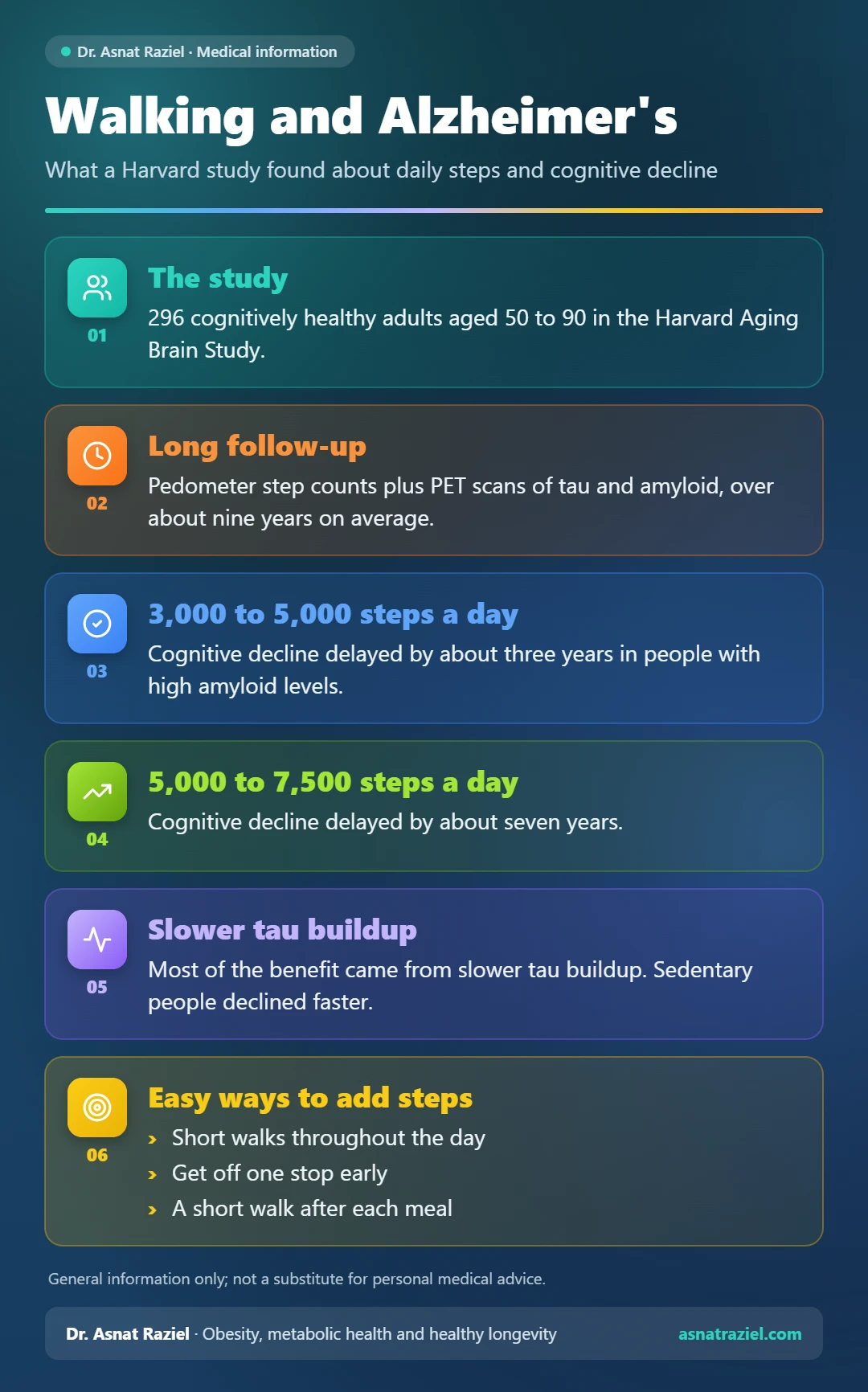
Researchers at Mass General Brigham followed 296 participants in the Harvard Aging Brain Study. They were 50 to 90 years old, and all were cognitively healthy at the start. In addition, pedometers counted their daily steps. At the same time, PET brain scans tracked the buildup of the proteins tau and amyloid. Overall, follow-up lasted about nine years on average.
Walking and Alzheimer’s: how many steps do you need?
In fact, a clear threshold emerges here. Among people with high amyloid levels, 3,000 to 5,000 steps a day delayed cognitive decline by about three years on average. Moreover, 5,000 to 7,500 steps delayed it by about seven years. In sedentary people, by contrast, tau built up faster and function declined more quickly.
Walking and Alzheimer’s: the link to tau
The statistical models point to an interesting mechanism. In particular, most of the cognitive benefit came from slower tau buildup. In other words, movement may directly affect one of the harmful processes in the disease. Notably, the benefit stood out mainly in people who already carried an amyloid burden.
How can you add more steps?
First, break your walking into short bouts throughout the day. In addition, get off the bus one stop early or park farther away. Also, set a reminder to get up every hour. Finally, add a short walk after each meal. As a result, these small habits add up to a meaningful step count without any special effort.
The bottom line
In short, the message is empowering and practical. After all, even a modest increase in daily steps may help protect the brain. To learn more, read about preventing dementia and protecting your brain, about complete fitness for longevity, and about aerobic vs. strength training. Ultimately, the best way to start is simply to get up and walk.
The information in this article is general and does not constitute personal medical advice.




