By Dr. Asnat Raziel, bariatric surgeon specializing in obesity treatment, metabolic health and healthy longevity; Director of the Multidisciplinary Center for Obesity Treatment, Assia Medical, Assuta Ramat HaChayal, Tel Aviv
Nutrition after stopping GLP-1 drugs: why it shapes what comes next
Nutrition after stopping GLP-1 medication is one of the most important tools for keeping off the weight you lost. When you stop injections like Wegovy or Mounjaro, appetite returns gradually, and sometimes with force. That is why we plan the menu before stopping, not after. In this article, I will explain what happens in the body, what the studies show and how to build a menu that helps you hold on to your results.
What happens to the body when you stop the medication
The new generation of anti-obesity medications acts on the hunger and fullness centers in the brain. As long as you take them, they reduce appetite. However, their effect lasts only while you stay on treatment. When you stop, the body gradually returns to its pre-treatment state.
The studies show this clearly. The extension of the STEP 1 trial followed 327 participants who received semaglutide for 68 weeks. They lost an average of 17.3% of their body weight. Yet one year after stopping, they had regained about two-thirds of the weight they lost. In addition, most of the improvements in blood pressure, blood sugar and blood lipids went almost back to baseline.
In the SURMOUNT-4 trial, participants took tirzepatide for 36 weeks and lost an average of 20.9% of their weight. After that, some of them switched to placebo. Over the following year, they gained an average of 14%, while those who continued treatment lost another 5.5%.
Moreover, a review published in the BMJ pooled 37 studies with more than 9,000 participants. The researchers found an average gain of about 0.4 kg a month after stopping the medications. Also, the regain was faster than after the end of a behavioral weight-loss program. So what happens when you stop a weight-loss drug should be part of the plan from the very start.
Why hunger comes back after stopping
Obesity is a chronic disease, and the body “remembers” its previous weight. After weight loss, it boosts hunger signals and slows the rate at which it burns energy. While the medication works, it balances this pressure. When it is gone, the balance shifts.
Many patients describe the return of food noise, meaning thoughts about food that will not let go. Others feel constant hunger after stopping treatment. This is not weakness or a lack of willpower. Rather, it is a well-known biological process, so you need practical tools to prepare for it.
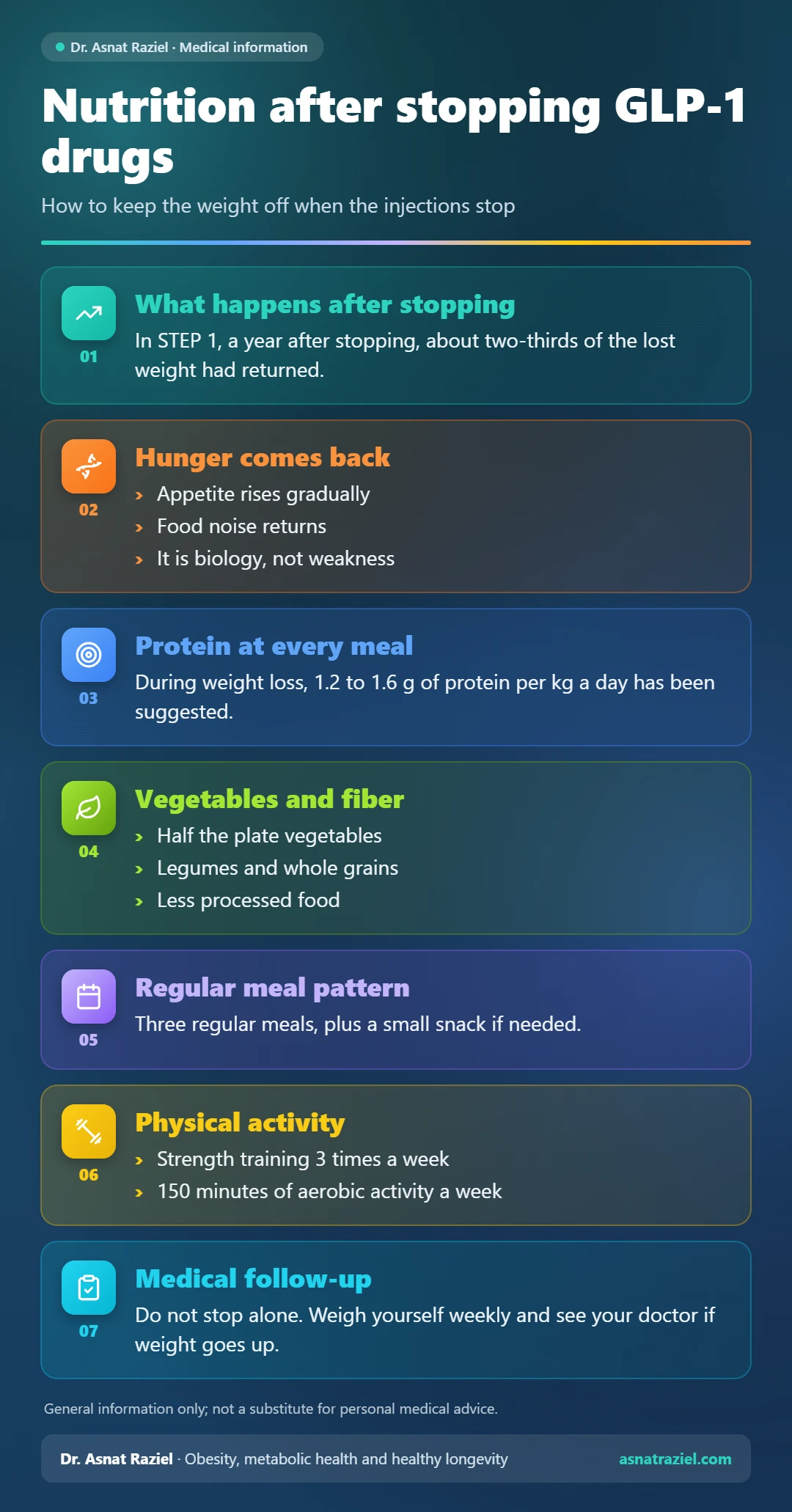
Principles of nutrition after stopping GLP-1 treatment
There is no single “diet” that suits everyone. Still, a few principles come up again and again in the recommendations of professional organizations. A joint advisory from four American organizations in nutrition, lifestyle medicine and obesity care stresses whole-food nutrition and physical activity before, during and after treatment. Similar principles also appear in the weight maintenance tips from Baylor College of Medicine.
Protein at every meal
Protein keeps you full for longer and helps preserve muscle mass. The general recommendation for adults is 0.8 grams of protein per kilogram of body weight a day. During weight loss, experts have suggested higher targets of 1.2 to 1.6 grams per kilogram. On the other hand, there is no need to go above 2 grams per kilogram over the long term. Good sources include eggs, yogurt, low-fat cheeses, fish, chicken, tofu and legumes. You may also want to read my protein intake guide.
Vegetables, legumes and whole grains
Dietary fiber adds volume to a meal and slows absorption. That is why filling half your plate with vegetables is a habit that pays off. In addition, legumes and whole grains provide both fiber and protein. Meanwhile, it is wise to cut back on pastries, snacks and processed food, since it is very easy to eat a lot of them.
A regular meal structure
During treatment, many people eat little and at random times. After stopping, this habit can lead to intense hunger in the evening. So it is best to set three regular meals, plus a small snack if needed. For example, you can use a daily Mounjaro meal plan as a base and gradually increase the portions.
Drinks and liquid calories
Juices, sweetened drinks, coffee with syrup and alcohol add calories without making you feel full. By contrast, water, soda water, tea and unsweetened coffee add almost nothing. Thirst also sometimes masquerades as hunger, so it helps to drink throughout the day.
Nutrition after stopping GLP-1 drugs: a sample day
Here is a general example, which you should adjust with a dietitian to your age, weight and health status:
- Breakfast: a two-egg omelet, a vegetable salad and a slice of whole-grain bread.
- Snack: plain yogurt with fruit and a spoonful of nuts.
- Lunch: chicken breast or fish, half a plate of vegetables and a small portion of quinoa.
- Dinner: lentil soup or shakshuka with low-fat cheese and a salad.
This example is rich in protein and fiber, yet it does not require counting calories. Ultimately, what matters most is a steady structure you can stick with.
Physical activity and preserving muscle
Nutrition alone is not enough. In a Copenhagen study of the drug liraglutide, people who exercised regularly maintained their weight better, even one year after treatment ended. By contrast, after stopping the medication alone, weight regain was on average 6 kg greater than in the exercise group.
The joint advisory recommends strength training at least three times a week, plus 150 minutes a week of moderate aerobic activity. In practice, that means brisk walking, swimming or cycling, together with training with weights or resistance bands. A healthy lifestyle also protects your heart, not just the number on the scale.
How to plan nutrition after stopping GLP-1 medication
First, do not stop on your own. The decision to stop, lower the dose or switch to other treatments for metabolic disease is one you make together with your doctor. Second, it is a good idea to start changing your menu a few weeks before stopping, while your appetite is still low.
In addition, weighing yourself once a week helps you spot a gain early. If your weight goes up by more than two or three kilos, that is the time to go back to your doctor rather than wait. At our clinic, we set this kind of “return threshold” in advance with every patient.
The bottom line
Nutrition after stopping GLP-1 treatment is not meant to replace the medication. Instead, it aims to limit weight regain and protect your health. Studies show that most patients regain a significant part of the weight after stopping. Therefore, it is worth building a menu rich in protein and fiber, keeping a regular meal structure, exercising consistently and staying in follow-up. If you are considering stopping, plan it ahead with your care team.
The information in this article is general and does not replace personal medical advice.
Questions and answers
Can I keep the weight off without the medication?
Some patients succeed, mainly when they combine an organized diet with physical activity. However, in most studies the majority of participants regained a significant part of the weight, so close follow-up is important.
How much protein do I need for nutrition after stopping GLP-1 drugs?
The basic recommendation is 0.8 grams per kilogram a day. During weight loss, experts have suggested 1.2 to 1.6 grams per kilogram. It is best to set your personal target with a dietitian.
What is the first step in nutrition after stopping GLP-1 medication?
Build three regular meals with a protein source and vegetables in each one. Ideally, start doing this even before you stop.
When should I see a doctor?
See your doctor when your weight keeps rising, when hunger feels out of control or when measures like blood sugar and blood pressure go up. In such cases, returning to treatment may be an option. You can find more about my approach on the page about Dr. Asnat Raziel.
Sources
How to maintain your weight after completing weight loss medications