By Dr. Asnat Raziel, bariatric surgeon specializing in obesity treatment, metabolic health and healthy longevity; Director of the Multidisciplinary Center for Obesity Treatment, Assia Medical, Assuta Ramat HaChayal, Tel Aviv
What is biological age, and why isn’t it the same as the age on your ID?
Biological age reflects how young or old your body really is. We all know how old we are from our date of birth. However, science teaches us that alongside chronological age there is another measure. That measure is based on the state of our cells and organs, our metabolism, inflammation in the body and our lifestyle.
The encouraging news is that this measure is not fixed. Unlike the age on your ID card, it responds to the choices you make every day. Many studies show that lifestyle changes can slow the pace of aging. In some cases, they even improve biological markers of aging. That said, “age reversal” is still at the frontier of research, so sweeping promises have no place here.
Not just how many years we live, but how we live them
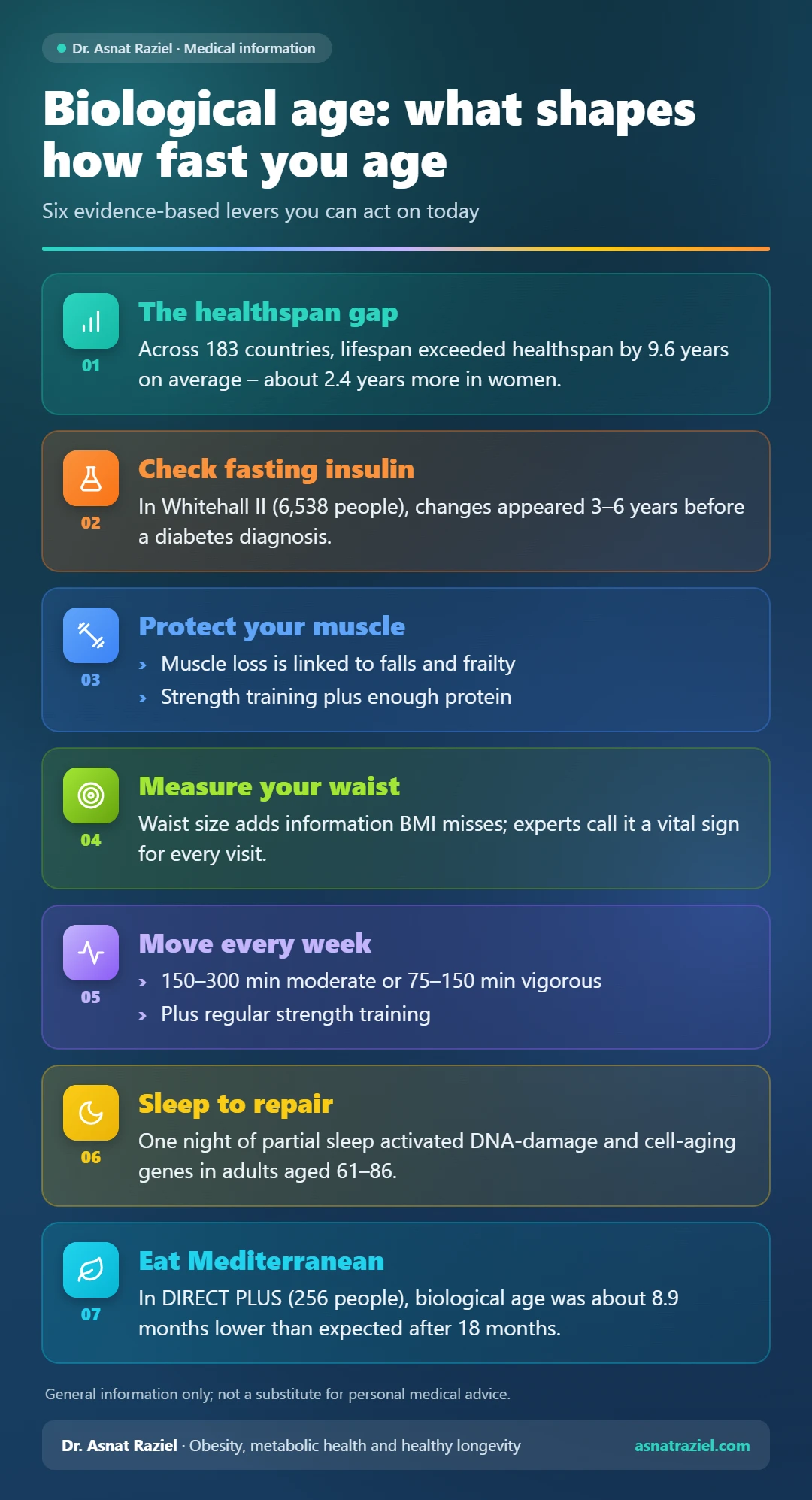
The real goal of longevity medicine is not simply to add years. Above all, it aims to extend healthspan, meaning the years in which we stay active, independent and mentally sharp. This gap is not theoretical. An analysis of World Health Organization data from 183 countries found that the gap between lifespan and healthspan averaged 9.6 years. For women, the gap was about 2.4 years wider.
The practical message is clear. We want to lower the risk of heart disease, diabetes, fatty liver, dementia and cancer starting today. To do that, we treat risk factors early, before disease appears.
The blood test that may flag diabetes years ahead
One of the more interesting recommendations is to check fasting insulin from time to time, not just blood sugar. In many cases, the pancreas ramps up insulin production years before blood sugar rises. This is an early sign that the body is working hard to stay in balance. Sometimes it is the first stage of insulin resistance.
The data support this. The Whitehall II study followed 6,538 British civil servants. The researchers identified changes in blood sugar, insulin sensitivity and insulin secretion as early as 3 to 6 years before a diabetes diagnosis. When these changes are caught early, weight loss, exercise, good sleep and a healthy diet can stop the decline.
Muscle mass: a key to a younger biological age
Many people focus only on the number on the scale. Yet one of the most important markers of healthy aging is actually muscle mass. As the years pass, we naturally lose muscle. The revised European definition of sarcopenia describes it as a muscle disease that builds up over a lifetime, and it puts the emphasis on muscle strength. This kind of loss is linked to falls, fractures, frailty, diabetes and even death.
That is why strength training, together with enough protein, is not just for bodybuilders. It is a central part of healthy aging. It helps maintain a healthy metabolism, steady blood sugar and everyday function for years to come.
Don’t just watch your weight, watch your waist too
Weight alone doesn’t tell the whole story. Abdominal obesity, and especially visceral fat around the internal organs, is linked to a high risk of heart disease, diabetes, high blood pressure and fatty liver. It is also linked to dementia.
Measuring your waist is a simple test anyone can do at home. An international consensus statement concluded that waist circumference adds information that BMI (body mass index) does not provide. For this reason, the experts recommend measuring it as a vital sign at every visit.
Exercise slows biological age
No single drug affects as many body systems as physical activity does. Combining aerobic exercise with strength training improves heart health and preserves muscle mass. In addition, it reduces chronic inflammation and supports brain health.
The World Health Organization guidelines recommend 150 to 300 minutes a week of moderate activity for adults. Alternatively, you can choose 75 to 150 minutes of vigorous activity. The guidelines also recommend regular strength training. Above all, the key is consistency. Moderate, regular activity beats an intense workout once every few weeks. You can read about the right mix in my article on aerobic vs. strength training.
Sleep, repair and biological age
In recent years it has become clear how essential quality sleep is for healthy aging. During sleep, the body repairs damage and balances hormones. At the same time, it clears waste from the brain, strengthens the immune system and regulates hunger.
Chronic sleep deprivation may speed up aging processes. In a trial in adults aged 61 to 86, a single night of partial sleep activated gene patterns of DNA damage and cellular aging in blood cells. In this way, lack of sleep raises the risk of diabetes, obesity and degenerative diseases. So good sleep belongs in any plan to improve biological age.
The Mediterranean diet and biological age
Despite all the trends, the Mediterranean diet keeps proving itself. It includes plenty of vegetables, fruit, legumes, whole grains, nuts, olive oil and fish. At the same time, it cuts back on ultra-processed food. This way of eating improves heart health and balances metabolism.
What’s more, there is early evidence of an effect on markers of aging. The Israeli DIRECT PLUS trial included 256 people with abdominal obesity or high blood lipids. After 18 months on a Mediterranean diet, participants’ biological age was about 8.9 months lower than expected. The strongest effect appeared in those who ate the most polyphenols, for example from green tea and Mankai, a tiny aquatic plant. For the principles of this menu, see my article on the longevity diet.
The bottom line
We can’t stop the hands of the clock. Even so, biological age can be influenced. We can certainly change the pace at which the body ages. Eating well, sleeping well and staying active are the foundation. In addition, it is important to preserve muscle mass, avoid abdominal obesity and detect metabolic problems early.
These are not just tips for a healthy lifestyle. They are the foundation of modern longevity medicine and of a younger biological age. The future of medicine is not only about treating diseases once they appear. Instead, the goal is to spot aging processes early, slow them down and give us more years of healthy, active life.
This article provides general information and is not a substitute for personal medical advice.
References
Global Healthspan-Lifespan Gaps Among 183 World Health Organization Member States
Sarcopenia: revised European consensus on definition and diagnosis
World Health Organization 2020 guidelines on physical activity and sedentary behaviour




