By Dr. Asnat Raziel, bariatric surgeon specializing in obesity treatment, metabolic health and healthy longevity; Director of the Multidisciplinary Center for Obesity Treatment, Assia Medical, Assuta Ramat HaChayal, Tel Aviv
What is the PNOE test and how does it work?
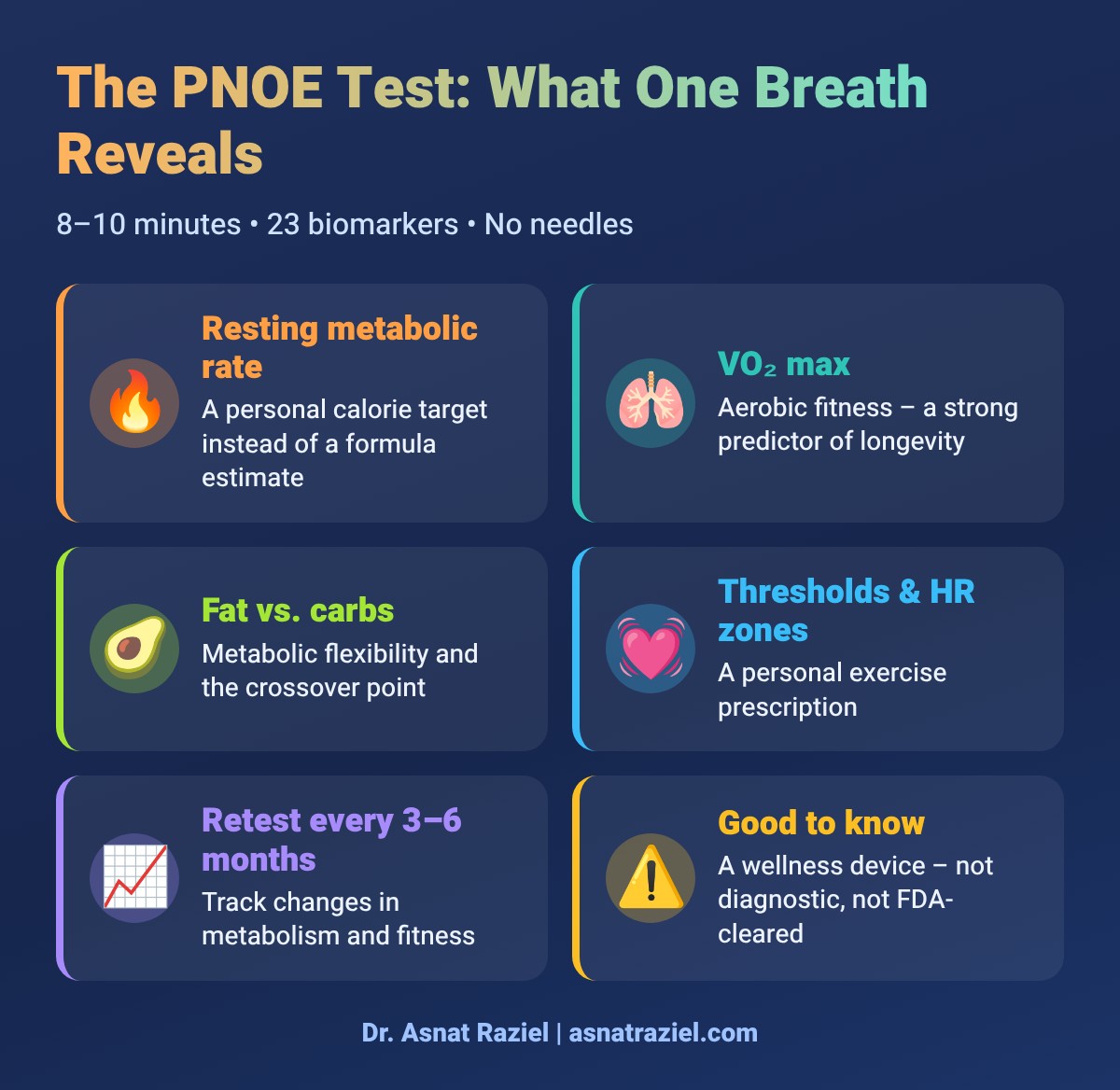
The PNOE test is a breath test that takes about ten minutes. It measures how many calories your body burns at rest. It also shows whether you burn mostly fat or carbohydrates, and how fit you are. Until now, we measured these markers mainly in exercise labs. In the clinic, we could only estimate them with formulas.
The name PNOĒ comes from the Greek word for breath. The device is based on indirect calorimetry. You breathe into a mask, and the device measures your oxygen uptake (VO₂) and your carbon dioxide output (VCO₂). It can measure you at rest or during exercise.
In practice, the device has three sensors. They measure oxygen concentration, carbon dioxide concentration and airflow volume. In addition, the device tracks heart rate and heart rate variability (HRV). From all of these, it calculates 23 cardio-metabolic biomarkers.
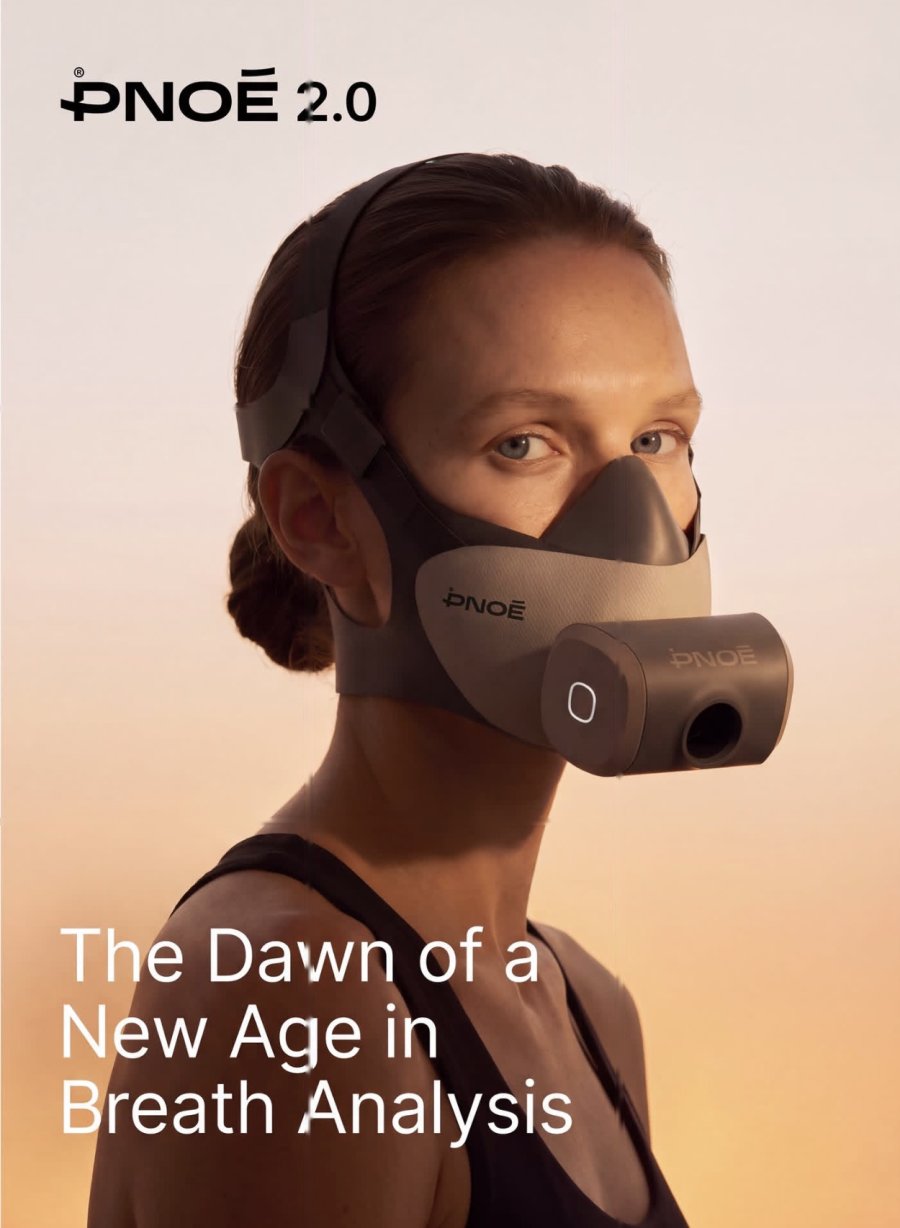
In October, the company launched a new model, PNOĒ 2.0. According to TechCrunch, it is a mask that you run yourself, with no trained operator. The test takes about eight minutes while seated. Also, the electronic unit detaches from the mask, so every person can keep their own mask.
The 23 biomarkers of the PNOE test
- Breathing and lungs (9): breathing rate, tidal volume, minute ventilation, forced expired volume, VE/VCO₂, end-tidal CO₂ and O₂, and the fractions of expired CO₂ and O₂.
- Heart and circulation (4): heart rate, heart rate variability (HRV), O₂ pulse and the VO₂ to breathing-rate ratio.
- Metabolism (8): VO₂ max, CO₂ output, respiratory exchange ratio (RER), calorie burn, fat oxidation, carbohydrate oxidation, mechanical efficiency and the crossover point. At this point, the body shifts from burning mostly fat to burning mostly carbohydrates.
- Thresholds (2): the aerobic threshold and the anaerobic threshold.
The report also shows your resting metabolic rate (RMR), a “biological age” and an estimate of nervous system activity. However, the last two are the company’s own calculated scores. So it is wise to read them with caution.
I tried the test myself
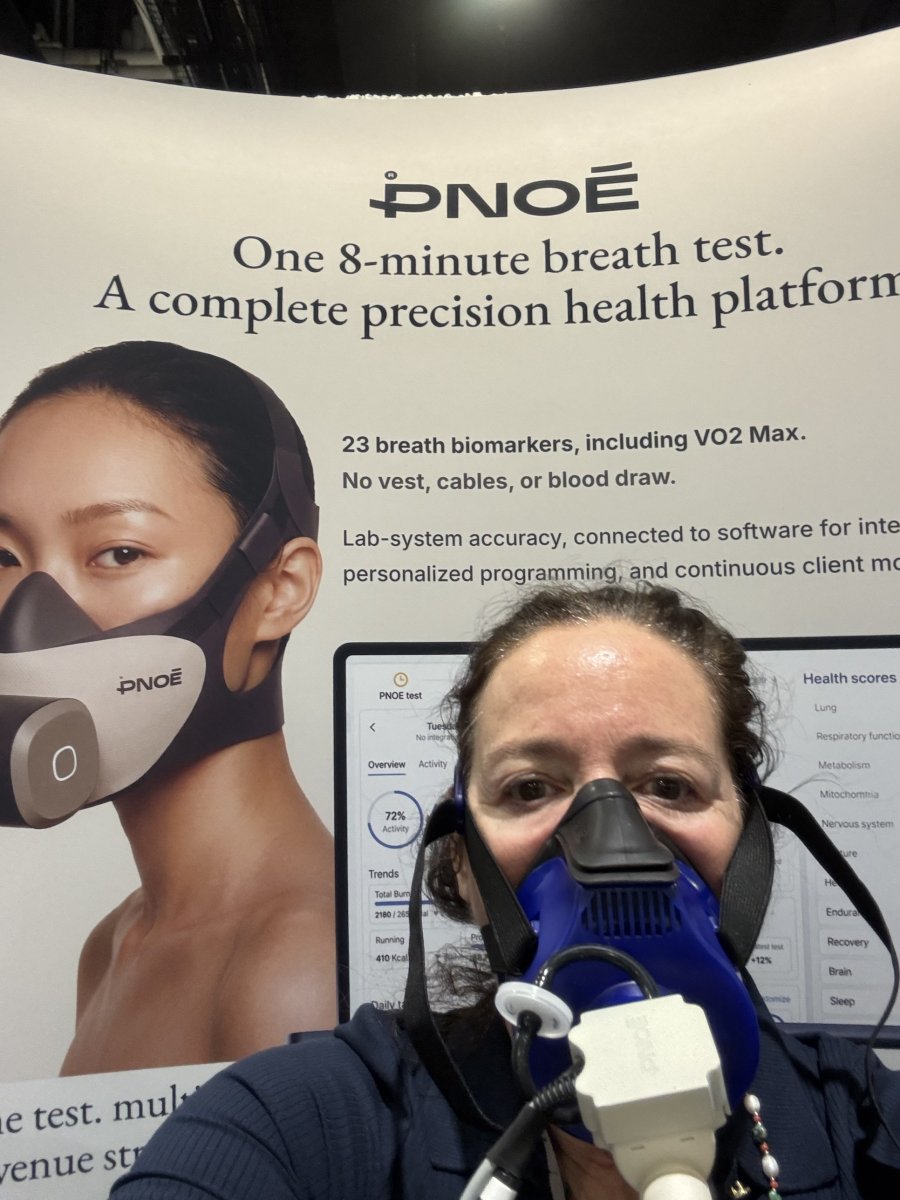
At the company’s booth at a conference in the United States, I took the test myself. Breathing in the mask is comfortable, and the test is short. Right after it, the screen shows the results. These include scores for lungs, metabolism, nervous system, endurance and recovery.
How accurate is the device?
The main validation study (Tsekouras et al., 2019) included 22 healthy volunteers. There were 17 men and 5 women, with a mean age of 32.3 ± 11.1 years. They did a four-stage incremental exercise test on a stationary bike. The researchers compared PNOĒ with the COSMED Quark CPET metabolic cart, a validated reference system.
The results showed strong correlations for VO₂ (r = 0.98), VCO₂ (r = 0.98) and minute ventilation (r = 0.98). For RQ, the correlation was r = 0.91. In addition, ten volunteers repeated the test on another day to check reliability.
In a second study (Kwok et al., 2025), researchers compared PNOĒ with the portable COSMED K5 during treadmill walking. This time, the correlations were moderate to high (r = 0.60–0.79). Even so, the authors concluded that the device is valid, reliable and comparable to the K5.
The limits matter too. The researchers tested small groups of healthy people under lab conditions. I found no published validation study in people with obesity. Moreover, the device is not FDA-cleared, and the company itself calls it a wellness device, not a diagnostic tool.
What the PNOE test adds to obesity care
- Measured, not estimated, calorie burn: in people with obesity, standard formulas can be off by hundreds of calories. Examples are Mifflin-St Jeor and Harris-Benedict. A direct measurement, by contrast, lets us set a personal calorie target.
- Spotting a slower metabolism: a patient may say “I eat very little and don’t lose weight”. We can then check whether their metabolic rate is lower than expected. We can also follow metabolic adaptation during weight loss, on medication or after surgery.
- Metabolic flexibility: the fat-to-carbohydrate burning ratio and the crossover point help the dietitian. For example, they help tune the macronutrient split and the personal nutrition plan.
- A personal exercise prescription: the aerobic and anaerobic thresholds become precise heart-rate training zones. This matters most for patients on semaglutide or tirzepatide and after bariatric surgery. For them, keeping muscle mass and fitness is part of the treatment.
- A longevity tool: VO₂ max is one of the strongest predictors of mortality and healthy lifespan. A true measurement is more accurate than smartwatch estimates, which rely on heart rate alone.
- Teamwork: the report gives the physician, the dietitian and the trainer a shared basis. That way, everyone works from the same numbers.
Follow-up over time
The device’s biggest strength is repeat testing. The company recommends retesting every three to six months. That way, we can see how resting metabolic rate changes during weight loss. Likewise, we can check whether aerobic fitness improves and whether fat burning rises.
We can also see how a dose change, a new exercise prescription or a change in diet affects the numbers. The company’s cloud platform brings breath-test results together with lab tests and smartwatch data.
What the patient gets from the test
- A personal report with resting metabolic rate and a tailored daily calorie target.
- Insight into how the body uses fuel: how much fat and how many carbohydrates it burns at rest and during exercise.
- A VO₂ max score compared with people of the same age, plus a “biological age” based on the company’s model.
- Personal heart-rate zones for training: for fat burning, for fitness and for high-intensity work.
- AI-generated nutrition and training plans, reviewed by a professional.
- Progress charts between tests. Personal, measurable numbers are a real source of motivation, so they help people stick with treatment.
How much does the PNOE test cost?
The company does not sell PNOĒ to consumers. Instead, it sells to businesses and clinics that offer the test to their clients. According to recent reports, a clinic pays a monthly subscription of about $400 to more than $1,000. The subscription covers hardware, software, training and marketing materials. Earlier reports put the system price at $3,000 to $5,000, plus a software subscription.
For comparison, a lab metabolic cart such as the COSMED Quark CPET costs $25,000 to $40,000. By contrast, the competing VO2 Master device is a one-time purchase of $6,895 to $7,595, with no monthly fee.
According to company figures, US clinics charge about $100 for an RMR test. An RMR test with a nutrition plan costs about $250. A VO₂ max test with a training plan costs about $450. These are the maker’s marketing figures. I found no official price for the test in Israel.
Pros and limitations
- Pros: a small, portable device, a short test, a wide range of biomarkers and fast results. In addition, the system produces reports and plans automatically, and repeat tests strengthen the bond with the patient.
- Limitations: an ongoing monthly subscription and reliance on the company’s platform, including for raw data access. The device is not FDA-cleared and is not a diagnostic tool. Also, validation in people with obesity is limited.
- Practical points: a resting test needs standard conditions, such as fasting, rest and no caffeine. Without them, it is hard to compare tests. An exercise test needs a bike or treadmill, and patients at cardiac risk need a medical check first.
Bottom line
The PNOE test brings lab-grade metabolic measurement into the clinic. In obesity care, it lets us set a true calorie target and build a personal exercise plan. This matters even more in the era of weight-loss drugs. It also lets us track metabolism and fitness objectively over time. However, the results should be read as health and fitness markers, not as a medical diagnosis.
This article is general information and is not a substitute for personal medical advice.
References
TechCrunch: PNOE’s new face mask wants to make lab-grade breath testing a self-serve affair