By Dr. Asnat Raziel, bariatric surgeon specializing in obesity treatment, metabolic health and healthy longevity; Director of the Multidisciplinary Center for Obesity Treatment, Assia Medical, Assuta Ramat HaChayal, Tel Aviv
Lose fat, not muscle: what the scale doesn’t tell you
How do you lose fat, not muscle? In my view, this is one of the most important questions in obesity treatment. The real challenge is not just losing weight, but knowing what that lost weight is made of. In this article, I focus on the evidence: what studies show about the quality of weight loss, and which steps make the difference. After all, weight loss that does not protect muscle can impair function and slow your metabolism. It also raises the risk of regaining weight. So the real question is not only how to lose weight, but how to lose it the right way.
Why muscle matters so much
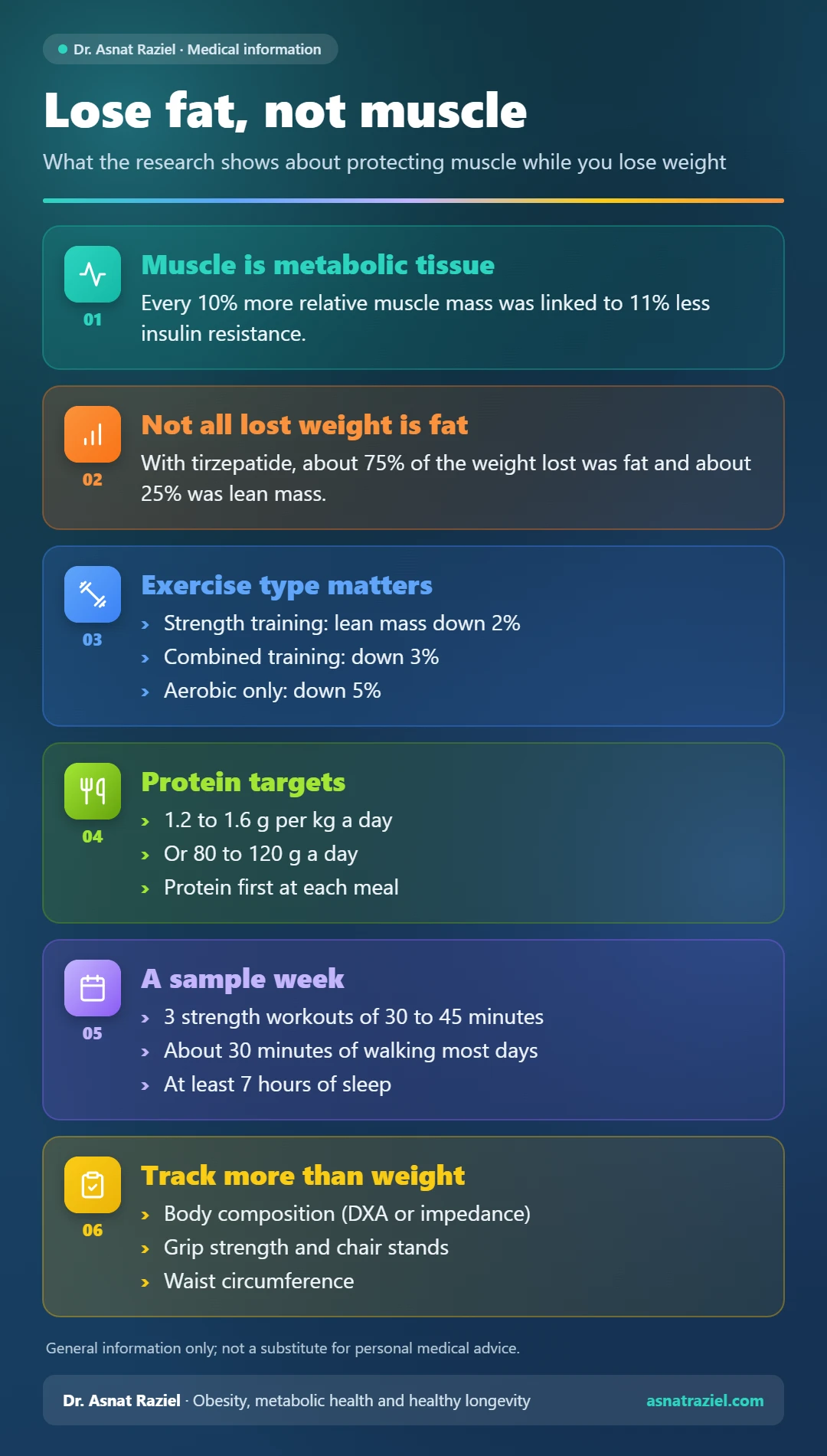
Muscle is far more than a way to move. It is active metabolic tissue that takes up sugar from the blood and improves insulin sensitivity. Muscle also supports posture, strength and balance. A study of 13,644 participants found that every 10% increase in relative muscle mass was linked to an 11% drop in insulin resistance. In addition, the more muscle you have, the more energy your body burns, even at rest.
Losing muscle during weight loss leads to a slower metabolism and lower fitness. It also makes it harder to keep the weight off. For older adults, the stakes are especially high: a greater risk of falls, fractures and loss of independence.
Why weight loss can cost you muscle
When your body is in a calorie deficit, it looks for available sources of energy. Without the right stimulus, muscle becomes a reserve the body draws from. Three factors increase the risk: losing weight too fast, eating too little protein and skipping strength training.
Even with obesity medication, some of the weight lost may be muscle if the process is not managed well. For example, in a substudy of the SURMOUNT-1 trial of tirzepatide (Mounjaro/Zepbound), about 75% of the weight lost was fat and about 25% was lean mass. Lean mass means everything that is not fat: muscle, organs, bone and water. However, a comprehensive review found a wide range across studies, so your personal approach makes a big difference.
What the research shows about how to lose fat, not muscle
Taken together, the studies in this article tell a clear story. First, muscle is worth protecting: more muscle means less insulin resistance. Second, the share of lean mass you lose is not fixed. With tirzepatide, it was about a quarter of the weight lost, but across studies the range is wide. Third, the type of exercise matters. In older adults who were dieting, lean mass fell by 5% with aerobic exercise alone, but only by 3% with combined training and by 2% with strength training. In other words, the same weight loss can look very different inside the body, and your daily habits help decide the result.
Protein: the basic requirement to lose fat, not muscle
Getting enough protein is a cornerstone of preserving muscle. Protein gives your body the building blocks it needs to maintain and build muscle. It also helps you feel full. The joint recommendations of four American organizations set out clear targets:
- 1.2 to 1.6 grams of protein per kilogram of body weight per day during active weight loss.
- Alternatively, a simple target of 80 to 120 grams of protein a day.
- Avoiding a prolonged intake of 2 grams per kilogram a day or more.
- Eating protein-rich foods at the start of a meal, while your appetite is still low.
The focus is not only on how much, but also on how you spread it out. For this reason, a balanced split of protein across meals is better than packing it all into one meal. It is also important to choose quality sources, from animal or plant foods. You will find practical details in my guide to eating well while taking weight-loss injections.
Strength training to lose fat, not muscle
There is no way to keep muscle without challenging it. Strength training, even at moderate intensity, is the most effective tool for preserving muscle and even building it. The joint recommendations suggest strength training at least three times a week. Alongside this, they recommend 150 minutes of moderate-intensity aerobic activity a week.
The data support this. A study published in the NEJM included 160 adults aged 65 and over with obesity. In the exercise groups, which also followed a weight-loss program, weight dropped by 9%. However, lean mass fell by only 2% with strength training and 3% with combined training. By contrast, it fell by 5% with aerobic exercise alone. Moreover, combining the two types of training improved physical function the most.
You don’t need extreme workouts or a professional gym. Bodyweight exercises, resistance bands or light weights also do the job. If you are just starting out, here is a simple twice-weekly beginner’s plan. To learn how the two types of exercise differ, read my article on aerobic versus strength training. I also wrote about a supplement that may help, in my article on creatine for women over 40.
Mayo Clinic’s overview of the benefits of strength training adds that it may help maintain bone strength, improve balance and lower the risk of falls.
A sample week
A good plan has to be simple enough to stick with. Here is an example of a balanced week designed to help you lose fat, not muscle. You can adapt it to any fitness level:
- Three strength workouts of 30 to 45 minutes, on non-consecutive days, covering all the major muscle groups.
- Brisk walking or cycling, about 30 minutes on most days of the week.
- A protein source at every meal: eggs, yogurt, fish, chicken, legumes or tofu.
- At least seven hours of sleep, which helps your muscles recover.
It’s best to start with a light load and increase it gradually. If you have pain, chronic conditions or are older, consider working with a trainer or physical therapist. That way, you stay safe and get lasting results. And if you’re still not sure how to lose fat, not muscle in your own situation, a talk with your care team can help you build a personal plan.
The pace of weight loss matters
Losing weight too quickly can increase muscle loss. Managing the pace, especially in the early stages, gives your body time to adapt and protect vital tissue. If you want to lose fat, not muscle, slow is sometimes exactly right. In other words, a steady, reasonable pace beats a quick record you can’t sustain.
Medication with the right support
Obesity medications make the process much easier. Even so, they do not replace nutrition and physical activity. A smart combination of medication, a protein-rich diet and strength training is the key to high-quality weight loss. That way, you lose fat, not muscle. In addition, close medical follow-up can spot early signs of muscle loss. As a result, the plan can be adjusted in time.
Tracking progress: are you losing fat, not muscle?
To know whether your treatment is protecting your muscle, tracking your weight is not enough. Instead, it’s worth combining several measures:
- Body composition, using a DXA scan (a low-dose X-ray scan) or bioelectrical impedance.
- Body measurements, such as waist circumference.
- Strength tests, such as grip strength and standing up from a chair.
- Fitness and daily function, such as climbing stairs.
Together, these measures give a full picture of your progress. What’s more, they also help during the weight-maintenance phase. For the full order of steps, from measuring at the start to regular follow-up, see my practical checklist with measurement and tracking. I also wrote more about the maintenance stage in my article on keeping weight off after major weight loss.
Final thoughts
The goal of obesity treatment is not to make the body smaller, but to make it healthy and strong. Weight loss that preserves muscle respects human biology and lays the foundation for long-term success. So how do you lose fat, not muscle? You combine the right nutrition, strength training and professional support. That way, you can lose weight without giving up your strength along the way.
The information in this article is general and does not replace personal medical advice.
References
Aerobic or Resistance Exercise, or Both, in Dieting Obese Older Adults
Changes in lean body mass with glucagon-like peptide-1-based therapies and mitigation strategies