By Dr. Asnat Raziel, bariatric surgeon specializing in obesity treatment, metabolic health and healthy longevity; Director of the Multidisciplinary Center for Obesity Treatment, Assia Medical, Assuta Ramat HaChayal, Tel Aviv
What to eat on weight loss injections: why it matters from day one
Knowing what to eat on weight loss injections is part of the treatment itself, not an optional extra. The medications lower your appetite, so you eat less. But when you eat less, every bite needs to deliver real nutritional value. In this guide I focus on the basics you need from the very first week: protein, fluids, fiber, vitamins, and how to eat when side effects strike.
What happens to eating during treatment
Medications such as Wegovy, Ozempic and Mounjaro mimic satiety hormones. The active ingredient in Wegovy and Ozempic is semaglutide, and in Mounjaro it is tirzepatide. As a result, the stomach empties more slowly and hunger fades.
According to joint recommendations from four professional organizations in obesity and nutrition, calorie intake drops by 16% to 39% during treatment. This raises the risk of falling short on protein, vitamins and minerals. In addition, part of the weight you lose is lean body mass. For example, in the STEP 1 trial of semaglutide, about 38% of the weight lost was lean mass.
Principle one: protein at every meal
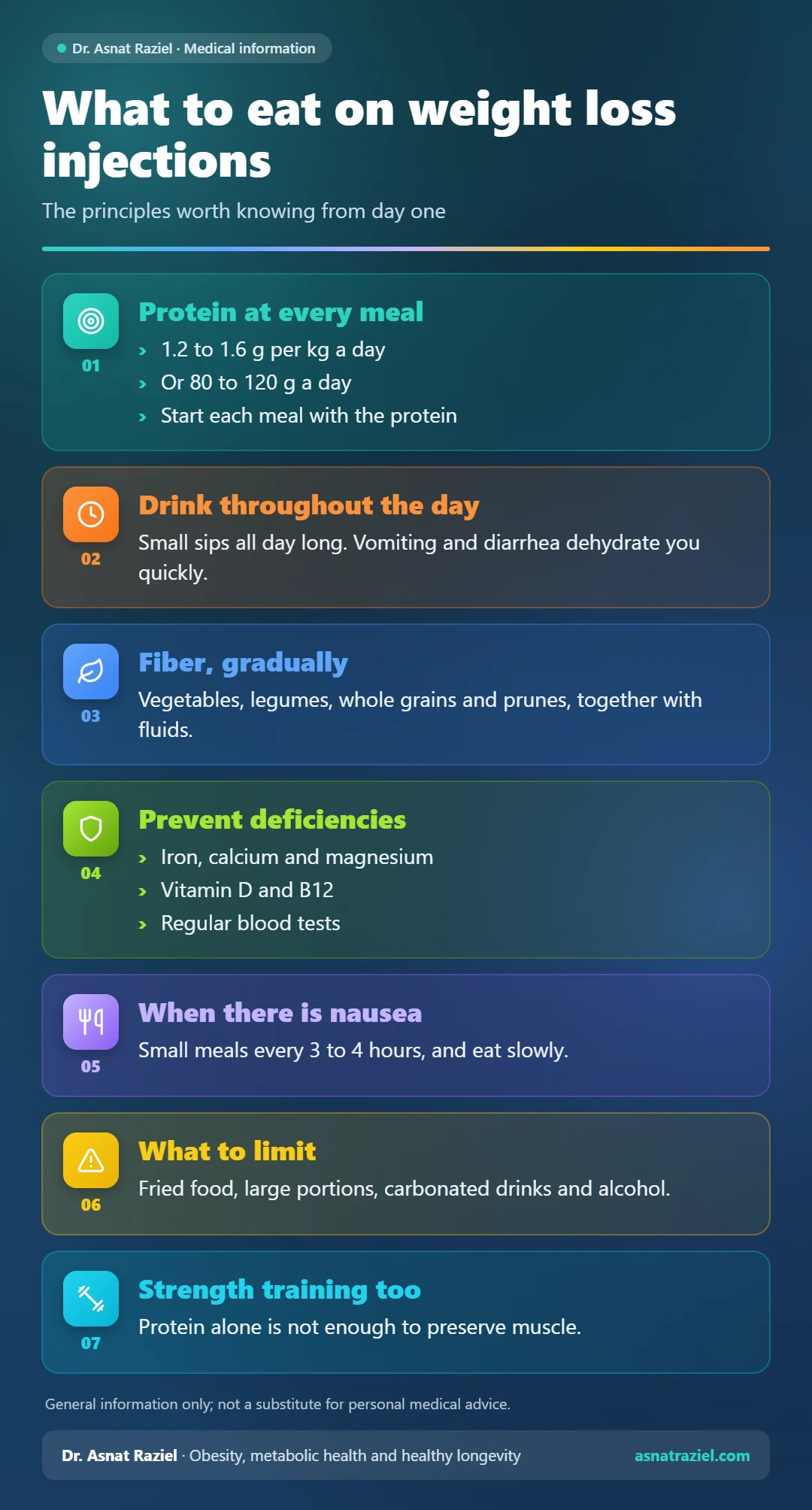
Protein protects your muscles while you lose weight. According to the recommendations, the target during active weight loss is 1.2 to 1.6 grams of protein per kilogram of body weight per day. A simple approach is to aim for 80 to 120 grams a day. It is best to spread protein across the day and to start every meal with it.
Good sources include eggs, yogurt and other dairy foods, fish, chicken, tofu and legumes. If food alone is not enough, a protein shake can help. Keep in mind, too, that protein alone is not enough: you also need strength training. You can read more in my guide to protein intake for weight loss.
Principle two: fluids throughout the day
During treatment, your sense of thirst may also fade. At the same time, vomiting and diarrhea drain fluids quickly. According to the recommendations, this kind of dehydration can lead to acute kidney injury. So it is best to drink in small sips throughout the day rather than a large amount all at once.
Water is the first choice. Herbal tea, such as ginger or mint, also helps some patients with nausea. It is worth cutting back on sugary drinks and alcohol, because alcohol makes nausea and heartburn worse.
Principle three: fiber, gradually
Constipation is a common side effect. That is why it helps to increase dietary fiber gradually: vegetables, fruit, legumes and whole grains. Prunes and other dried fruit are especially helpful. The increase should be slow and always paired with fluids; otherwise, bloating may get worse. I have also written separately about the metabolic benefits of dietary fiber.
What to eat on weight loss injections to prevent deficiencies
When you eat very little, it is easy to miss out on vitamins and minerals. The recommendations point to a risk of deficiency in iron, calcium, magnesium, zinc, vitamin D, vitamin B12 and other vitamins. The risk is especially high when energy intake falls below about 1,200 calories a day for women and 1,800 for men.
So, aim for a plate with a variety of colors and sources. In addition, periodic blood tests help detect a deficiency early. If needed, your doctor or dietitian will recommend a tailored supplement.
What to eat on weight loss injections when side effects strike
Nausea
Eat a small breakfast, and then small meals every three to four hours. A large meal raises the chance of vomiting. Likewise, eat slowly and stop at the first sign of fullness. I wrote about the emotional side of nausea from weight loss drugs in a separate article.
Constipation
Besides fiber and fluids, water-rich foods such as cucumber, watermelon and soups can help. The recommendations also suggest temporarily cutting back on heavy, fatty meals, which slow stomach emptying. If that is not enough, there are simple medication options. It is worth discussing them with your doctor.
Diarrhea
In this case, avoid large meals and fatty or fried food. In addition, be especially careful to drink enough. Diarrhea that lasts several days, or signs of dehydration, call for a visit to your doctor.
When to call your doctor instead of changing your diet
Most side effects improve when you adjust what you eat on weight loss injections, using the simple steps above. Still, some situations are a signal to stop adjusting your diet on your own and to talk to your doctor:
- Diarrhea that lasts several days.
- Signs of dehydration, especially after vomiting or diarrhea, since dehydration can lead to acute kidney injury.
- Constipation that does not improve with fiber, fluids and water-rich foods.
- Eating well below about 1,200 calories a day for women or 1,800 for men, when the risk of deficiencies rises.
In these cases, blood tests, simple medication or a tailored supplement may be needed, and these decisions belong with your medical team.
For a broader overview of the medication itself, see my article on Wegovy side effects and how to manage them.
Building your plate, step by step
When you think about what to eat on weight loss injections, the structure of your plate matters even more, because your appetite is small. First, put a palm-sized portion of protein on the plate. Next, add cooked or fresh vegetables, depending on what your stomach tolerates. Finally, add a small amount of whole-grain carbohydrate, such as brown rice, bulgur, quinoa or whole-grain bread.
Start the meal with the protein, and only then move on to the rest. That way, even if fullness comes quickly, you have already eaten the most important part. A smaller plate also helps you avoid eating past fullness. If food is left over, you can save it for a later snack.
Good snacks include yogurt, cheese, a hard-boiled egg, a handful of nuts, or hummus with vegetables. All of them provide protein in a small volume. By contrast, sweet and salty snacks take up room that nourishing food should fill.
What not to eat on weight loss injections
Knowing what not to eat on weight loss injections is just as useful, because some foods make side effects worse. Examples include fried food, very fatty dishes, large portions, carbonated drinks and alcohol. Highly processed food also delivers a lot of calories and little value. As mentioned, when your appetite is small, the space on your plate is reserved for protein, vegetables and whole grains.
From general principles to a personal plan
The principles here suit everyone, but each person needs a plan of their own. In my article on a personal nutrition plan for weight loss injections, you will find a sample day, adjustments for each stage of dose escalation, and adjustments for different goals. It is also worth learning about nutrition alongside obesity medication in general, and about eating after you stop treatment.
In our clinic, the dietitian is a permanent member of the care team. That is because close nutritional support helps patients get through side effects and preserve muscle.
The bottom line
What to eat on weight loss injections comes down to a few simple principles: protein at every meal, fluids throughout the day, fiber added gradually, and variety that prevents deficiencies. In addition, small, slow meals ease nausea, and strength training preserves muscle. That way, the medication does its job, and your body stays strong and well nourished.
The information in this article is general and does not replace personal medical advice.
Frequently asked questions
How much protein should I eat on weight loss injections?
During active weight loss, 1.2 to 1.6 grams per kilogram of body weight per day is recommended. Alternatively, aim for 80 to 120 grams a day. The exact target is set individually.
Can I skip meals when I am not hungry?
It is better not to. Even without hunger, it is worth eating small meals that include protein, to prevent deficiencies and muscle loss.
What should I eat on weight loss injections when I feel nauseous?
Small meals every three to four hours, eating slowly and drinking in sips. It is best to skip fatty and fried food.
Do I need supplements on weight loss injections?
Not always. Blood tests will show whether there is a deficiency, and then your doctor will recommend a suitable supplement.