By Dr. Asnat Raziel, bariatric surgeon specializing in obesity treatment, metabolic health and healthy longevity; Director of the Multidisciplinary Center for Obesity Treatment, Assia Medical, Assuta Ramat HaChayal, Tel Aviv
Weight stigma: the room where people are afraid to step on the scale
Weight stigma was at the heart of one of the most human and painful sessions at the European Congress on Obesity, ECO 2026, in Istanbul. Between lectures on drugs, genetics and surgery, this session was about something else: the way people look at others. It was about how society and the health system see people with obesity. Above all, it was about how people with obesity come to see themselves after years of judgment and shame.
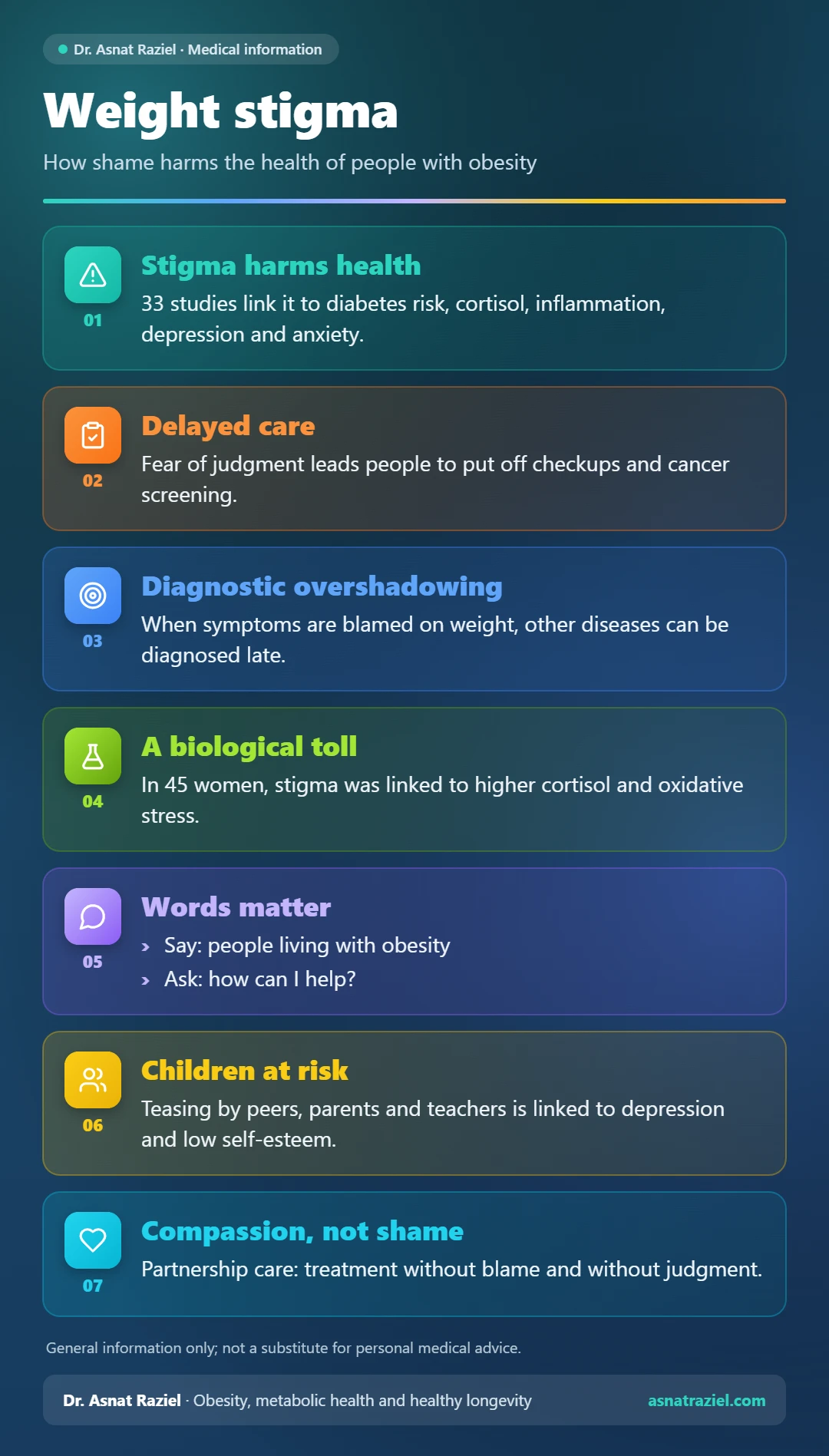
Still, the session was not only about feelings or the politics of language. It was about science, medicine and public health. One speaker opened with a simple and shocking story. A patient had put off cancer screening tests for years. She was not afraid of the test itself. Instead, she was afraid of the comments, the looks and the humiliation she expected.
How weight stigma harms health
This is exactly the heart of the problem. Shame is not just hurt feelings. The joint international consensus statement for ending stigma of obesity concluded that stigma causes physical and psychological harm. In addition, people who experience it often receive inadequate medical care. That is why the experts defined it as a threat to health and to human rights.
A systematic review of 33 studies examined the link between stigma and health measures. The researchers found links to diabetes risk, cortisol levels, inflammation, depression, anxiety and eating disorders. At the same time, the self-esteem of those affected was low. In other words, the damage can be measured; it is not just a feeling.
When medical weight stigma leads people to delay tests
The harm happens at work, at school, in the media and in relationships. However, the most painful harm comes from within the health system itself. A review by Prof. Rebecca Puhl describes negative attitudes toward patients with obesity among professionals in many fields. The result is poor communication, lower-quality care and patients who avoid going to the doctor.
Doctors, nurses and other professionals can cause harm even without meaning to. For example, they may use hurtful language or blame every complaint on weight alone. Another systematic review found the same bias among fitness trainers, physical therapists and nutrition professionals.
The disease that hides other diseases
One lecture dealt with the concept of diagnostic overshadowing. This is a situation in which excess weight “hides” other diagnoses. Pain, fatigue, shortness of breath or a hormonal problem are automatically blamed on obesity. As a result, serious diseases are diagnosed late.
The audience responded with a heavy silence. Many of the participants knew these situations from the clinic, and sometimes from their own lives.
Internalized weight stigma: when shame turns inward
A powerful part of the session dealt with internalized stigma. The question is not only what society thinks about people with obesity. It is also what they start to think about themselves. Children and adults who face years of mockery and criticism absorb guilt, a sense of failure and worthlessness.
The consequences run deep, both psychologically and biologically. A study of 45 women with overweight or obesity found a link between experiences of stigma and higher cortisol levels and oxidative stress. This link held regardless of the amount of belly fat. In addition, a review in the journal American Psychologist linked stigma to emotional eating, avoiding exercise and weight gain. I have also written about the link between psychological stress and weight in my article on stress and obesity.
One speaker made a point that hung in the air for a long time. We treat the disease, she said, but sometimes society wounds the person more than the disease itself.
How medical language can heal or wound
One of the key messages was the importance of respectful language. Instead of “fat people,” we say “people living with obesity.” Instead of “diet failure,” we talk about a chronic disease with complex biological mechanisms. And instead of asking “Why didn’t you succeed?” we ask “How can I help?” You will find more on this in my article on respectful language in obesity care.
The speakers stressed that language has power. It can encourage a person to seek care, but it can also push them away from it.
An accessible space is part of care
The session also presented practical principles for clinics and hospitals. These include suitable chairs, blood pressure cuffs in the right size, appropriate beds and equipment, and a non-judgmental way of talking. Even the design of the physical space is now seen as part of care. This approach aims to change not only treatments but an entire medical culture.
Children and teenagers under attack
One panel focused on children and teenagers. A review of weight stigma in young people describes mistreatment by peers, parents and teachers. This mistreatment is linked to symptoms of depression, low self-esteem, avoiding sports and weight gain. So children with obesity do not need more shame. Rather, they need protection, support and early professional care, as I described in my article on treating childhood obesity.
Social media also came up for discussion. Participants talked about the extreme thin ideal, about filters and about the culture of “before and after” photos that reduce a person to a single picture.
Less blame, more science
At the congress, it was clear that the scientific world is changing its view of obesity. In the past, the conversation focused almost entirely on weight and calories. Today, the understanding is much broader: biology, genetics, the brain, the environment, trauma, sleep and stress.
The Lancet Commission on the definition of clinical obesity, published in January 2025, also stressed this issue. The commission stated that bias and stigma are major barriers to prevention and treatment. Furthermore, it recommended training professionals and policymakers to address them.
Treating weight stigma starts with compassion
The session did not oppose obesity treatment. Quite the opposite. The message was clear: obesity should be treated in a professional, scientific and effective way. Treatment includes nutrition, physical activity, emotional support, innovative medications and, at times, bariatric surgery. But it must be built on compassion, not on shame. The same is true at home, as I explain in my guide to talking to your family about obesity treatment.
The researchers stressed that shame does not drive lasting change. In fact, it sometimes makes the disease worse. In its place, they presented the Partnership Care approach, a therapeutic partnership between clinician and patient, without blame and without judgment.
The bottom line on weight stigma
At the end of the session, the feeling in the room was that medicine still needs some deep soul-searching. Weight stigma is not just a moral problem. It is a medical risk factor in its own right, one that keeps people away from tests and treatment. Perhaps precisely in an era of more effective drugs than ever, the big challenge is not only weight loss. In the end, the challenge is to give people back their dignity.
The information in this article is general and does not replace personal medical advice.
References
Joint international consensus statement for ending stigma of obesity
Weight Stigma and Barriers to Effective Obesity Care
Weight bias among exercise and nutrition professionals: a systematic review
Associations of weight stigma with cortisol and oxidative stress independent of adiposity
Weight stigma as a psychosocial contributor to obesity
Weight Stigma in Youth: Prevalence, Consequences, and Considerations for Clinical Practice




