By Dr. Asnat Raziel, bariatric surgeon specializing in obesity treatment, metabolic health and healthy longevity; Director of the Multidisciplinary Center for Obesity Treatment, Assia Medical, Assuta Ramat HaChayal, Tel Aviv
A heart-healthy lifestyle in the era of obesity drugs
A heart-healthy lifestyle has not become unnecessary in the age of the new medications. On the contrary, it matters more today than ever. Obesity treatment has changed dramatically in recent years. New drugs allow major weight loss and real improvement in metabolic markers. Even so, a new study shows that medication alone is not enough.
In other words, even when the weight comes off with the help of a drug, our habits keep shaping our risk of heart disease. The medication does not replace behavior. Instead, it works together with it.
What the new study shows
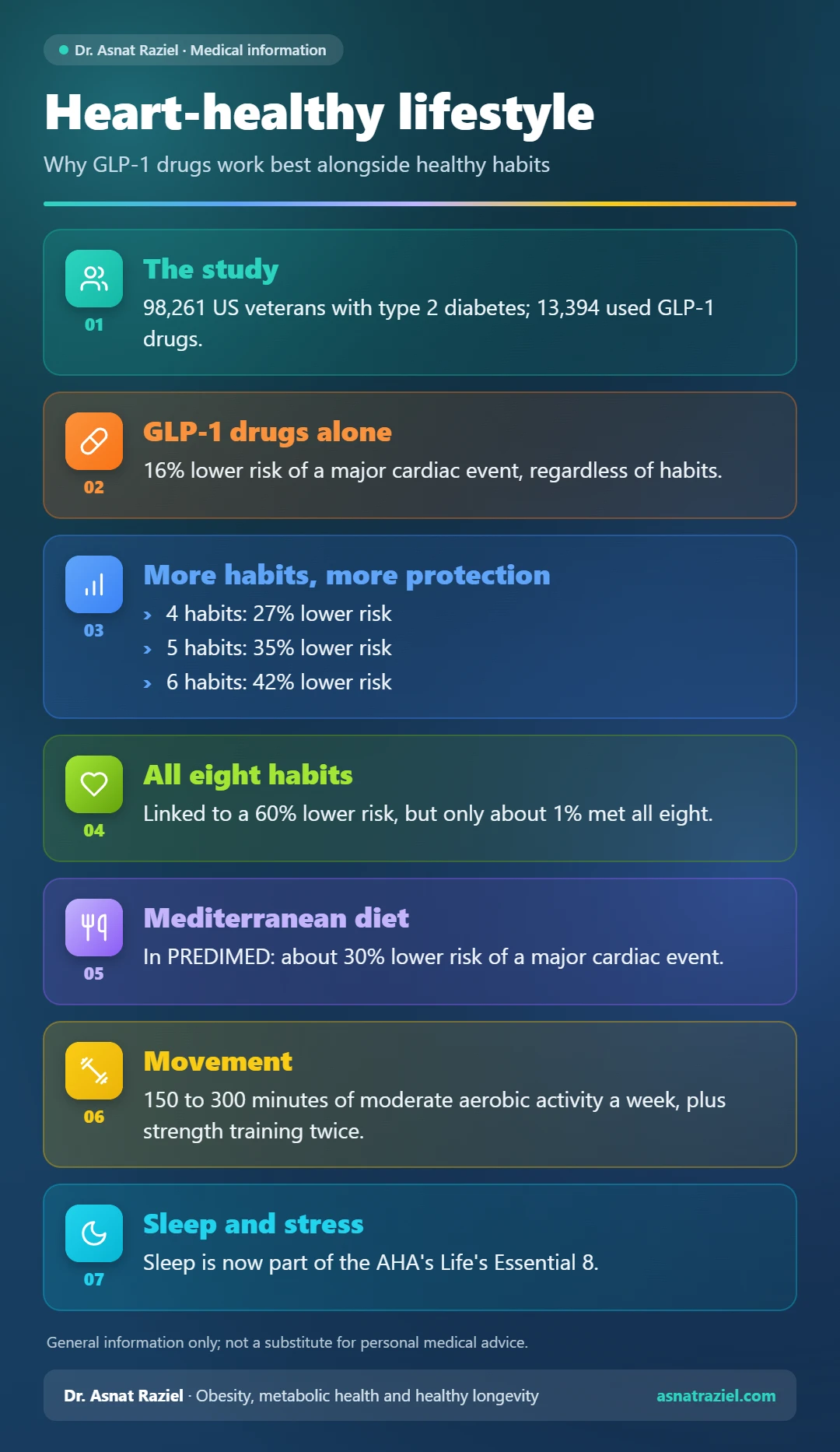
In 2026, The Lancet Diabetes & Endocrinology published a large cohort study from Harvard University. The researchers followed 98,261 US military veterans with type 2 diabetes. Of these, 13,394 were treated with GLP-1 drugs. The team measured eight habits: diet, physical activity, sleep, stress management, social connection, not smoking, avoiding heavy drinking and avoiding opioid addiction.
The results were clear. Among GLP-1 users, regardless of habits, the risk of a major cardiac event was 16% lower. By comparison, GLP-1 users with four, five or six healthy habits had a 27%, 35% and 42% lower risk, respectively, compared with people who had one healthy habit or none. Adopting all eight habits, compared with one habit at most, was linked to a 60% reduction. However, only about 1% of participants met all eight. According to a report on the study, each factor contributed to the protection on its own.
It is important to remember that this is an observational study, and most participants were men. Therefore, it shows an association and does not prove cause. Still, the message is consistent with many other studies.
Cardiometabolic disease: one system, many faces
Obesity, diabetes and heart disease are part of one biological continuum. Chronic inflammation, insulin resistance and visceral fat, meaning fat around the abdominal organs, act together. Together, they damage the function of the blood vessels. I discuss this continuum further in my article on cardiovascular-kidney-metabolic (CKM) syndrome.
Lifestyle directly affects these mechanisms. It changes hormonal activity, the level of inflammation and the way cells function. For this reason, lifestyle change is a biological treatment in every sense. The medications also act on the heart: in the SELECT trial, semaglutide (Wegovy) lowered the relative risk of a major cardiac event by 20%. The goal is to combine the two.
Precise nutrition: beyond counting calories
Weight loss alone is not enough. It is the quality of the diet that shapes the real risk. A diet rich in vegetables, quality protein and healthy fats improves blood lipids. In addition, it reduces inflammation and supports the blood vessels. For example, the PREDIMED trial included 7,447 people at high cardiovascular risk. A Mediterranean diet with extra-virgin olive oil or nuts was linked to about a 30% lower risk of a major cardiac event, compared with a low-fat diet.
On the other hand, processed food and simple sugars keep fueling harmful processes, even as the weight drops. When a patient takes a drug that reduces hunger, a window of opportunity opens to choose well. This is a critical moment for change, so it is worth building a nutrition plan together with your care team.
A heart-healthy lifestyle starts with movement
Physical activity works like an anti-inflammatory drug. It improves insulin sensitivity, lowers blood pressure and improves blood vessel function. The World Health Organization recommends 150 to 300 minutes a week of moderate aerobic activity for adults. In addition, it recommends strength training at least twice a week.
Combining strength training with aerobic activity is especially important during weight loss. That way, you preserve muscle mass and improve the metabolic result. This matters even more with weight-loss injections, which can also lead to some loss of muscle.
Sleep and stress: the hidden foundation of a heart-healthy lifestyle
Lack of sleep and chronic stress directly affect the metabolic system. They disrupt the hunger and fullness hormones, increase inflammation and promote belly fat. It is no accident that the American Heart Association added sleep as a new component of Life’s Essential 8, its eight measures of heart health. The measure also includes diet, activity, avoiding nicotine, weight, blood lipids, blood sugar and blood pressure.
During periods of pressure and tension, these factors become a central part of treatment. I explain the link between stress and weight in my article on stress and obesity.
The microbiome: the connecting link
Gut bacteria are shaped by diet and daily habits. In turn, they affect metabolism, inflammation and the immune system. Studies suggest that lifestyle change also changes the microbiome. In this way, it may help lower heart risk and improve overall health.
A heart-healthy lifestyle: a partner, not a substitute
The key message is clear: obesity medication and lifestyle are not competing. The drug reduces appetite and improves metabolic markers. Meanwhile, lifestyle improves tissue quality, reduces inflammation and stabilizes the result over time. Together, they create a deep and lasting effect. In the new study, for example, GLP-1 users with six to eight healthy habits had a 43% lower risk than people who did not take the drug and adopted up to three habits. For a broader look at the topic, see my article on obesity and heart risk.
A moment of opportunity for real change
Starting medication is a turning point. Less hunger allows better control, and this is the time to build new habits. Precise nutrition, regular movement, good sleep and stress management are not an add-on. Rather, they are the foundation of long-term success.
The bottom line on a heart-healthy lifestyle
Modern treatment does not focus on weight alone. It sees the whole person: metabolism, emotional state, habits and environment. Ultimately, healthy habits and advanced medications complement each other. Together, they allow truly personalized care and good results over time.
This article provides general information and is not a substitute for personal medical advice.
References
Healthy Lifestyle Plus GLP-1s Yields Bigger CV Reduction Than Drugs Alone
Semaglutide and Cardiovascular Outcomes in Obesity without Diabetes
The SELECT trial was funded by Novo Nordisk, the maker of semaglutide.




