By Dr. Asnat Raziel, bariatric surgeon specializing in obesity treatment, metabolic health and healthy longevity; Director of the Multidisciplinary Center for Obesity Treatment, Assia Medical, Assuta Ramat HaChayal, Tel Aviv
Obesity medication and lifestyle: what to know before you start
In recent years, combining obesity medication and a healthy lifestyle has become one of the most important tools in obesity medicine. The new drugs act on the mechanisms of hunger and fullness, not just on “willpower.” Even so, a medication on its own is not a magic fix. The best results come when it is combined with nutrition, physical activity, sleep and close support.
In this article, I will explain who the treatment is right for, which medications are available, what the research shows, and what role a holistic approach plays along the way.
Obesity is a chronic disease, not a weakness
Obesity is a chronic disease with a biological basis. Genetics, hormones, sleep, stress and other medications all affect body weight. In addition, when you lose weight, the body ramps up hunger and slows the rate at which it burns energy. That is why many people regain the weight after a diet, even when they do everything “right.”
This is where medication comes in. These drugs rebalance the signals the brain receives from the gut and from fat tissue. In other words, they reduce appetite and increase the feeling of fullness. Many people also describe less “food noise,” the intrusive thoughts about food throughout the day.
Who is obesity medication and lifestyle change right for?
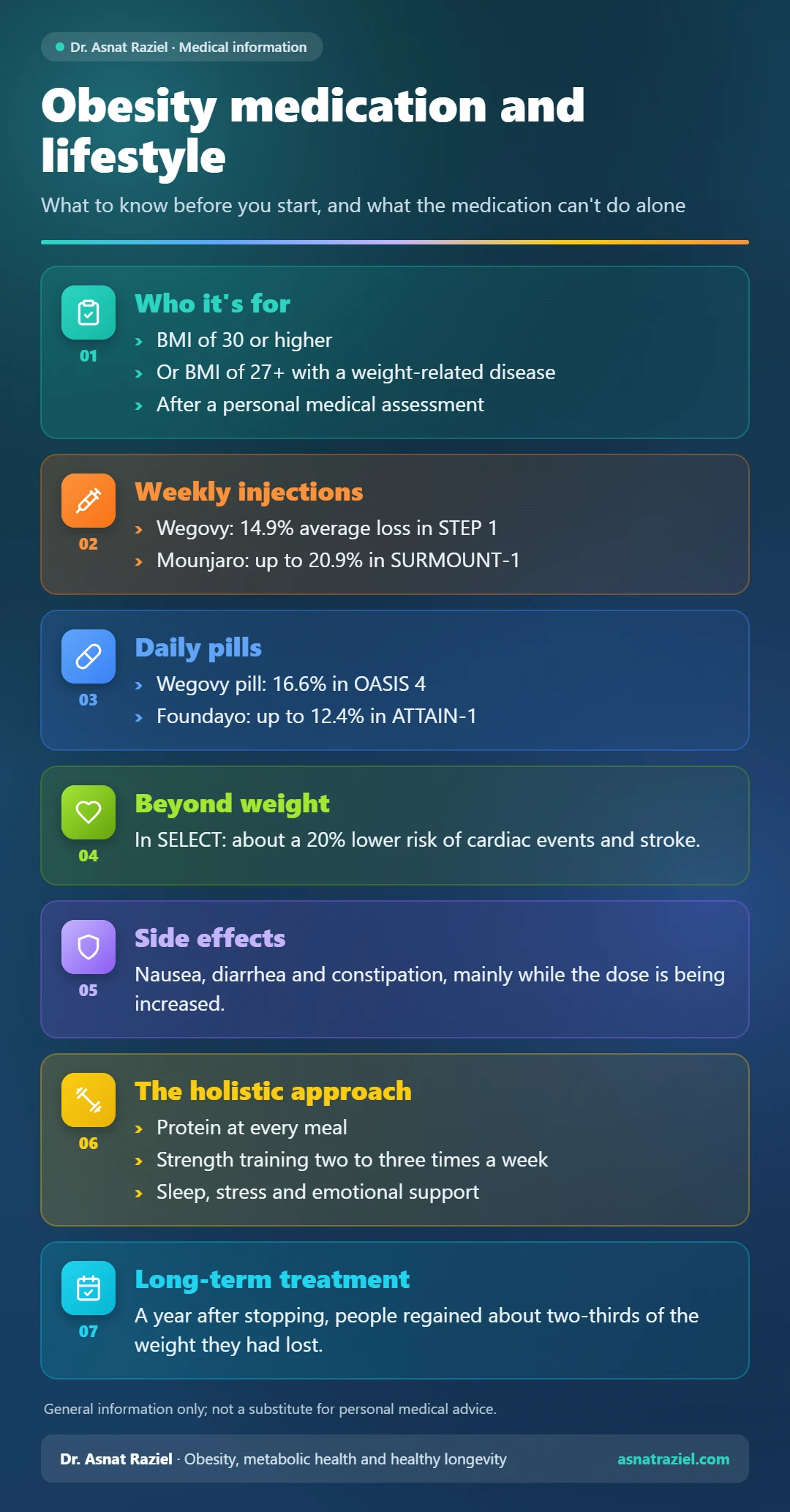
According to the US National Institute of Diabetes and Digestive and Kidney Diseases (NIDDK), a doctor may consider drug treatment for adults with a BMI (body mass index) of 30 or higher. People with a BMI of 27 or higher may also qualify if they have a weight-related condition. Examples include high blood pressure, type 2 diabetes, fatty liver disease or sleep apnea.
However, the number is only a starting point. Before deciding, I review the medical history, regular medications, pregnancy plans, and the person’s emotional and nutritional state. It is also important to check for an eating disorder, because it changes how we treat. You can read more about the first steps in my article on how to start weight loss medication.
Which obesity medications are available today?
Anti-obesity medications fall into several main families. They differ in how effective they are, how they are taken and which side effects they cause.
Weekly GLP-1 injections
Semaglutide, known as Wegovy, mimics a gut hormone called GLP-1. In the STEP 1 trial, participants lost an average of 14.9% of their body weight after 68 weeks, compared with 2.4% in the placebo group. Tirzepatide, known as Mounjaro, acts on two hormones: GLP-1 and GIP. In the SURMOUNT-1 trial, the highest dose led to an average loss of 20.9% after 72 weeks.
Daily pills
In December 2025, the US Food and Drug Administration (FDA) approved the Wegovy pill, oral semaglutide at a dose of 25 mg a day. The OASIS 4 trial showed an average loss of 16.6% among people who stayed on treatment. In addition, in April 2026 the FDA approved Foundayo, a pill containing orforglipron. It can be taken at any time of day, with no restrictions on food or drink. In the ATTAIN-1 trial, the highest dose led to an average loss of 12.4% after 72 weeks.
Older medications
Alongside these, there are drugs such as Saxenda, Mysimba and orlistat. Their effectiveness is generally lower, but they still suit certain patients.
Obesity medication and lifestyle: benefits beyond weight
The advantage of the new drugs is not only the number on the scale. The SELECT trial included 17,604 people with heart disease and overweight, without diabetes. In the semaglutide group, 6.5% had a heart attack, a stroke or died of heart disease, compared with 8.0% in the placebo group. That is a relative risk reduction of about 20%.
Moreover, losing 5% to 10% of body weight already improves blood sugar, blood pressure and blood fats. So it is worth measuring success by blood tests too, not just by weight.
Side effects and situations that call for caution
The common side effects are nausea, diarrhea, constipation and a feeling of fullness. They are usually mild to moderate and appear mainly while the dose is being increased. In the STEP 1 trial, for example, 4.5% of patients stopped treatment because of digestive side effects. Raising the dose gradually, eating small meals and drinking enough fluids make a big difference.
On the other hand, some situations call for extra caution. These include a history of pancreatitis, gallstones, or planning a pregnancy. You will find more details in my article on the side effects of weight loss drugs.
Obesity medication and lifestyle: what the drug can’t do alone
The medication turns down the intensity of hunger, but it does not build habits. That is why a holistic approach to obesity treatment combines several layers:
- Nutrition: protein at every meal, vegetables and fiber, and enough fluids.
- Strength training: two to three times a week, to preserve muscle mass.
- Sleep and stress: short sleep and ongoing stress increase hunger and make it harder to stick with the plan.
- Emotional support: emotional eating does not disappear just because of an injection.
A dietitian works in our clinic. In addition, when needed, I refer patients to a multidisciplinary mind-body team: dietitians, psychologists, holistic coaches, naturopaths and complementary medicine practitioners, as well as Pilates and yoga instructors and experts in stress-reduction techniques. This way, combining drug treatment with a holistic approach becomes one plan rather than two separate tracks. Digital tools help as well, as I have written about artificial intelligence in everyday life.
How long should obesity medication and lifestyle change go together?
This is one of the most common questions in my clinic. The honest answer: usually, for the long term. In a follow-up to the STEP 1 trial, participants stopped treatment and were checked again a year later. Within that year, they regained about two-thirds of the weight they had lost. Therefore, a decision to stop should be planned together with your doctor. I go into this in more detail in my article on what happens when you stop weight loss medication.
In addition, if weight loss is less than 5% after 12 weeks at the full dose, it is worth considering a different drug. Sometimes bariatric surgery is also a better option, especially in severe obesity. It is also worth reading about how to succeed at weight loss over time.
The bottom line
Obesity medications are an effective, research-based medical tool that treats the biology of hunger. They work best as part of a complete plan that includes nutrition, physical activity, sleep and support. The decision starts with a personal medical assessment and continues with close follow-up. If you are considering treatment, it is a good idea to consult a doctor who specializes in obesity medicine.
The information in this article is general and is not a substitute for personal medical advice.
Frequently asked questions
Can I get obesity medication without a prescription?
No. These drugs are available by prescription only, after a medical assessment. Buying from unofficial sources is dangerous, because there is no certainty about what the product contains.
Which is better, an injection or a pill?
It depends on personal preference, the level of effectiveness needed and your lifestyle. In studies, the weekly injections led to greater weight loss on average. On the other hand, a pill suits people who are afraid of needles.
How do you protect muscle with obesity medication and an active lifestyle?
Part of the weight you lose is lean body mass. That is why it is important to eat enough protein and do strength training throughout treatment.
When do you see results?
Most patients notice reduced appetite within the first few weeks. Weight loss usually continues for about a year to a year and a half, and then levels off.
Sources
Prescription Medications to Treat Overweight & Obesity
Once-Weekly Semaglutide in Adults with Overweight or Obesity
Tirzepatide Once Weekly for the Treatment of Obesity
Semaglutide and Cardiovascular Outcomes in Obesity without Diabetes
Wegovy pill approved in the US as first oral GLP-1 for weight management
FDA approves Foundayo, an oral GLP-1, for adults with obesity




