By Dr. Asnat Raziel, bariatric surgeon specializing in obesity treatment, metabolic health and healthy longevity; Director of the Multidisciplinary Center for Obesity Treatment, Assia Medical, Assuta Ramat HaChayal, Tel Aviv
Heat waves: the new summer is already here
Heat waves are no longer just a passing seasonal event. As part of climate change, they are longer, more intense and more frequent than before. Many people see them as a mere nuisance. Medically, however, extreme heat stress affects almost every system in the body. It can speed up aging, worsen chronic diseases and even lead to medical emergencies.
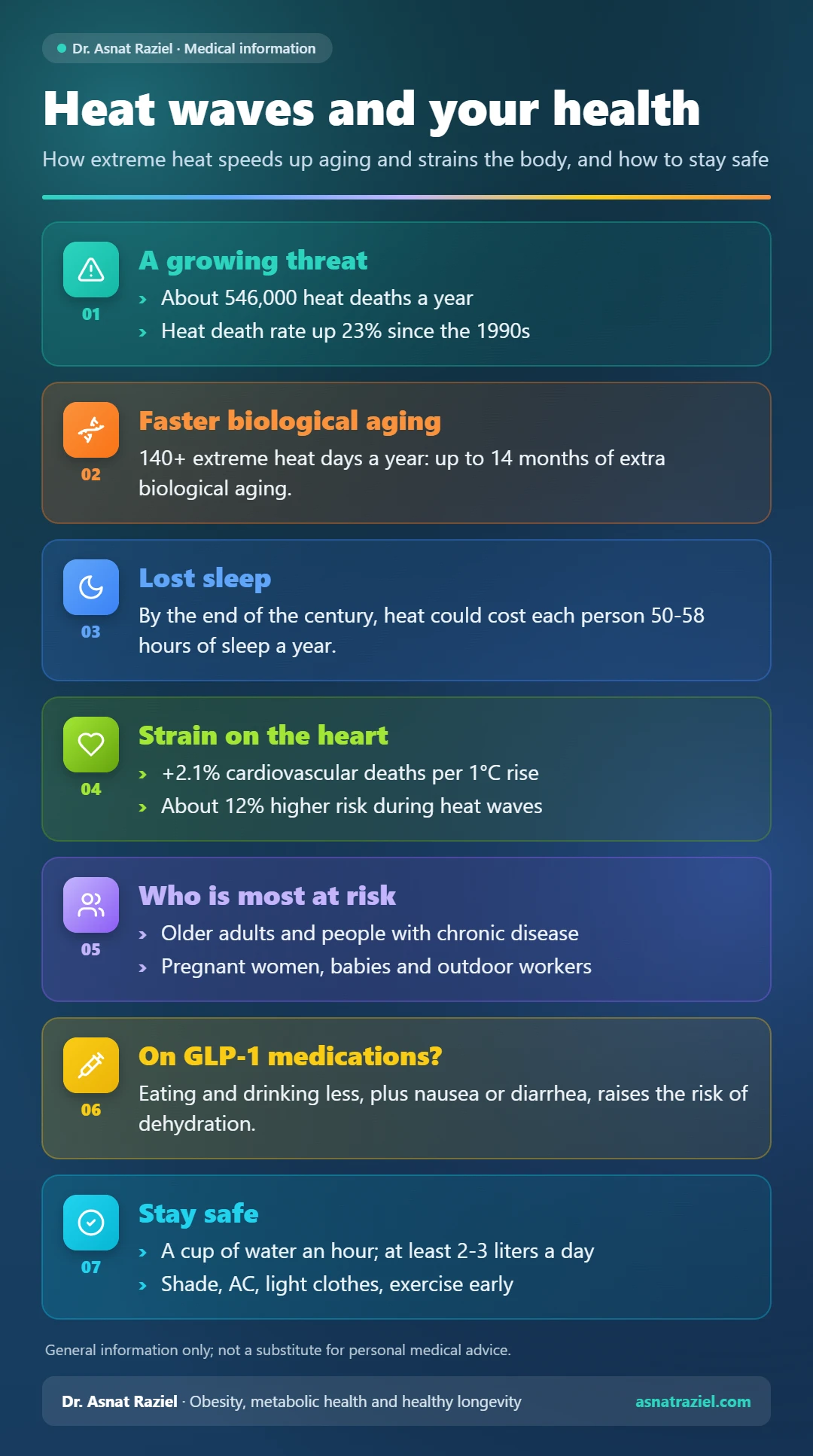
The numbers are worrying. According to the 2025 Lancet Countdown report, heat causes an average of about 546,000 deaths a year. The rate of heat-related deaths has risen by 23% since the 1990s. In longevity medicine, we understand that a long life is also measured by the body’s ability to withstand environmental stress. A heat wave is one of the toughest tests of all.
The body works overtime
The body keeps its temperature within a very narrow range. When the heat outside rises, the body switches on its cooling mechanisms. Blood vessels in the skin widen, the heart rate rises, and sweat evaporates and carries heat away.
However, these mechanisms use a lot of energy. When the heat is heavy or the humidity is high, cooling becomes less effective. This leads to physiological strain: dehydration, low blood pressure, a rapid heart rate and kidney damage. Later on, heat exhaustion or heatstroke may develop. According to the World Health Organization, heatstroke is a medical emergency with a high death rate, and it needs immediate treatment.
Heat waves speed up the biological clock
One of the principles of longevity medicine is that chronic stress speeds up biological aging. A heat wave is exactly that kind of situation. The body spends resources on keeping its temperature stable, and stress hormones rise. When this goes on for many days, the body’s repair and recovery mechanisms wear out.
A 2025 study strengthened this assumption. Researchers at the University of Southern California examined blood samples from 3,686 Americans aged 56 and older. They measured biological age with epigenetic clocks, which are chemical patterns on DNA that reflect the pace of aging. According to the lead researcher, people in areas with 140 or more extreme heat days a year showed up to 14 months of additional biological aging. The comparison was with areas that had fewer than ten such days. I explain these clocks in more detail in my article on aging clocks.
To be precise, this is an observational study that shows a link, not cause and effect. Even so, it adds to a large body of evidence on the cumulative damage caused by heat.
The brain heats up too
The brain is especially sensitive to rising temperatures. On hot days, concentration, memory, speed of thinking and decision-making sometimes suffer. In addition, hot nights disrupt sleep. A global study of sleep and climate estimated that by the end of the century, suboptimal temperatures could rob each person of 50 to 58 hours of sleep a year. The effect is especially strong in older adults.
Lack of sleep raises stress hormones, increases inflammation and harms metabolic health. So this is not just temporary tiredness. You will find practical tips for better sleep in my article on improving sleep for metabolic health.
Heat waves and the heart
To cool the body, the heart pumps a large amount of blood to the skin. This means a heavier workload for the heart for hours on end. In people with heart disease, high blood pressure or heart failure, this strain can be life-threatening.
A meta-analysis of 266 studies found that every 1°C rise in temperature is linked to a 2.1% increase in deaths from cardiovascular disease. The highest risk was for stroke and coronary heart disease. The researchers also found an increase in arrhythmias and cardiac arrest. During heat waves, the risk of cardiovascular death rose by about 12%, and it grew as the heat wave became more intense. I explain the link between weight and the heart in my article on obesity and heart disease.
The kidneys are thirsty for water
The kidneys need a steady blood flow. When the body loses fluid through sweat and does not replace it, blood flow to the kidneys drops. The result can be acute kidney injury, especially in older adults and people with kidney disease. In addition, the risk of kidney stones rises in summer, because urine becomes concentrated when we do not drink enough.
Who is most at risk during heat waves?
In older adults, the body’s heat regulation works less efficiently and the sense of thirst weakens. People with heart disease, diabetes, obesity, or kidney or lung disease are also vulnerable to heat stress. In addition, the World Health Organization points to people who live alone, outdoor workers and athletes.
Pregnant women, babies and young children also struggle in the heat. What’s more, certain medications increase the risk of dehydration. Examples include diuretics, some blood pressure drugs and psychiatric medications. If you take such medications, ask your doctor how to manage them during the summer.
Heat waves and weight-loss medications
Patients taking GLP-1 medications, including semaglutide (Ozempic/Wegovy) and tirzepatide (Mounjaro/Zepbound), need to be especially careful about drinking in the summer. These drugs reduce hunger, and many people eat and drink less without noticing. When nausea, vomiting or diarrhea are added to the mix, the risk of dehydration rises. Such dehydration can harm the kidneys, as I explained in my article on the side effects of these medications.
That is why it is a good idea to drink proactively, even when you are not thirsty. If you lose a significant amount of fluid, you can consider replacing electrolytes as recommended by your doctor. Dizziness, extreme weakness or reduced urine output call for a medical checkup.
How to get through the summer safely
On days of heat stress, drink throughout the day, even if you are not thirsty. The World Health Organization recommends a cup of water every hour and at least 2 to 3 liters a day, unless your doctor has told you otherwise. In addition, stay in air-conditioned places, keep out of the sun during the hottest hours and wear light, light-colored clothing. Move your workout to the early morning or after sunset.
Light meals with vegetables, fruit and quality protein help the body cope with the heat. Also, check every day on older relatives who live alone. They often do not notice that they are dehydrated until complications appear.
Beyond that, people with good muscle mass, regular physical activity, quality sleep and good metabolic health usually cope well with heat stress. In other words, preparing for summer starts all year round. This foundation of healthy aging is what I work on with my patients.
More than just surviving heat waves
Heat waves are part of the new reality, so coping with them should be part of preventive medicine. Drinking, fitness, sleep and metabolic health are not only a way to feel good on hot days. They are a direct investment in a long, healthy life. We cannot cancel summer, but we can reduce the health damage that heat waves cause.
The information in this article is general and does not replace personal medical advice.
References
Climate inaction is claiming millions of lives every year, warns new Lancet Countdown report
Ambient outdoor heat and accelerated epigenetic aging among older adults in the US
Rising temperatures erode human sleep globally
Heat exposure and cardiovascular health outcomes: a systematic review and meta-analysis




