By Dr. Asnat Raziel, bariatric surgeon specializing in obesity treatment, metabolic health and healthy longevity; Director of the Multidisciplinary Center for Obesity Treatment, Assia Medical, Assuta Ramat HaChayal, Tel Aviv
The future of longevity: the main argument
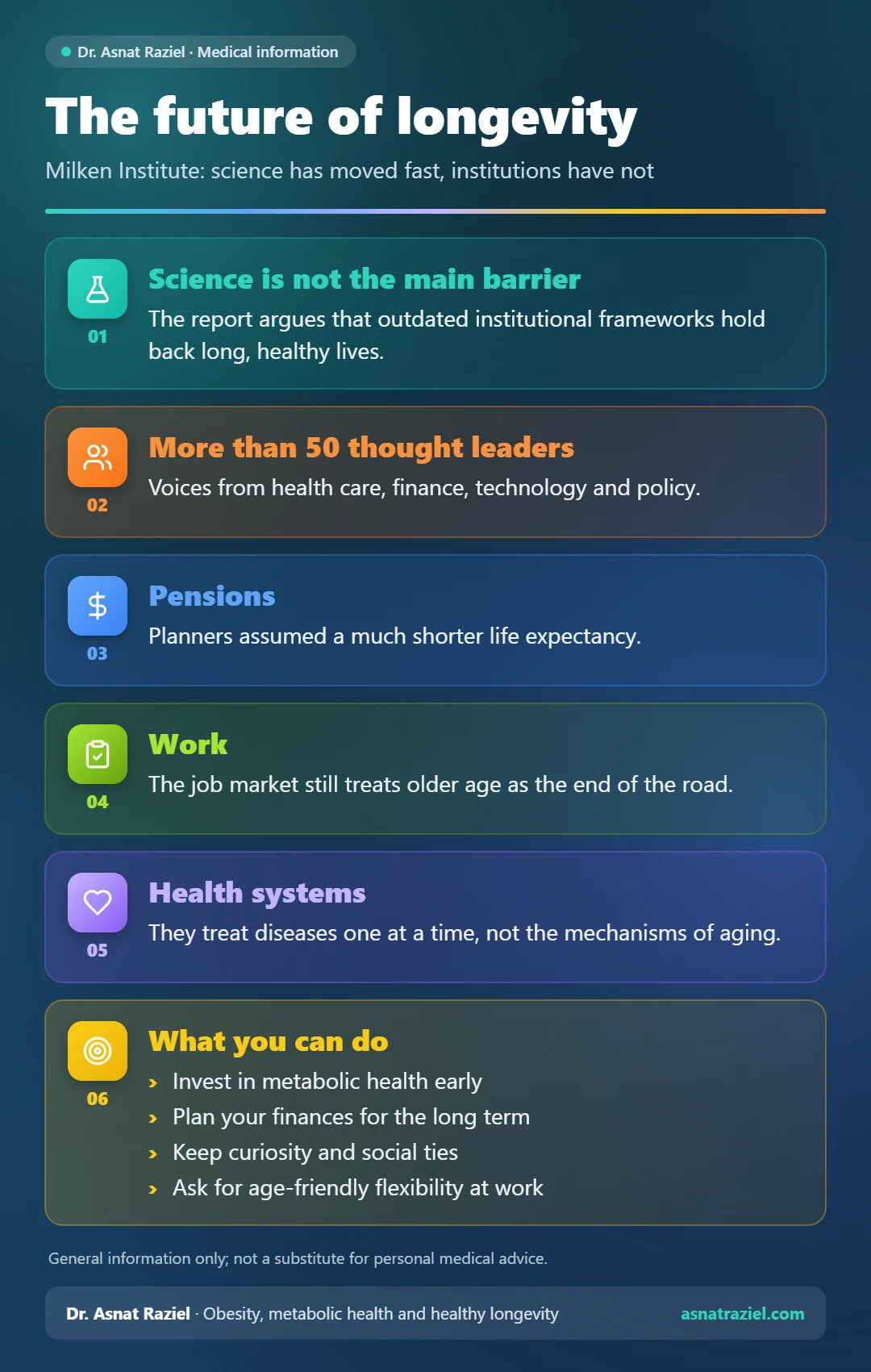
The future of longevity is not only a biological question but also a social and economic one. A new report from the Milken Institute sums up a decade of progress in the field. Its central argument is sharp: the main barrier to long, healthy lives is not the science. Instead, it lies in outdated institutional frameworks.
What does the report say about the future of longevity?
The report comes from the Milken Institute’s Future of Aging program. It brings together essays by more than 50 thought leaders. They come from health care, finance, technology and policy. Together, they paint a single picture. Science has moved fast, but pension, employment and health systems have fallen behind.
Where is the big gap?
This is the heart of the matter. First, pension planners assumed a much shorter life expectancy. In addition, the job market still treats older age as the end of the road. Health systems also treat diseases one at a time, rather than the mechanisms of aging themselves. As a result, the public does not always benefit from scientific progress.
The future of longevity: why it matters to all of us
This topic matters to every one of us. If we live longer, we will also want to live well. In other words, we want not just more years, but many years of health and function. However, that will require broad preparation across whole systems. On the other hand, without institutional change, the gap between what medicine can do and everyday reality will only grow.
What can you do as an individual?
There is plenty to do on a personal level, too. First, invest in your metabolic health from a young age. In addition, plan your financial future for the long term. Also, keep up your interests, your curiosity and your social connections. Finally, ask your workplace for age-appropriate flexibility. That way, we can turn the extra years into good years.
The bottom line
To sum up, longevity is a social project, not just a scientific one. To learn more, you can read about what longevity medicine offers today, about what really slows aging, and about small lifestyle changes that add up. Ultimately, the generation that adapts to this new era is the one that will truly benefit from it.
References
The Future of Aging and Longevity: A Decade of Progress, A Decade to Act




