By Dr. Asnat Raziel, bariatric surgeon specializing in obesity treatment, metabolic health and healthy longevity; Director of the Multidisciplinary Center for Obesity Treatment, Assia Medical, Assuta Ramat HaChayal, Tel Aviv
How to choose an obesity doctor: why this choice matters
How to choose an obesity doctor is a question many patients ask me at our first meeting. Obesity is a chronic disease, so its treatment takes a long time. The doctor you choose will guide you through decisions about nutrition, medication and sometimes surgery. In this article, I have put together a simple checklist to help you choose well.
Obesity is a disease, not just a number on the scale
The Canadian clinical practice guideline for obesity in adults defines obesity as a chronic disease. According to the guideline, treatment should include nutrition, physical activity and psychological support. Depending on the situation, medication or surgery can be added. Likewise, the position statement of the European Association for the Study of Obesity (EASO) states that treatment should be multidisciplinary. In other words, the goal is not only weight loss. It also includes better body composition, treatment of related diseases and a better quality of life.
That is why a good specialist in this field will not settle for asking how much you weigh. Instead, they will look at the causes, the related diseases and the impact on your life. I have also written about this approach in my article on clinical obesity.
How to choose an obesity doctor: a checklist
The following list is based on professional guidelines and on my experience in the clinic. Not every item has to be fully met. However, the more of them are met, the better your chances of safe and successful treatment.
1. Experience and training in obesity medicine
Obesity medicine is a field that deals with the full range of causes of the disease: genetics, environment, nutrition, physiology and psychological factors. In the United States, there is a dedicated board certification in this field. In practice, in Israel obesity is treated by doctors from several specialties, such as endocrinology, internal medicine, family medicine and bariatric surgery. So it is worth asking how many patients with obesity the specialist follows, and what training they have completed in the field.
2. A thorough medical assessment before any recommendation
A good obesity doctor will start with a thorough workup. They will ask about your weight history, previous diets, sleep, mood and regular medications. In addition, they will order blood tests and check your blood pressure, blood sugar, blood lipids and liver function. According to the Obesity Action Coalition (OAC) on physician-supervised programs, a suitable provider reviews your medical history, medications and goals before prescribing treatment.
3. Command of all treatment options
Today there are several ways to treat obesity: lifestyle change, medication for obesity, endoscopic procedures and bariatric surgery. A provider who knows only one approach may offer it to everyone. By contrast, a specialist who knows them all will tailor treatment to you. So ask directly: which options suit me, and why?
4. Choosing an obesity doctor with a multidisciplinary team
Good obesity care is teamwork. A dietitian, a psychologist, a physical therapist or a fitness trainer complement the doctor’s work. Even if the specialist works alone, they should refer you to the right professionals.
5. Regular follow-up and availability
Obesity drugs require dose adjustments and monitoring for side effects. At the start of treatment, visits are usually frequent, and later the intervals grow longer. That is why it is important to find out how often follow-up visits will take place. In addition, ask how to reach the clinic between visits, for example in case of severe nausea. Fixed appointments booked in advance also help you stick with the plan.
6. Transparency about side effects, costs and results
A trustworthy provider also explains what might go wrong. They present possible results as a range and do not promise an exact number. In addition, they set out in advance the costs and what is covered by the national health basket or by insurance.
7. Respectful treatment and good communication
Many of my patients have experienced humiliating treatment in the past because of their weight. A good obesity doctor listens, does not blame and speaks to you as an equal. If you left the appointment feeling guilty, that is a sign to look at another option. Also, notice whether the doctor takes an interest in your own goals. For example, some people mainly want to improve their blood sugar, while others want to walk again without pain. Personal goals like these are the basis of a good plan.
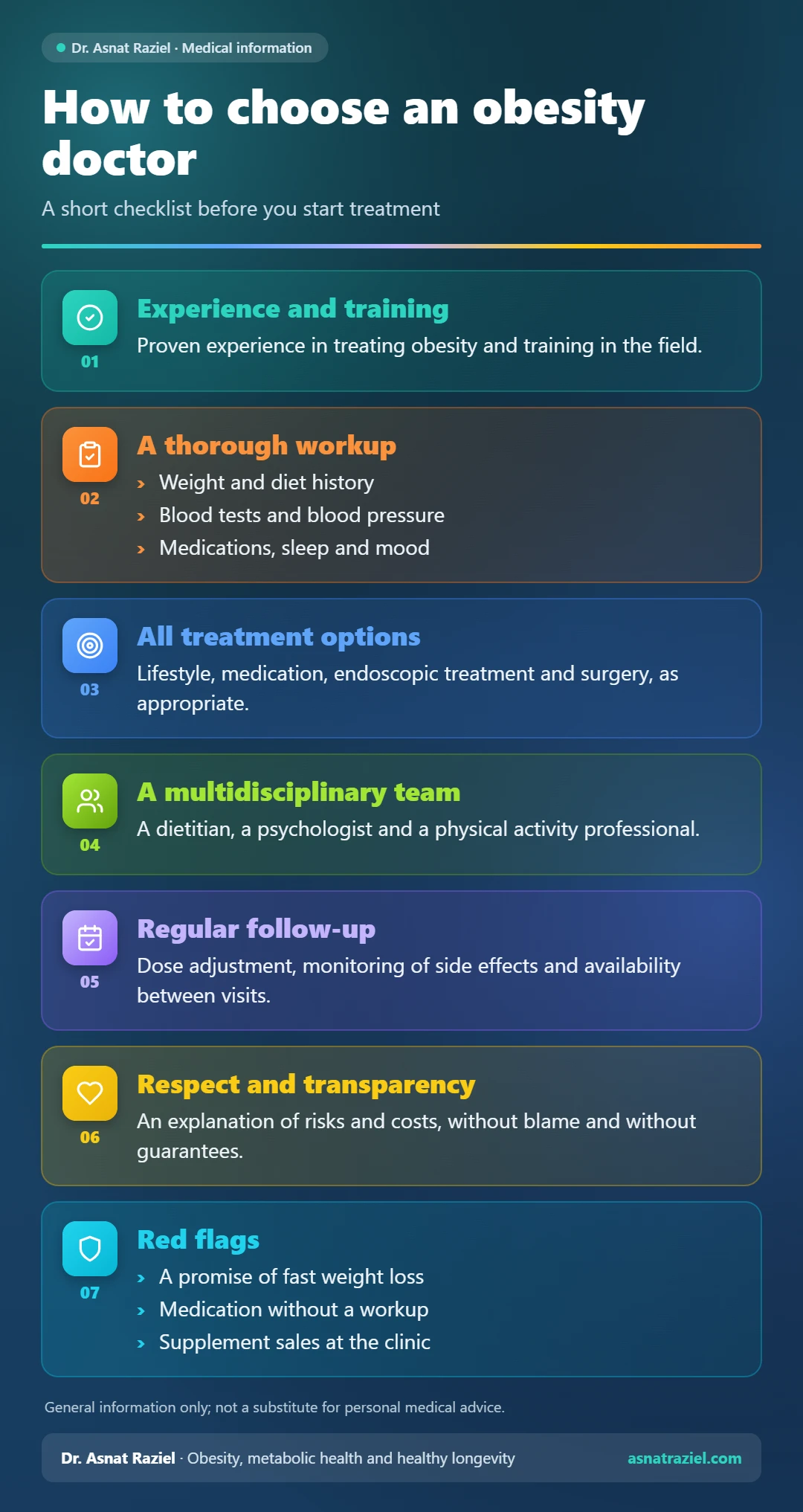
How to choose an obesity doctor: red flags
Alongside the good signs, it is important to know the warning signs too. If any of them appears, consider getting a second opinion:
- A promise of fast, guaranteed weight loss without effort.
- A prescription at the very first visit, without a workup or tests.
- Sales of supplements or products by the clinic itself.
- No follow-up plan, or no availability when side effects appear.
- Brushing off questions about risks, or pressure to decide quickly.
How to prepare for your first appointment
Good preparation makes the visit far more productive. The OAC recommends bringing a one-week food and activity diary, a list of your medical conditions and family history, and a complete list of medications and supplements. It is also a good idea to write down your questions in advance. For example, you can use the list of questions about obesity that I have collected on this site.
Choosing an obesity doctor for the stage you are at
Your needs change along the way. Someone starting treatment mainly needs a thorough workup and a clear plan. Someone already taking medication needs close support and help preserving muscle mass. Meanwhile, someone who has had bariatric surgery needs long-term nutritional follow-up. That is why it is worth choosing a specialist who knows every stage. An overview of anti-obesity medications will help you arrive at the appointment with some basic knowledge.
The bottom line
How do you choose an obesity doctor? Look for experience in the field, a thorough medical assessment, familiarity with all treatment options, a supportive team and regular follow-up. Also, pay attention to how you feel during the visit: respect and transparency are part of the treatment. If you would like to learn how I work, you can read more about me.
The information in this article is general and does not replace personal medical advice.
Questions and answers
Do family doctors treat obesity?
Yes. Family doctors with experience in the field treat obesity and prescribe medication. In complex cases, or when surgery is being considered, they refer patients to a dedicated clinic.
How do I choose an obesity doctor when I have related conditions?
In that case, it is best to go to a multidisciplinary clinic. Diabetes, high blood pressure, sleep apnea or fatty liver require coordination among several specialists. A full team can address all of these aspects together.
What should I ask at the first appointment?
Ask which tests you need, which treatment options suit you, what the side effects are, what it will cost and what follow-up will look like.
Sources
Obesity in adults: a clinical practice guideline
An EASO position statement on multidisciplinary obesity management in adults
Understanding Your Obesity Treatment Options (Obesity Action Coalition)




