By Dr. Asnat Raziel, bariatric surgeon specializing in obesity treatment, metabolic health and healthy longevity; Director of the Multidisciplinary Center for Obesity Treatment, Assia Medical, Assuta Ramat HaChayal, Tel Aviv
Polypharmacy in obesity: when less is better
Polypharmacy, the use of many medications at once, is especially common in people with obesity. High blood pressure, diabetes, high blood lipids, chronic pain, sleep apnea and mood disorders each sometimes get a medication of their own. Over time, the patient ends up taking a large number of pills every day. Along the way, side effects and interactions between the drugs pile up. The good news is that the right obesity treatment may reduce the number of medications, lower risks and improve quality of life.
What’s the danger of polypharmacy?
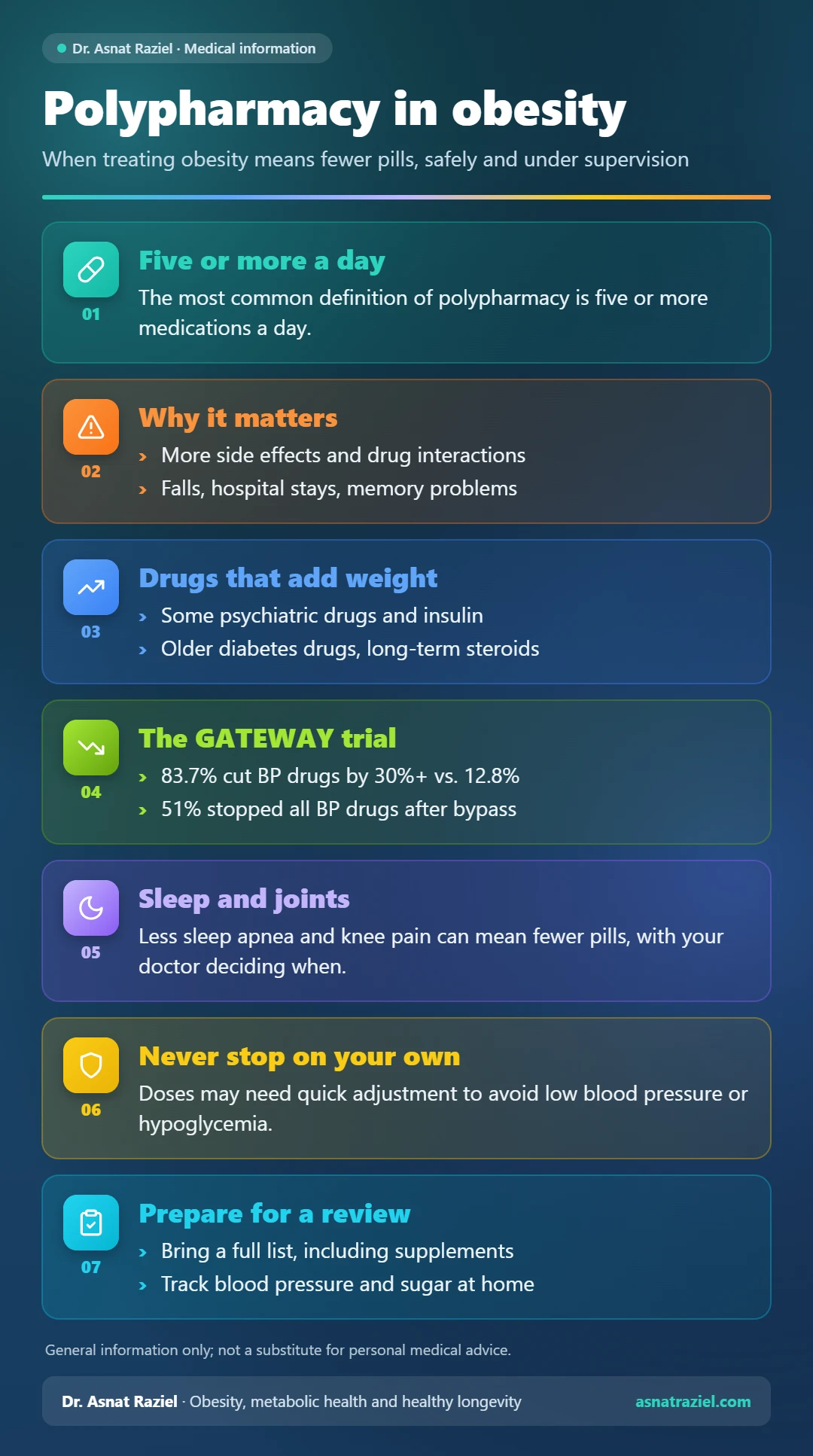
There is no single agreed definition. However, a systematic review of the definitions found that the most common one is five or more medications a day. As the number of medications rises, so does the risk of side effects, drug interactions, confusion about how to take them and poor adherence. The World Health Organization has devoted a special report to medication safety on this topic. In older adults, polypharmacy is linked to falls, hospital admissions and problems with memory and thinking. At this age, obesity itself also poses challenges, as I explain in my article on obesity in older adults.
Medications that make weight loss harder
Some medications make weight loss harder and even cause weight gain. In this way, they deepen the very problem they were meant to solve. The Endocrine Society guidelines note that many medications for diabetes, depression and other chronic diseases affect weight. Therefore, the guidelines recommend choosing, when possible, medications with a favorable effect on weight. For example, certain psychiatric medications increase appetite, and so do insulin and some of the older diabetes drugs. Long-term steroid treatment can also cause weight gain. So before adding yet another medication to treat the result, it is worth checking with your doctor whether a suitable alternative exists. I cover this in depth in my article on psychiatric medications and weight gain.
Obesity as a medication “multiplier”
Obesity acts as a multiplier. It raises the risk of many diseases, and each of them gets its own treatment. As a result, instead of treating the main cause, a chain of symptom treatments builds up. The modern approach seeks to change direction. In other words, it aims to treat the root and not just the branches.
Treating obesity to reduce polypharmacy
When we treat obesity effectively, the body changes as a whole system. Blood pressure goes down, blood sugar control improves, blood lipids stabilize, joint pain eases and sleep gets better. Therefore, in many cases, doctors can reduce medications gradually and sometimes even stop them.
The data support this. The GATEWAY trial included 100 patients with obesity and high blood pressure. After one year, 83.7% of those who had gastric bypass surgery reduced their blood pressure medications by at least 30% while still keeping their blood pressure normal. In contrast, only 12.8% of the group treated with medication alone reached this goal. In addition, 51% of the surgical patients stopped all their blood pressure medications, while no patient in the other group did. You can read more in my article on treating high blood pressure through weight loss.
Patients describe not only weight loss, but also “medication relief”: fewer pills, fewer side effects and a much simpler routine.
When sleep and joints improve
The effect of weight loss goes beyond blood pressure and blood sugar. For example, sleep apnea often improves with weight loss, and with it fatigue and sometimes blood pressure. Similarly, less strain on the knees reduces pain, so some patients need fewer painkillers. You can read about the link between obesity and sleep in my article on obesity and sleep apnea. In all of these cases, the doctor decides when and how to lower the dose.
Caution: never stop on your own
It is important to stress that reducing medications must happen under medical supervision. Weight loss changes how the body processes drugs, the dose needed and your sensitivity to the drug. For example, medications for blood pressure or diabetes may need a quick adjustment. This prevents blood pressure that is too low, or hypoglycemia, meaning a sharp drop in blood sugar. That is why close follow-up and coordination between your caregivers are worthwhile during obesity treatment: your family doctor, endocrinologist, cardiologist and sometimes a clinical pharmacist. I explain the importance of a multidisciplinary team in my article on why you can’t do it alone.
Obesity medication within the polypharmacy picture
Obesity medications also become part of the overall medication regimen, so doctors need to add them with care. The prescribing information for tirzepatide, the active ingredient in Mounjaro, gives several important examples:
- For people taking insulin or drugs that increase insulin secretion, the label recommends considering a lower dose of those drugs to prevent hypoglycemia.
- The drug slows stomach emptying, so it may change how other oral medications are absorbed.
- For women taking birth control pills, the label recommends switching to a non-oral method, or adding a barrier method for 4 weeks after starting and after each dose increase.
On the other hand, when treatment succeeds, the obesity medication may become a “replacement drug.” In other words, it allows the doctor to reduce several other medications. A prominent example is type 2 diabetes, in which weight loss improves blood sugar control. I discuss this in my article on obesity and type 2 diabetes.
How to prepare for a medication review
A simple step makes a big difference. First, bring a complete list of all your medications to the appointment, including dietary supplements and herbal remedies. Second, ask about each medication: why am I taking it, and do I still need it? In addition, measure your blood pressure and blood sugar at home while you are losing weight, and share the results with your doctor. Finally, ask for regular follow-up visits so that your doctor can update doses in time.
A whole-system view
Needing many pills is not a life sentence. When we treat obesity as a central disease with a multidisciplinary approach, it is possible to improve your numbers and also simplify your entire medical treatment. Fewer medications are not always a goal in themselves. Still, they are often a good result of the right treatment.
The practical bottom line on polypharmacy
Obesity treatment does not have to add another layer to your medication regimen. On the contrary, it may remove layers that are no longer needed. With a careful, personalized and supervised approach, polypharmacy can turn into treatment that is far simpler, safer and more beneficial for the patient.
The information in this article is general and does not replace personal medical advice.
References
What is polypharmacy? A systematic review of definitions
Medication safety in polypharmacy: technical report
Pharmacological management of obesity: an Endocrine Society clinical practice guideline




