By Dr. Asnat Raziel, bariatric surgeon specializing in obesity treatment, metabolic health and healthy longevity; Director of the Multidisciplinary Center for Obesity Treatment, Assia Medical, Assuta Ramat HaChayal, Tel Aviv
GLP-1 nausea: a side effect or proof that it works?
GLP-1 nausea is one of the most common complaints I hear in the clinic. And yet, many patients stay on treatment even when they feel unwell. The drug revolution in obesity has changed the rules of the game. GLP-1 drugs, followed by dual drugs that act on both GLP-1 and GIP, bring about substantial weight loss. In addition, they improve metabolic markers and reduce heart risk.
Alongside these successes, however, digestive side effects remain common. Nausea, vomiting and diarrhea appear mainly at the start of treatment and while the dose is being increased. The interesting question is why so many people don’t stop, and what that says about the way we support them.
What the Rutgers University study found
Researchers at Rutgers University analyzed 60 anonymous reviews by people using semaglutide, including Ozempic, for weight loss. The reviews were posted on a public medical information website. The study was published in 2026 in the journal JMIR. The method is called infoveillance: monitoring public health information online to learn about patients’ experiences.
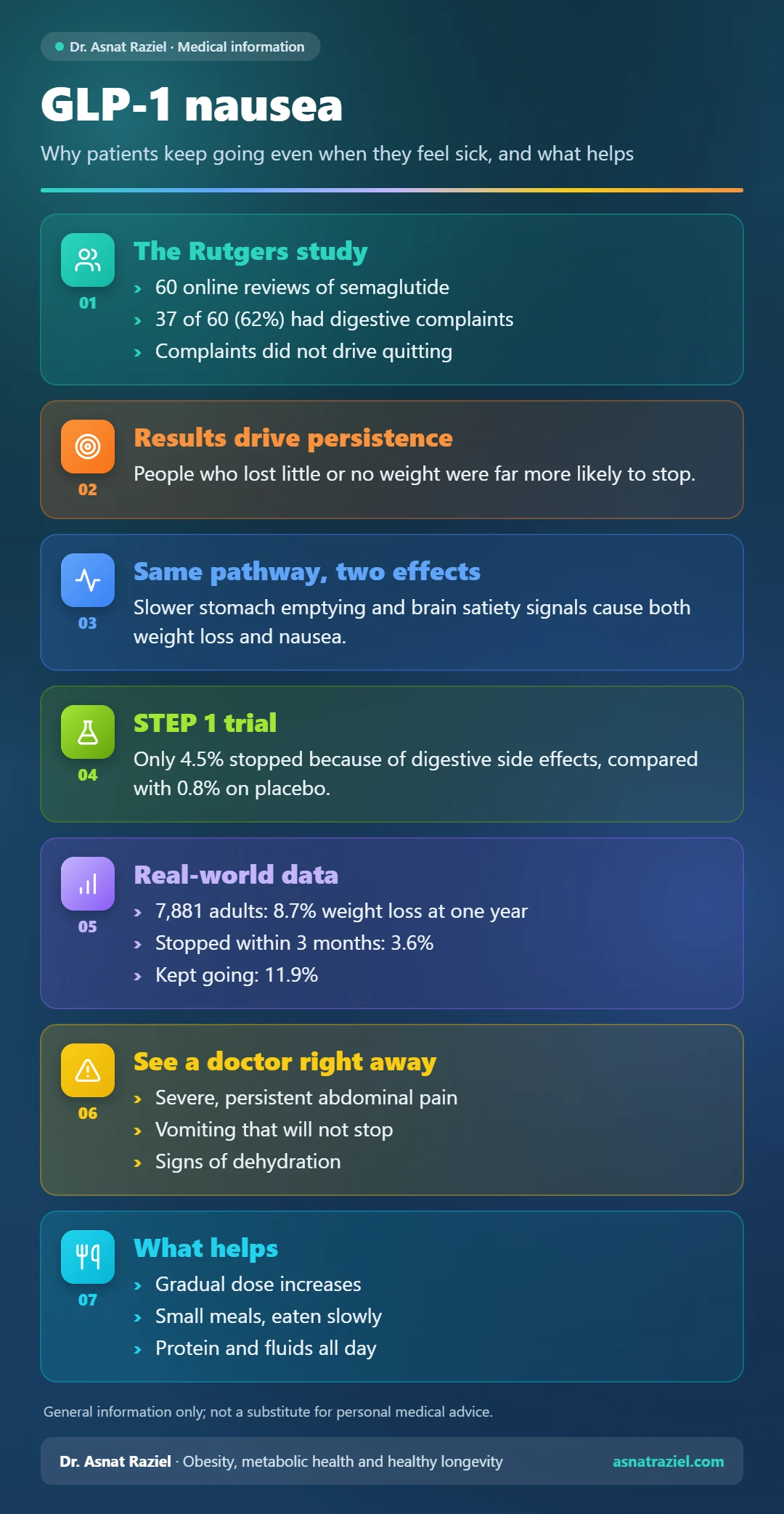
Two-thirds of the reviewers reported less weight, less appetite or fewer food cravings. At the same time, 37 of the 60 (62%) reported digestive complaints. Even so, these complaints did not significantly affect satisfaction or the decision to continue. By contrast, people who lost little or no weight, and those who had other side effects, were far more likely to stop.
In other words, the sense that the drug was working predicted the decision to continue better than any other factor. The senior researcher, Prof. Morgan James, summed it up this way: if the drug helps people lose weight, they are willing to put up with considerable discomfort. Keep in mind, though, that this was a small study based on online reviews, not a controlled trial.
The meaning patients give to nausea
For some patients, a clear link forms between physical discomfort and effectiveness. That is, in their eyes, the nausea becomes a biological sign that appetite is fading and the drug is working. Obesity is a chronic disease with a deep emotional and social dimension. For many people, weight loss symbolizes regaining control over the body and success after years of struggle. Therefore, a side effect is sometimes seen as a reasonable price on the way to the result.
This side of treatment is also tied to the way we talk about these drugs, and to the connection between the medications and the mind. I discuss GLP-1 drugs and body image in a separate article.
The biology behind GLP-1 nausea
GLP-1 drugs slow the emptying of the stomach. They also act on the satiety centers in the hypothalamus and weaken hunger signals. Those very same effects also cause digestive symptoms. Thus, effectiveness and discomfort share a common pathway, and patients sense this intuitively. You can read about how these drugs act on the brain in my article on how obesity medications work.
The major trials support this picture. In the STEP 1 trial, nausea and diarrhea were the most common side effects of semaglutide. Most were transient, mild to moderate, and faded over time. Only 4.5% stopped because of digestive side effects, compared with 0.8% on placebo. Similarly, in the SURMOUNT-1 trial of tirzepatide, most digestive side effects were mild to moderate and appeared mainly during the dose-increase phase. Still, the differences between individuals are large.
What happens outside clinical trials
In the real world, the picture is much more complicated. A Cleveland Clinic study followed 7,881 adults who started semaglutide or tirzepatide. After one year, participants lost an average of 8.7% of their body weight. However, those who stopped within the first three months lost only 3.6%, compared with 11.9% among those who kept going. In addition, 80.8% of patients stayed on low maintenance doses. According to the researchers, high discontinuation rates and low doses explain the gap compared with clinical trials. In short, persistence changes the outcome. I discuss this further in my article on persistence in obesity treatment.
Why framing and expectations matter
The findings highlight the power of advance expectations. When patients get a clear explanation of the side effects and how long they are likely to last, they tolerate them much better. Framing the process correctly changes the experience. Setting realistic expectations from weight-loss drugs is therefore part of the treatment itself.
For the medical team, this is a reminder that managing treatment is not just pharmacology. It takes an open and empathetic dialogue, clear limits for continuing treatment and guidance on warning signs. Patients who see nausea as a sign of success may underreport how severe their symptoms are. For example, severe and persistent abdominal pain, vomiting that won’t stop or signs of dehydration require you to see a doctor right away.
Balancing effectiveness and safety
When a patient says, “I don’t feel well, but I’m seeing results,” we stand at a delicate balance point. Our professional responsibility is to protect safety while also preserving motivation and persistence. For this reason, personalization is the key.
Several tools help reduce GLP-1 nausea and improve the outcome:
- Increasing the dose gradually, and sometimes staying on the current dose for a longer period.
- Small meals, eating slowly and stopping at the first sign of fullness.
- Getting enough protein and drinking throughout the day.
- Physical activity and strength training to preserve muscle mass.
- Close nutritional support, especially in the first months.
It also matters what not to do. Don’t stop the drug on your own, and don’t skip doses to “ease things.” Instead, tell your doctor exactly what you feel and when. Sometimes a small change in the pace of dose increases solves the problem. You’ll find a detailed practical guide in my article on Wegovy side effects and how to cope.
The bottom line on GLP-1 nausea
The drug revolution in obesity is here to stay. Understanding the patient’s psychology is just as important as understanding how the drug works. GLP-1 nausea is not a measure of success. Nevertheless, the experience it creates shows how deep the desire for change runs, and how much the feeling of progress matters to patients. Ultimately, the goal is a treatment that is effective and also pleasant to live with.
The information in this article is general and does not replace personal medical advice.
References
Why People Won’t Quit a Weight Loss Drug – Even When It Makes Them Feel Sick
Once-Weekly Semaglutide in Adults with Overweight or Obesity




