By Dr. Asnat Raziel, bariatric surgeon specializing in obesity treatment, metabolic health and healthy longevity; Director of the Multidisciplinary Center for Obesity Treatment, Assia Medical, Assuta Ramat HaChayal, Tel Aviv
Diet for insulin sensitivity: why it matters
A diet for insulin sensitivity is one of the most powerful tools we have for metabolic health. Insulin sensitivity means that the body responds efficiently to the hormone insulin and moves sugar from the blood into the cells. When sensitivity drops, the pancreas has to release more and more insulin. This state is linked to obesity, prediabetes, type 2 diabetes and other metabolic diseases.
In recent years, many studies have looked at how diet improves the response to insulin, eases the load on the pancreas and steadies blood sugar after meals. This article presents the full picture: carbohydrate quality, overall eating pattern, the order in which you eat, and the habits around the plate.
Carbohydrate quality matters more than quantity
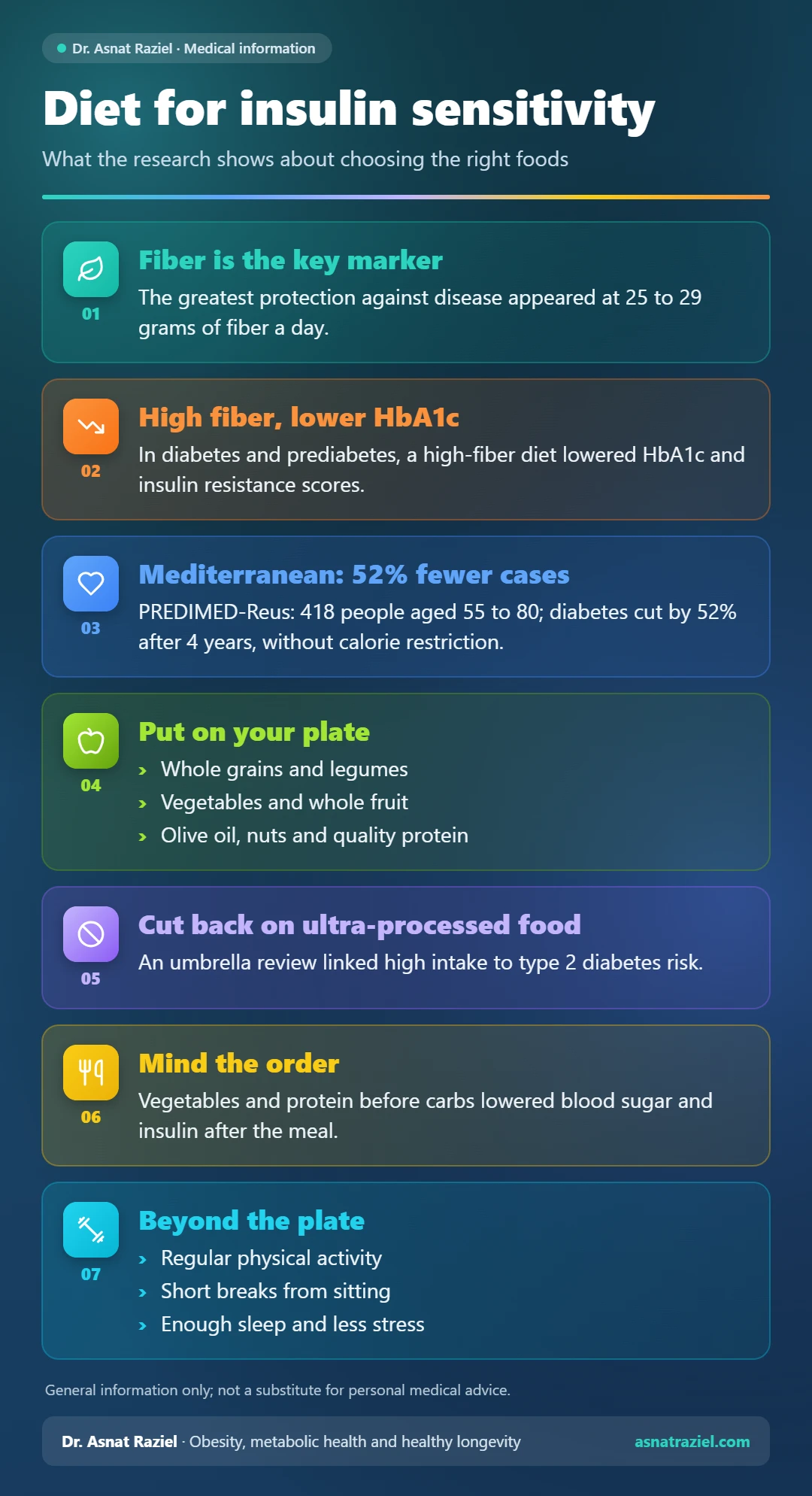
Not all carbohydrates are the same. Refined carbohydrates, such as white bread and sweetened drinks, are absorbed quickly and cause sharp spikes in blood sugar and insulin. In contrast, whole grains, legumes and vegetables release sugar slowly. In a series of meta-analyses published in The Lancet, researchers concluded that fiber and whole grains are the key markers of carbohydrate quality. The greatest protection against disease appeared at an intake of 25 to 29 grams of fiber a day.
Soluble fiber forms a gel in the gut that slows the digestion of carbohydrates. As a result, sugar enters the bloodstream more slowly, and the pancreas needs less insulin. In a meta-analysis of studies in people with diabetes and prediabetes, a high-fiber diet lowered HbA1c, the average blood sugar over the past three months. In addition, insulin resistance scores, blood lipids and inflammatory markers all went down. You will find a detailed explanation of fiber itself in my article on the food that teaches the body to handle sugar better.
The Mediterranean pattern: a diet for insulin sensitivity
Beyond any single food, the overall eating pattern changes the picture. The PREDIMED-Reus trial included 418 people aged 55 to 80 without diabetes who were at high risk of heart disease. They followed a Mediterranean diet with olive oil or with nuts, or a low-fat diet. After 4 years, the Mediterranean diet reduced new cases of diabetes by 52%. What’s more, the benefit appeared without calorie restriction and without significant weight change.
Likewise, a meta-analysis of 57 trials showed that the Mediterranean diet improves blood sugar, insulin and HOMA-IR, a score that estimates insulin resistance. It also reduced liver fat and inflammatory markers. Nutrition for healthy aging follows the same principles.
Which foods should go on your plate?
Whole grains and legumes
Oats, quinoa, brown rice, lentils, chickpeas and beans provide fiber and plant protein. Together, they slow sugar absorption and keep glucose levels steady.
Vegetables and whole fruit
Green vegetables, apples, pears and berries are rich in fiber and plant compounds. Choose whole fruit rather than juice, because juice loses most of the fiber.
Healthy fats
Olive oil, nuts, almonds and seeds provide unsaturated fat. As part of a meal, they slow the digestion of carbohydrates and help you feel full.
Quality protein
Fish, eggs, legumes and low-fat dairy products keep you full and steady throughout the day. In addition, protein helps preserve muscle mass, which is a major consumer of sugar. You can find more information in my article on protein intake during weight loss.
What to cut back on
Ultra-processed food usually contains sugar, white flour and fat, with little fiber. In an umbrella review published in The BMJ, researchers found convincing evidence for a link between high intake of ultra-processed food and the risk of type 2 diabetes. However, these are observational studies, which show an association, not cause and effect. I cover this topic in more depth in my article on ultra-processed food and the brain.
The order you eat in also matters
The order in which you eat the parts of a meal affects blood sugar. In a small trial published in Diabetes Care, participants ate the same meal in two different orders. When they ate vegetables and protein before carbohydrates, blood sugar and insulin levels after the meal were lower. So you can start a meal with a salad and a serving of protein, and leave the bread or rice for last. This is a simple step, but it does not replace changing the menu as a whole.
A daily menu built on a diet for insulin sensitivity
First, include a source of fiber at every meal: vegetables, legumes or whole grains. Second, swap white baked goods for whole-grain bread or oats. Third, add protein and a healthy fat to every meal. Fourth, drink water instead of sweetened drinks. Finally, plan simple meals ahead for busy days, so you don’t end up reaching for sweet snacks out of hunger. If hunger is a struggle for you, it also helps to understand the physiology of satiety.
A diet for insulin sensitivity is only part of the picture
Diet is one component among several. The American Diabetes Association’s 2026 Standards of Care combine nutrition, physical activity, sleep and mental health in treatment. Regular physical activity increases the uptake of glucose into the muscles, even after light exercise. In addition, short breaks in long periods of sitting help balance blood sugar.
Getting enough sleep, reducing stress and losing a moderate amount of weight, when needed, also support a healthy metabolic response. The long-term impact of lifestyle also shows up in a 21-year follow-up of people with prediabetes.
The bottom line on a diet for insulin sensitivity
A diet for insulin sensitivity is not an extreme diet. Rather, it comes down to consistent choices: quality carbohydrates, fiber at every meal, a Mediterranean pattern and less ultra-processed food. In this way, you can change how your body uses insulin and lower your risk of type 2 diabetes.
The information in this article is general and does not replace personal medical advice.
References
Carbohydrate quality and human health: a series of systematic reviews and meta-analyses
Dietary fibre and whole grains in diabetes management: Systematic review and meta-analyses
Food Order Has a Significant Impact on Postprandial Glucose and Insulin Levels




