By Dr. Asnat Raziel, bariatric surgeon specializing in obesity treatment, metabolic health and healthy longevity; Director of the Multidisciplinary Center for Obesity Treatment, Assia Medical, Assuta Ramat HaChayal, Tel Aviv
Plant protein sources: you can get enough protein without animal products
Plant protein sources can meet the protein needs of most adults, as long as the diet is varied and well planned. The question I hear most often is, “But where will you get your protein?” The short answer: from legumes, soy, whole grains, nuts and seeds. In this article, I’ll explain how much protein you need, which foods provide it, and what really matters when it comes to protein quality.
How much protein do you need each day?
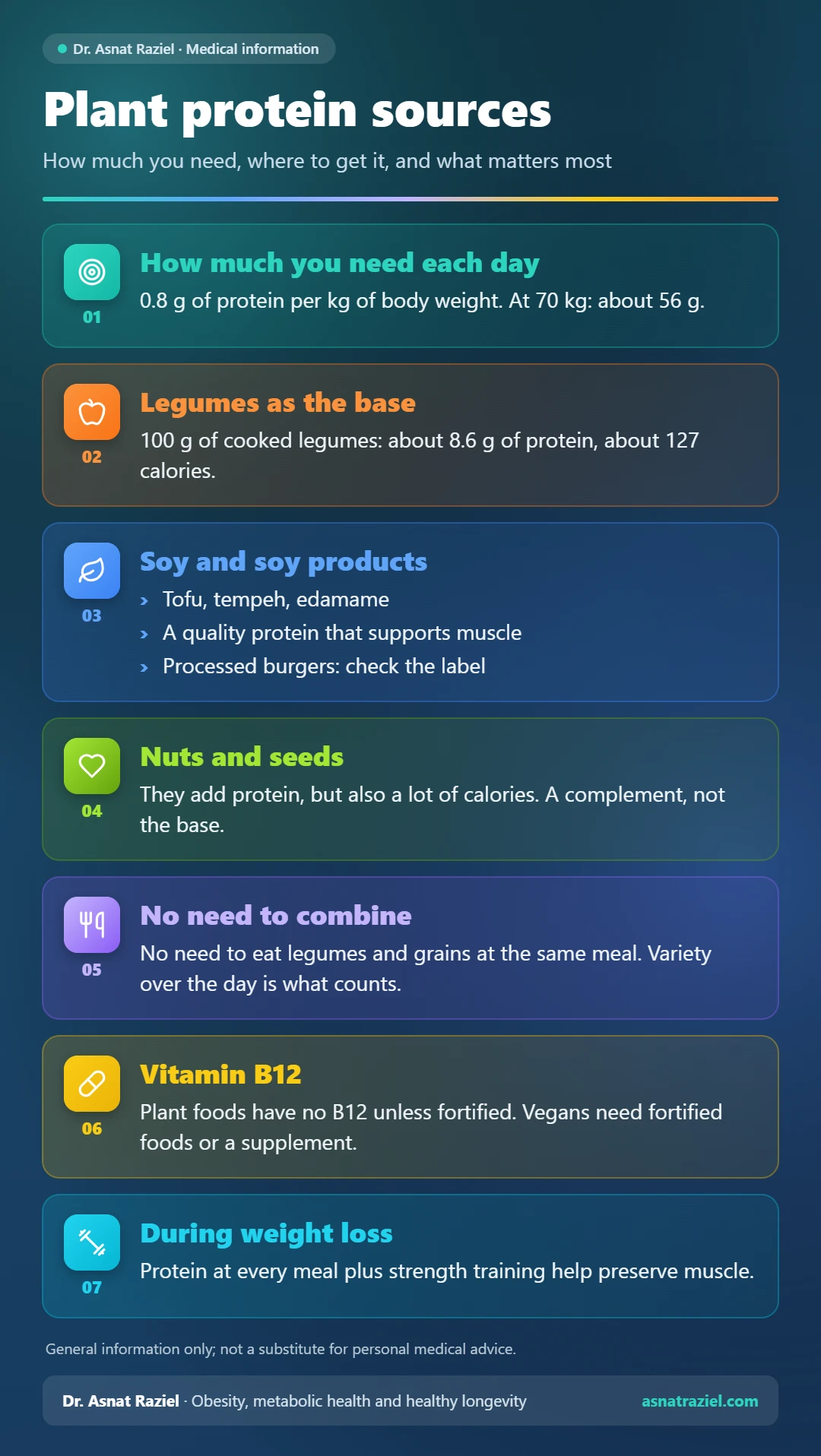
The dietary recommendation for a healthy adult is 0.8 grams of protein per kilogram of body weight per day. For example, a person who weighs 70 kg needs about 56 grams of protein a day. This amount covers the needs of most of the population. However, there are situations in which it makes sense to eat more, such as older age, strength training or weight loss. I wrote about this in detail in my article on protein intake during weight loss.
So, do vegetarians and vegans reach this amount? According to a review of protein and amino acids in vegetarian diets, a typical vegetarian diet provides plenty of protein. Still, some vegans face a moderate risk of eating too little. That is why planning is especially important on a vegan diet.
Legumes: the foundation of plant protein sources
Lentils, chickpeas, beans, peas and fava beans are the backbone of a plant-based diet. According to a review of plant protein and meat alternatives, a 100-gram serving of cooked legumes provides about 8.6 grams of protein on average, for about 127 calories. What’s more, about 29% of the calories in legumes come from protein. In grains, by comparison, the figure is about 13%.
Beyond protein, legumes also supply dietary fiber, resistant starch and beneficial plant compounds. In other words, they help keep you full and support balanced blood sugar. If they give you gas, start with small portions and increase them gradually.
Soy and soy products
Tofu, tempeh, edamame and soy milk are excellent sources of protein. Soy protein is a high-quality protein. In studies, it supported gains in muscle mass and strength much like animal proteins did, including whey protein. On the other hand, the protein content of processed soy burgers varies widely. In the same review, five soy burgers contained between 14 and 27 grams of protein per patty. So it’s worth reading the label and checking the sodium and saturated fat as well.
Nuts, seeds and whole grains
Nuts and seeds add protein, but they also add a lot of fat and calories. For example, two tablespoons of peanut butter provide about 7.27 grams of protein, but also about 189 calories. As a result, they round out the menu, but they usually aren’t the main source of protein. Tahini, pumpkin seeds, chia and hemp seeds are easy to add to a salad, oatmeal or baked goods.
Whole grains such as oats, buckwheat and quinoa also contribute protein. They matter in particular because we eat them in large amounts throughout the day.
Protein quality: what PDCAAS and DIAAS mean
All plant foods contain all 20 amino acids, including the 9 essential ones that the body can’t make on its own. The difference lies in the ratio between them. Grains, for example, are low in lysine. Legumes, on the other hand, are slightly low in the sulfur-containing amino acids. For this reason, the review concludes that the terms “complete protein” and “incomplete protein” are misleading.
Two scores are used to rate protein quality. PDCAAS is the Protein Digestibility-Corrected Amino Acid Score. DIAAS is the Digestible Indispensable Amino Acid Score. Both give animal proteins much higher scores. Even so, according to the review, the difference in digestibility between plant and animal protein is only a few percent.
Plant protein sources: do you have to combine them at the same meal?
No. This is a long-standing myth. The review of vegetarian diets explains that combining proteins at one meal is simply a practical way to ensure variety. There is no evidence that you must eat legumes and grains together. What counts is variety over the course of the day and your total protein intake.
So hummus at lunch and whole-grain bread at dinner complement each other nicely. Likewise, traditional dishes such as mujadara (lentils with rice) or rice and beans are a delicious way to combine them.
I talk about this myth and several others in the following video (in Hebrew):
Plant protein sources during weight loss
During weight loss, and especially during drug treatment, appetite shrinks and portions get smaller. As a result, it’s easy to eat too little protein, and that raises the risk of losing muscle. This is where legumes and soy shine, because they deliver protein and fiber in a relatively small volume. I wrote about adjusting your diet in my article on nutrition with weight loss injections, and about lean body mass on GLP-1 drugs.
In addition, strength training is protein’s constant partner. At an older age this combination matters even more, as I explained in my article on building muscle after 60. At the same time, there is also a scientific debate about protein restriction and longevity, and it’s worth knowing both sides.
What else matters on a vegan diet
Vitamin B12 is the most important point. According to the U.S. National Institutes of Health fact sheet, plant foods don’t contain vitamin B12 unless they are fortified with it. The position paper of the Academy of Nutrition and Dietetics also states that vegans need a reliable source of the vitamin, such as fortified foods or a supplement. In addition, pay attention to zinc, iodine and calcium.
The Academy also stresses that a well-planned vegetarian or vegan diet is appropriate for all stages of life. The key word is “well-planned.”
How to build a day around plant protein sources
- Breakfast: oatmeal made with soy milk and topped with seeds.
- Lunch: a lentil or chickpea stew, with a whole grain and a salad.
- Snack: edamame, soy yogurt or a handful of nuts.
- Dinner: stir-fried tofu or tempeh with vegetables.
This way you get protein at every meal, not just at one big meal. Also, check the amount of protein in the portion you actually eat, not just per 100 grams.
A dietitian works at our clinic. In addition, when needed, I refer patients to a multidisciplinary mind-body team: dietitians, psychologists, holistic coaches, naturopaths and complementary medicine practitioners, as well as Pilates and yoga instructors and experts in stress-reduction techniques.
The bottom line
Plant protein sources, led by legumes and soy, provide all the protein most people need. There’s no need to combine proteins at the same meal, but you do need variety and an adequate amount over the course of the day. On a vegan diet, you must make sure to get vitamin B12 from fortified foods or a supplement.
The information in this article is general and does not replace personal medical advice.
Frequently asked questions
Is plant protein inferior to animal protein?
Its quality scores are slightly lower, mainly because of the ratio of amino acids. In a varied diet, however, the difference is small, and soy protein supports muscle building much like animal protein does.
How much protein is in legumes?
A 100-gram serving of cooked legumes provides about 8.6 grams of protein on average. Some soy products contain much more.
Are plant protein sources a good fit during treatment with weight loss injections?
Yes. They provide protein and fiber in a small portion. Make sure you get enough protein at every meal, and add strength training.
Do vegans need supplements?
Yes, at least vitamin B12, from fortified foods or a supplement. For other nutrients, it’s best to consult a doctor or dietitian.
Sources
Dietary Protein and Amino Acids in Vegetarian Diets – A Review
Position of the Academy of Nutrition and Dietetics: Vegetarian Diets




