By Dr. Asnat Raziel, bariatric surgeon specializing in obesity treatment, metabolic health and healthy longevity; Director of the Multidisciplinary Center for Obesity Treatment, Assia Medical, Assuta Ramat HaChayal, Tel Aviv
Preschool obesity: the message from Prof. Antje Körner
Preschool obesity is not a cosmetic matter, and it is not a phase that passes on its own. That is the central message of Prof. Antje Körner, a pediatrician and researcher at Leipzig University and Helmholtz Munich. Körner received the EASO and Novo Nordisk Foundation Prize for Excellence, the leading award of the European Association for the Study of Obesity. Today, she is one of the world’s most prominent researchers in childhood obesity and metabolism in the early years.
Her prize lecture at the European Congress on Obesity (ECO) presented an eye-opening view. Obesity does not begin in adolescence, or even at school age. In many cases, it begins in the first years of life, sometimes as early as age three. Moreover, it affects heart health, hormones and metabolism for decades.
Childhood obesity is not a passing phase
Körner opened with a sharp message: childhood obesity is not something the child will simply grow out of. Children with excess weight at a young age have a high risk of carrying obesity into adulthood. Later on, their risk of type 2 diabetes, high blood pressure, fatty liver, heart disease and early death rises. I have written at length about the consequences of obesity in childhood and adolescence in another article.
In the past, doctors believed that metabolic diseases appeared only later in life. Today, it is clear that the biological processes begin in the first years. Already in childhood, we can detect lower insulin sensitivity, more chronic inflammation and changes in how fat tissue works.
Why preschool obesity shapes a child’s metabolic future
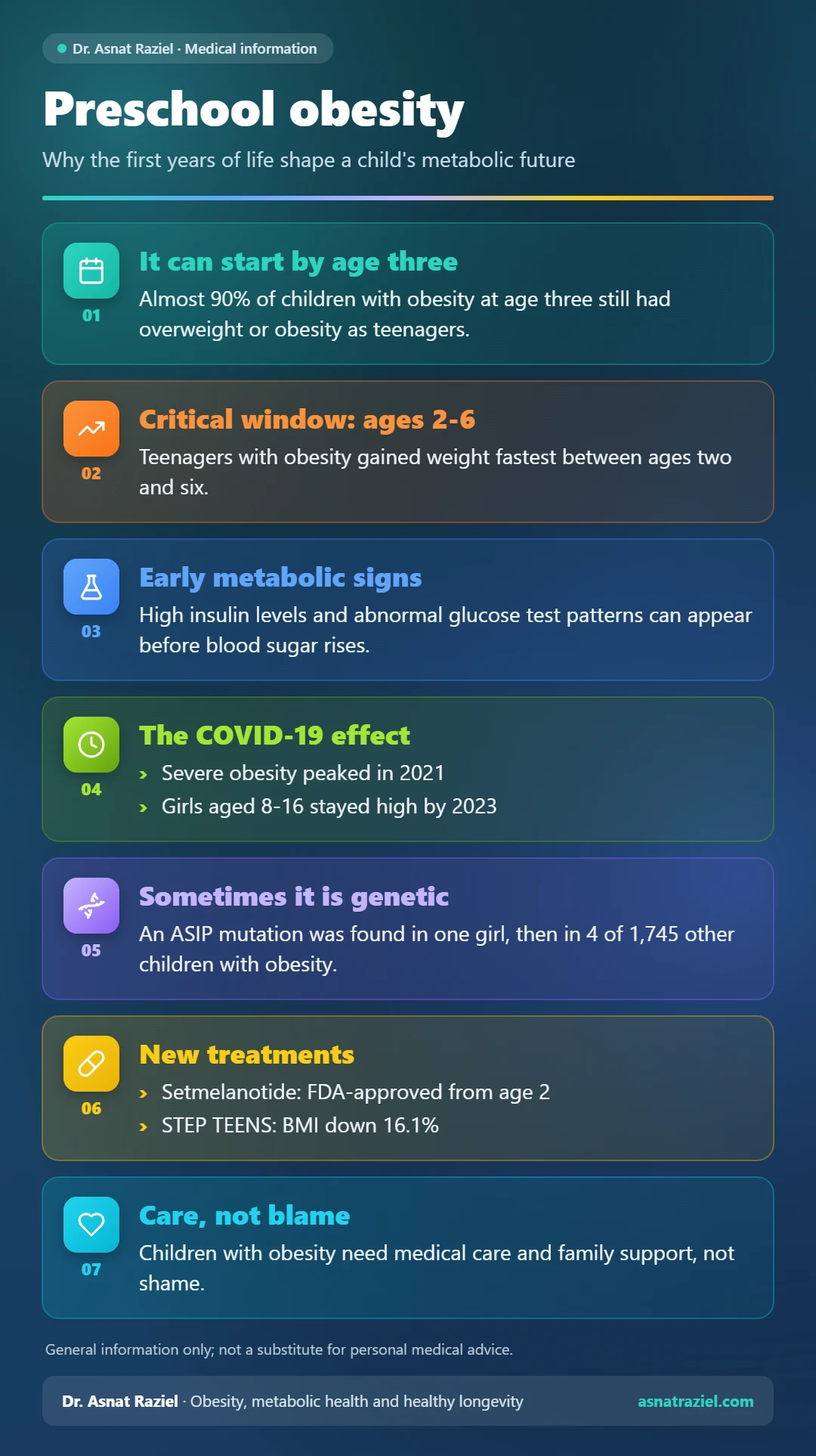
One of the most fascinating parts of the lecture asked when the “obesity trajectory” begins. The answer comes from a large study by the Leipzig team, published in NEJM. The researchers followed 51,505 children from birth to adolescence. Almost 90% of the children who had obesity at age three still had overweight or obesity as teenagers.
What’s more, among the teenagers with obesity, the fastest weight gain happened between ages two and six. In other words, the preschool years are a critical window. During these years, fat cells develop, along with hunger and fullness signals, insulin sensitivity and the metabolic brain.
According to Körner, children with a high BMI (body mass index) at a young age often have hyperinsulinemia, meaning higher than normal insulin levels. This happens even before blood sugar rises. In addition, an oral glucose tolerance test (OGTT) often shows abnormal patterns that predict a future risk of diabetes. So metabolic damage sometimes starts years before the disease becomes visible.
COVID-19 and preschool obesity
A significant part of the lecture dealt with the effect of the COVID-19 pandemic on children’s health. The lockdowns created a “metabolic storm”: less physical activity, a lot of screen time, disrupted sleep, family stress and emotional eating.
Data from Germany illustrate the picture. An analysis of almost 1.5 million medical visits by children aged 4 to 16 showed that severe obesity peaked in 2021. However, the picture was not uniform. By 2023, younger children had returned to pre-pandemic levels. By contrast, among older children, and especially girls aged 8 to 16, weight stayed high. In other words, for some children the weight gain of the pandemic years did not go away.
Is all childhood obesity the same disease?
One of the most innovative topics in the lecture was monogenic obesity, meaning obesity caused by a change in a single gene. The Leipzig team identified a mutation in the region of the ASIP gene in a girl with extreme obesity. The mutation causes overproduction of a protein that blocks the fullness pathways in the brain. The researchers then tested 1,745 children with obesity and found four more children with exactly the same mutation.
According to Körner, in some children obesity does not stem mainly from the environment or lifestyle. Instead, it comes from deep biological and genetic changes that affect hunger, energy expenditure and metabolism. Understanding the biology therefore changes how we treat families. Instead of blame, they need timely diagnosis and personalized treatment.
The new generation of treatments for childhood obesity
Körner also presented the future of treatment for children with severe obesity. One example is setmelanotide (Imcivree), which acts on the hunger and fullness pathways in the brain. In December 2024, the FDA approved the drug from age two, but only for rare types of genetic or syndromic obesity.
At the same time, GLP-1 drugs are also being studied in children and teenagers. In the STEP TEENS trial, for example, BMI fell by 16.1% in teenagers who received semaglutide, compared with a 0.6% rise on placebo. In addition, there are now data on Wegovy for children aged 6 to 12. According to Körner, we are at the start of a new era. In this era, we will match treatment to the child’s biological profile, not just to their BMI.
That said, medication alone is not the solution. Treatment for children must include a supportive family environment, good nutrition, physical activity, good sleep and emotional support. You can read about the options available in Israel in my article on treating childhood obesity in Israel.
Childhood obesity is a biological disease, not a personal failure
One of the strongest messages of the lecture was the fight against stigma. Children with obesity often experience shame, social rejection and damaged self-esteem from a very young age. When professionals or parents present obesity as a lack of willpower, they ignore the biology of the disease. Worse still, they can cause real emotional harm.
Körner called for a shift from a judgmental approach to a medical, empathetic and scientific one. In this approach, the child is a person with a chronic disease who needs treatment and support, not blame. Word choice matters as well, as I explained in my article on respectful language in obesity care.
Bottom line: preschool obesity calls for timely intervention
Körner’s work represents a central direction in modern obesity medicine: spotting metabolic trajectories in childhood and intervening before complications appear. The issue is far bigger than any one family. According to the World Health Organization, about 35 million children under age five worldwide had overweight in 2024.
Ultimately, obesity is not just the result of excess calories. It is a biological disease that sometimes starts in the first years of life. It affects the heart, liver, brain and metabolism throughout life. Therefore, preschool obesity deserves medical attention, without blame and with plenty of support for the family. This understanding ties into the view of obesity as a biological disease, which was also highlighted at ECO 2026.
The information in this article is general and does not replace personal medical advice.
References
Acceleration of BMI in Early Childhood and Risk of Sustained Obesity
From Childhood to Adolescence: Long-Term Trends in Severe Obesity in German Youth (2002-2023)




