By Dr. Asnat Raziel, bariatric surgeon specializing in obesity treatment, metabolic health and healthy longevity; Director of the Multidisciplinary Center for Obesity Treatment, Assia Medical, Assuta Ramat HaChayal, Tel Aviv
Nutrition for weight loss injections: from a general plan to your own plan
Nutrition for weight loss injections starts with a simple question: who are you, and what stage of treatment are you at? A 35-year-old woman who has just started Wegovy needs a different menu from a 65-year-old man with diabetes who is taking Mounjaro. In this article I offer a practical way to build a personal plan: a sample day, adjustments for each dose stage, and adjustments for your goal.
I have covered the general principles, such as protein, fluids and fiber, in a separate guide to healthy eating on weight loss injections. It’s worth reading that first and then coming back here.
Step one: calculate your personal protein target
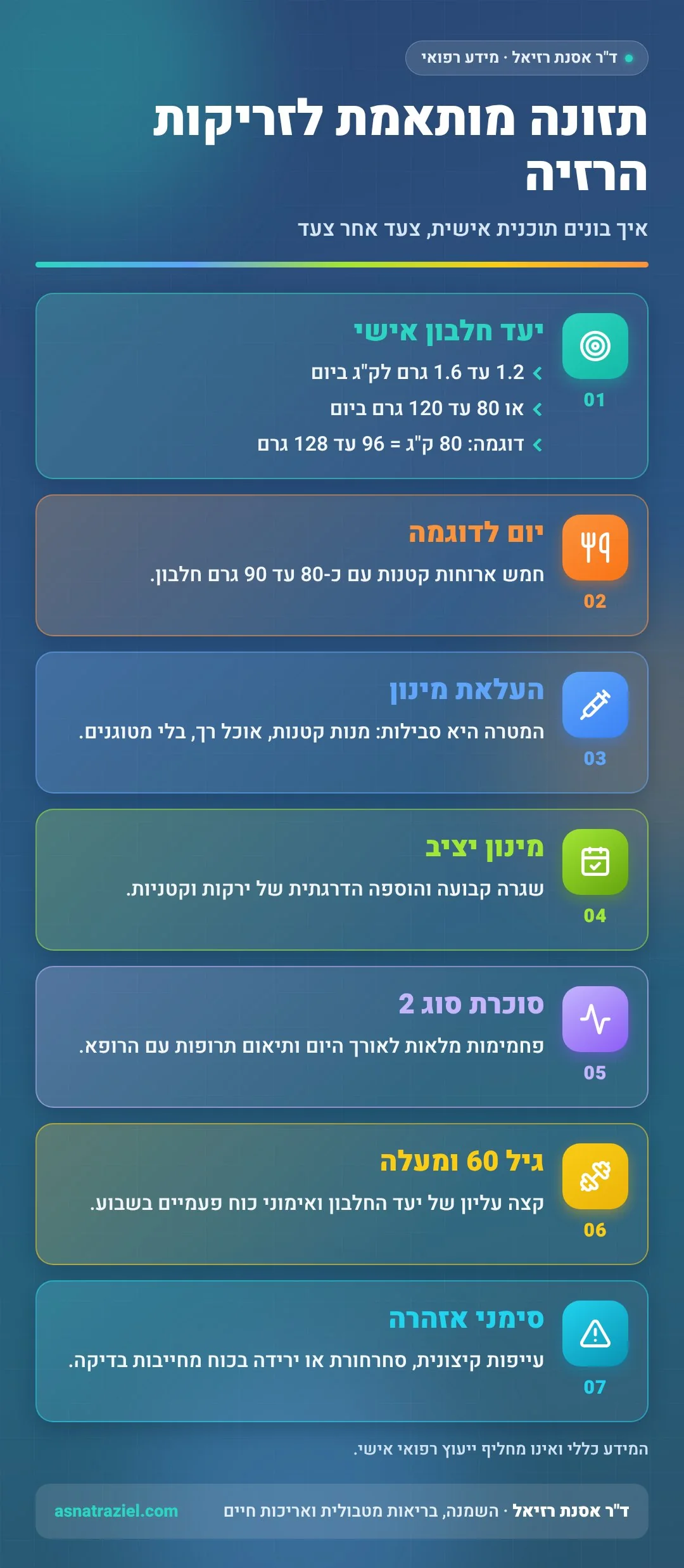
According to joint recommendations from US obesity and nutrition organizations, the target during active weight loss is 1.2 to 1.6 grams of protein per kg per day. Alternatively, you can aim for 80 to 120 grams a day. For example, for someone who weighs 80 kg, the calculation comes to 96 to 128 grams a day.
At a very high body weight, calculating by total weight can give a figure that is too high. In such cases the dietitian adjusts the target, sometimes based on body composition. And with kidney disease, the target is set only together with your doctor.
A sample day of nutrition for weight loss injections
Here is a sample day providing about 80 to 90 grams of protein. The amounts are approximate, and you can swap foods to suit your taste.
- Breakfast: Two eggs, a slice of whole-grain bread and chopped vegetables. About 15 grams of protein.
- Mid-morning snack: A cup of high-protein yogurt. About 15 to 20 grams of protein.
- Lunch: About 100 grams of chicken breast or fish, cooked vegetables and three tablespoons of brown rice. About 25 to 30 grams of protein.
- Afternoon: Half a tub of cottage cheese with cucumber. About 12 grams of protein.
- Dinner: Lentil soup or stir-fried tofu with vegetables. About 12 to 15 grams of protein.
Throughout the day, drink water in small sips. Dairy products are a convenient source of protein and calcium, a topic I have written about in my article on dairy and weight loss injections. If you are taking Mounjaro, the site also has a daily meal plan for Mounjaro.
Nutrition for weight loss injections by dose stage
The first weeks and dose escalation
With medications such as Wegovy and Mounjaro, the dose is increased gradually, usually every four weeks. Side effects are especially common during this period. So the goal here is tolerability, not a perfect menu. Eat small portions, choose soft, simple foods, and avoid fried food.
On injection day and for a day or two afterward, some patients feel quite nauseous. On those days, it helps to prepare light foods in advance, such as yogurt, soup or a protein shake. That way you can meet your daily target even when you don’t feel like eating.
A stable dose
Once the dose is stable, side effects ease for most patients. This is the time to build a regular routine: three meals plus one or two snacks. It’s also the time to gradually add vegetables, legumes and whole grains. You can read separately about more ways of preventing digestive side effects.
The maintenance phase
Once you reach your goal, the focus shifts from losing weight to maintaining it. Portions increase slightly, but protein and strength training stay at the center. Even at this stage, it’s worth staying in touch with your care team.
Anyone stopping the medication needs a particularly well-organized plan, because appetite returns gradually. That’s why it’s worth planning portion sizes, meal timing and your exercise routine in advance. This makes it easier to hold on to the weight you have lost.
Nutrition for weight loss injections by goal
Type 2 diabetes
Here it’s important to spread carbohydrates throughout the day and choose whole-grain carbohydrates. Anyone who is also taking insulin or certain glucose-lowering drugs is at risk of low blood sugar when food intake drops. That’s why the doses of these medications are coordinated with the doctor right from the start of treatment.
Age 60 and over, or low muscle mass
In this group, the risk of muscle loss is especially high. Aim for the upper end of the protein target and include strength training at least twice a week. I have written in detail about what incretin medications mean for muscle mass. The site also has a guide to strength training during weight loss.
Active people and athletes
If you train a lot, you need energy before and after your workouts. For example, fruit with yogurt before a workout, and a meal with protein and carbohydrates afterward. On a hot day or during a long workout, fluids are doubly important.
How to know your nutrition plan for weight loss injections is working
The good signs are gradual weight loss, reasonable energy, regular bowel movements and maintained strength. On the other hand, extreme fatigue, dizziness, hair loss or a loss of strength call for a check-up. In those cases, we review the menu, the protein target and sometimes blood tests as well.
The active ingredient in Wegovy and Ozempic is semaglutide, and in Mounjaro it is tirzepatide. The nutritional principles are similar for both. At our clinic, the dietitian builds the plan together with the patient and updates it throughout treatment.
Common mistakes in nutrition for weight loss injections
The first mistake is eating only when you’re hungry. During treatment, hunger is very weak, so if you wait for it you’ll eat too little. Instead, set regular times for small meals.
The second mistake is skimping on protein, of all things. When you feel full quickly, it’s easy to settle for coffee and a snack. But that harms your muscles and increases fatigue. So, as mentioned, start every meal with the protein.
The third mistake is copying someone else’s menu. Even if you’re both on the same medication, your bodies, ages and goals differ. And the plan should change over time, based on your dose, your weight and your test results.
The bottom line
Nutrition for weight loss injections is built in three steps: a personal protein target, a sample day that suits your taste, and adjustments for your dose stage and your goal. In the first weeks, the goal is tolerability. Next, you build a routine, and finally you maintain what you’ve achieved. A good plan evolves along with you.
The information in this article is general and does not replace personal medical advice.
Frequently asked questions
What should I eat on injection day?
Light, soft foods in small portions, such as yogurt, soup or a protein shake. It’s best to avoid fatty foods.
Does the sample day suit everyone?
No. It’s only a starting point. Amounts vary with weight, age, underlying conditions and physical activity.
What changes if I have diabetes?
Spread carbohydrates throughout the day, and coordinate your glucose-lowering medications with your doctor to prevent low blood sugar.
When should I plan nutrition for weight loss injections with a dietitian?
Ideally right at the start of treatment. Also reach out if you notice a loss of strength, extreme fatigue or difficulty eating.