By Dr. Asnat Raziel, bariatric surgeon specializing in obesity treatment, metabolic health and healthy longevity; Director of the Multidisciplinary Center for Obesity Treatment, Assia Medical, Assuta Ramat HaChayal, Tel Aviv
Maintaining weight after weight loss: why it is so hard
Maintaining weight after weight loss is often the hardest part of the whole journey. Many of my patients tell me that losing the weight felt exciting, but fear set in right afterward. That fear makes sense, because the body really does pull back toward its previous weight. Still, research shows that you can hold on to your success once you understand what is happening in your body and act accordingly.
What happens in the body after weight loss
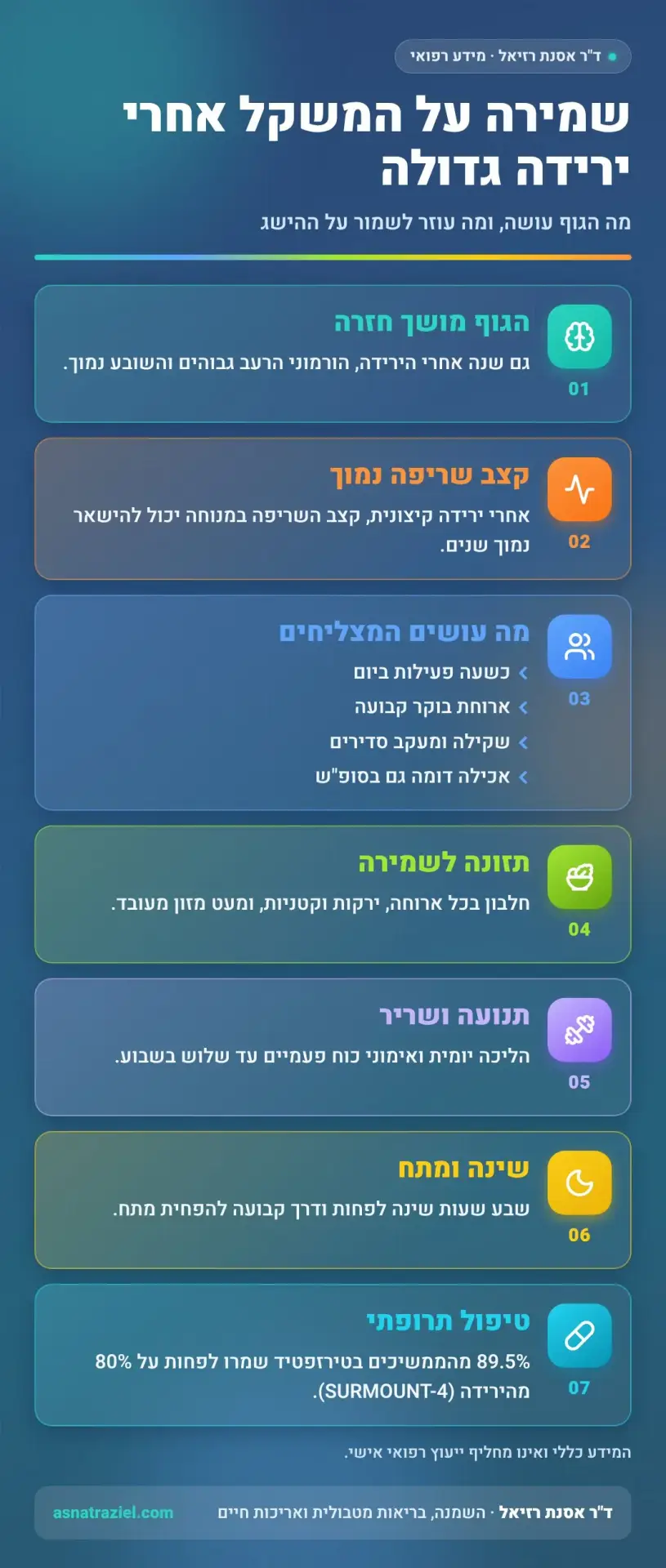
After significant weight loss, the body switches on defense mechanisms. First, hunger and satiety hormones change. In a study published in NEJM, researchers followed 50 people who lost an average of 13.5 kg. Even a year later, levels of leptin, the satiety hormone made by fat tissue, remained low. At the same time, levels of ghrelin, the hunger hormone, stayed high, and participants reported much more hunger than at the start.
Second, resting metabolic rate drops. In a follow-up of contestants from the reality show “The Biggest Loser,” six years after the competition, their resting calorie burn was about 700 calories a day lower than at baseline. Most contestants had also regained a large share of the weight. So weight regain is not a matter of poor discipline. It is biology.
Maintaining weight after weight loss: what successful people do
The good news comes from a large US database called the National Weight Control Registry, which tracks people who lost weight and kept it off. According to a review by researcher Rena Wing, registry members lost an average of 33 kg and maintained that loss for more than five years. In addition, the review found that after two to five years of maintenance, the chances of continued success rise sharply.
What do they have in common? They reported simple, consistent habits:
- About an hour of physical activity a day, on average.
- A balanced, low-calorie, low-fat diet.
- Eating breakfast regularly.
- Weighing themselves and self-monitoring on a regular basis.
- A similar eating pattern on weekdays and weekends.
Nutrition for the maintenance phase
The maintenance phase does not call for a strict diet. Instead, you need a menu you can live with for years, based on simple weight management principles that balance the energy you take in with the energy you burn. For example, protein at every meal helps with fullness and with preserving muscle. In addition, vegetables, legumes and whole grains provide fiber and volume without many calories. It also helps to cut back on sugary drinks and highly processed foods.
At the same time, structure matters. Regular meals reduce snacking and emotional eating. If you have finished drug treatment, you will find more detail in my guide to stopping weight loss medication.
Exercise and maintaining weight after weight loss
Exercise on its own leads to only modest weight loss. However, it is very important for keeping weight off. In a review of studies on the role of physical activity, researchers found that aerobic activity at the recommended level leads to a modest loss of about 2 kg. On the other hand, they highlight its role in preventing weight regain and its health benefits even without weight loss.
Above all, choose an activity you enjoy and can stick with. A daily walk is an excellent foundation, and one study has looked at walking as a way to maintain weight. In addition, strength training two to three times a week helps preserve muscle mass and a healthy body composition. If you like structure, you can join a running or cycling group, such as Pipman, and make movement a fixed part of your week.
Routine, sleep and stress
Stable habits do not rely on willpower alone. Rather, they rely on your environment and routine. For example, short sleep and chronic stress increase hunger and cravings for high-calorie food. So aim for at least seven hours of sleep, and find a regular way to reduce stress.
Your work environment also plays a part. Long hours of sitting, irregular meals and deadline pressure all make maintenance harder. That is why it pays to plan movement breaks and prepare food in advance.
The emotional side of keeping weight off
Many patients live in constant anxiety about every kilogram they gain. This anxiety is exhausting, and sometimes it actually leads to emotional eating. It is worth recognizing a paralyzing fear of regaining weight and learning ways to cope with it. Instead of aiming for perfection, set a “weight range” of 2 to 3 kg and act early when you move outside it.
When medication helps with maintaining weight after weight loss
For some patients, medication is part of the maintenance plan. In the STEP 4 trial, people who continued semaglutide lost a further 7.9% of their body weight over 48 weeks. By contrast, those who switched to placebo regained 6.9%. Similarly, in the SURMOUNT-4 trial, 89.5% of those who continued tirzepatide kept off at least 80% of their weight loss, compared with only 16.6% in the placebo group.
In other words, obesity is a chronic disease, and sometimes it needs ongoing treatment. You and your doctor decide together on long-term obesity medication, based on your response, side effects and goals. If your weight starts to creep up, I invite you to seek personal advice early, before the trend takes hold.
The bottom line
Maintaining weight after weight loss is not a test of willpower. Your body responds with hormonal and metabolic changes, so you need a plan. Consistent habits, daily movement, strength training, good sleep and self-monitoring form the foundation. Finally, for some patients, ongoing medication is also part of the solution.
This article provides general information and does not replace personal medical advice.
Frequently asked questions
How long does the hardest phase of maintenance last?
According to the US registry data, after two to five years of maintenance, the chances of continued success rise sharply. However, the hormonal changes can persist for a long time.
How often should I weigh myself?
Many successful maintainers weigh themselves regularly, for example once a week. That way, you can spot a gain early and act before it grows.
Do I have to stay on medication to keep the weight off?
Not everyone does. However, studies show that most patients regain weight after stopping the medication. So the decision should be personal and planned with your doctor.
What should I do when my weight starts to rise?
Go back to basics: a food diary, regular meals and daily movement. If the gain continues, see your doctor early rather than waiting.
References
Long-term persistence of hormonal adaptations to weight loss
Persistent metabolic adaptation 6 years after “The Biggest Loser” competition
Long-term weight loss maintenance
The role of exercise and physical activity in weight loss and maintenance