By Dr. Asnat Raziel, bariatric surgeon specializing in obesity treatment, metabolic health and healthy longevity; Director of the Multidisciplinary Center for Obesity Treatment, Assia Medical, Assuta Ramat HaChayal, Tel Aviv
How obesity medication works, and why it’s worth knowing
How does obesity medication work? It is the first question I hear in almost every consultation. The short answer: the new drugs don’t “burn fat.” Instead, they change the signals the brain receives about hunger and fullness. As a result, people eat less without a daily battle against hunger.
Once you understand the mechanism, it is also easier to understand the side effects, why the dose has to be increased gradually and what happens when you stop. So it pays to see the full picture before you start.
Obesity is a disease of regulation, not willpower
Our bodies defend their weight. When we lose weight by dieting, levels of the satiety hormone leptin fall. At the same time, the hunger hormone ghrelin rises and metabolism slows down. In other words, the body works to win back the kilograms it has lost.
That is why most people return to their previous weight after a diet. This is not a personal weakness; it is biology. I wrote about this shift in understanding in detail in my article “Not a Diet and Not Magic.” Modern medications act on precisely this regulatory system.
How obesity medication works in the brain
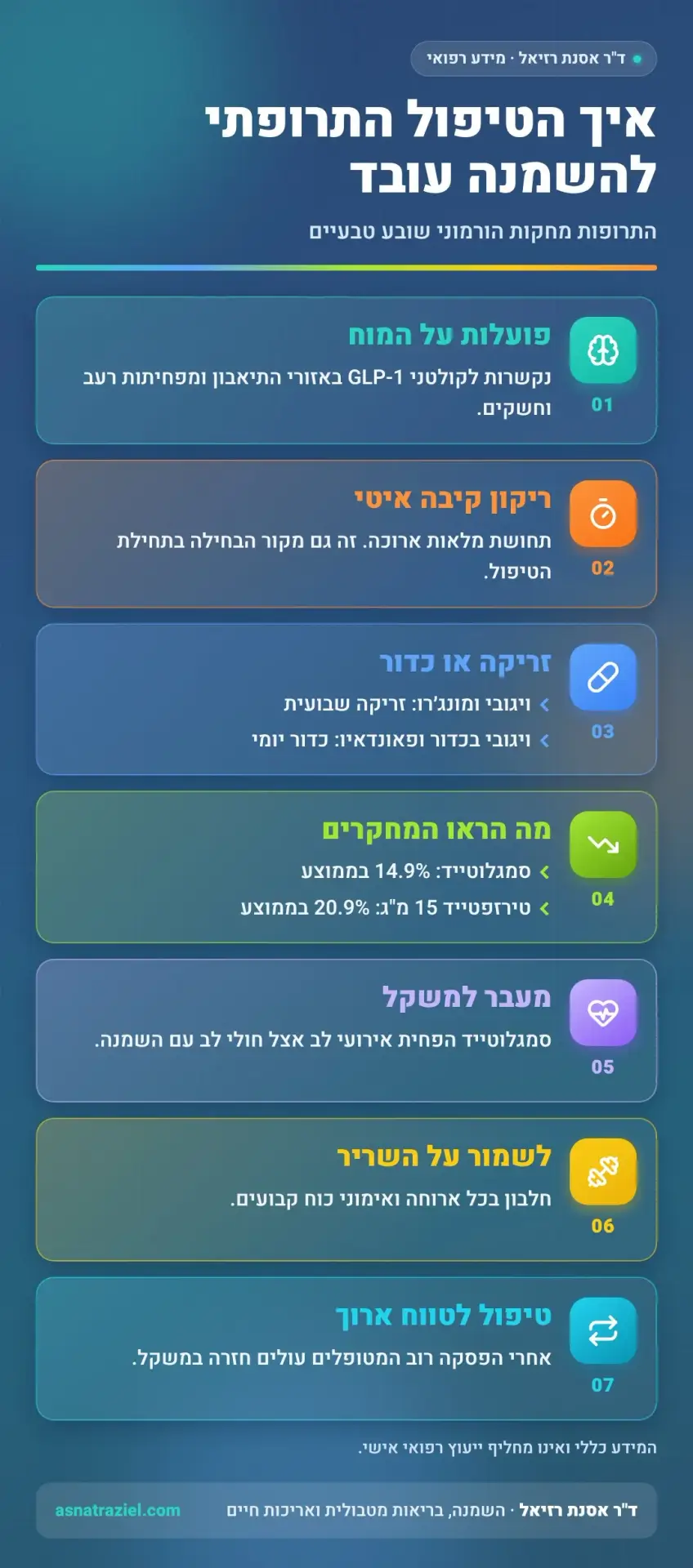
After a meal, the gut releases small hormones called incretins. The most important of these is GLP-1 (glucagon-like peptide-1). This hormone sends the brain a signal that says, “That’s enough, I’ve eaten.” The body, however, breaks it down within minutes.
The medications mimic this hormone but stay in the body for days. They bind to receptors in the hypothalamus and brainstem, the areas that control appetite. According to the US National Institute of Diabetes and Digestive and Kidney Diseases (NIDDK), this is how all GLP-1 obesity medications work. I also explain this side of the story in my article on obesity drugs and the brain.
Quieting the food noise
Many patients describe a drop in what is known as “food noise,” the constant, intrusive thoughts about food. The medications also affect the brain’s reward system, so for many people cravings for sweet and fatty foods fade as well.
How obesity medication works in the stomach
A second mechanism operates in the stomach. The medications slow stomach emptying, so the feeling of fullness lasts longer. This also explains the nausea, heartburn and constipation some people feel early in treatment. That is why treatment starts at a low dose that is raised gradually over several months.
The main medications and what each one does
Not all of these drugs are the same. The key differences are which hormones they mimic and how strongly. These are the main medications in use today:
- Semaglutide (Wegovy): mimics GLP-1, given as a weekly injection. A daily pill version is also available.
- Tirzepatide (Mounjaro): mimics two hormones, GLP-1 and GIP, given as a weekly injection.
- Liraglutide (Saxenda): an older GLP-1 drug, given as a daily injection.
- Orforglipron (Foundayo): a daily non-peptide GLP-1 pill that can be swallowed without any food or drink restrictions.
There are also older medications that work in other ways. Orlistat blocks enzymes in the gut and reduces the absorption of fat from food. The combination of naltrexone and bupropion, on the other hand, acts on the brain’s reward and satiety pathways. This overview of anti-obesity medications traces the history of all these drug families.
The new pills
In December 2025, the US Food and Drug Administration (FDA) approved the Wegovy pill at a dose of 25 mg. In April 2026, the FDA also approved Foundayo, a daily pill from Lilly. Both pills work the same way as the injections: by activating the GLP-1 receptor. I cover Foundayo in detail in a separate article.
How obesity medication works: the numbers
The large clinical trials paint a clear picture. In the STEP 1 trial, adults who received semaglutide 2.4 mg once a week lost an average of 14.9% of their body weight over 68 weeks, compared with an average of 2.4% in the placebo group. About half of the participants (50.5%) lost 15% of their body weight or more.
In the SURMOUNT-1 trial, tirzepatide 15 mg led to an average weight loss of 20.9% over 72 weeks, compared with 3.1% on placebo. With the Foundayo pill at its highest dose (36 mg), average weight loss in the ATTAIN-1 trial was 12.4%.
Keep in mind that these are averages. Some people respond very well, and some lose only a little. According to the NIDDK, anyone who has not lost at least 5% of their body weight after 12 weeks at the full dose should discuss a change of plan with their doctor.
Benefits beyond the scale
Weight is only part of the story. In the SELECT trial, semaglutide reduced cardiovascular events in people with heart disease and obesity who did not have diabetes. A major cardiac event occurred in 6.5% of patients on the drug versus 8.0% on placebo. Put simply: about 1.5 fewer events for every 100 patients treated.
The medications also improve blood sugar control, blood pressure and blood lipids. I wrote about the broader picture of treating obesity and metabolic disease on a separate page.
Side effects and why they happen
Because these medications slow stomach emptying, most side effects involve the digestive system. The most common are nausea, diarrhea, constipation and vomiting. In most cases they are mild and ease after the first few weeks. Even so, in SELECT 16.6% of patients stopped the drug because of side effects, compared with 8.2% on placebo.
There are also rare risks, such as pancreatitis and gallstones, which is why treatment requires a medical evaluation and follow-up. I have gathered all the details in my article on the side effects of weight-loss medications.
Preserving muscle mass
Rapid weight loss also includes some loss of muscle mass. That is why I advise every patient to eat protein at every meal and to do regular strength training. This protects strength, metabolism and health for years to come.
How obesity medication works over the long term
This is the most important point to understand. The medications do not cure the body’s weight-regulation system; they keep it in balance only while they are in the body. In the extension of the STEP 1 trial, participants who stopped semaglutide regained about two-thirds of the weight they had lost within a year.
In other words, obesity is a chronic disease, much like high blood pressure. So the length of treatment, the long-term dose and the eventual exit strategy should all be planned in advance. I discuss this in detail in my guide to what happens when you stop weight-loss medication.
Who is a candidate for medication?
According to the NIDDK, medication is considered for adults with a BMI (body mass index) of 30 or higher. It is also appropriate for those with a BMI of 27 or higher who have a weight-related condition, such as high blood pressure or type 2 diabetes. The choice of drug depends on underlying conditions, a preference for an injection or a pill, side effects and cost.
At our clinic, we combine medication with nutritional guidance, physical activity and emotional support. Clinical literature on the pharmacologic treatment of overweight emphasizes that this combination improves results. In my article on the weight-loss drug revolution, I also explained why the medication is only one part of the plan.
The bottom line
So how does obesity medication work? These drugs mimic natural satiety hormones, quiet hunger and cravings and slow stomach emptying. The result is significant weight loss along with better heart and metabolic health. The effect lasts only as long as you keep taking the medication, however, so a long-term plan is essential. If you are considering treatment, it is best to build it together with a doctor who specializes in obesity.
The information in this article is general and does not replace personal medical advice.
Frequently asked questions
Do these medications “burn” fat?
No. They act mainly on the brain and the stomach and reduce how much you eat. The weight loss comes from eating less.
How soon will I see results?
According to the NIDDK, most of the weight loss happens in the first six months. The response is usually assessed after 12 weeks at the full dose.
How does obesity medication work in a pill compared with an injection?
The mechanism is the same: activation of the GLP-1 receptor. The differences lie in how the drug is taken, how often and how much weight people lost in the trials.
What happens if I stop treatment?
Most patients start regaining weight after stopping. That is why a maintenance dose and supportive habits are planned in advance to help preserve the results.
Sources
Once-Weekly Semaglutide in Adults with Overweight or Obesity
Tirzepatide Once Weekly for the Treatment of Obesity
Semaglutide and Cardiovascular Outcomes in Obesity without Diabetes
Prescription Medications to Treat Overweight & Obesity
Pharmacologic Treatment of Overweight and Obesity in Adults
FDA approves orforglipron, an oral GLP-1, for adults with obesity




